The recent incursion by the Russian Federation into Ukraine has resulted in a significant increase in the presence of naval mines in the Black Sea, reaching levels that recall the period of heightened tensions during the Cold War era. The munitions, which have broken free from their chains and are being swept away by the currents, pose a significant risk to navigational safety in the region and directly threaten the Istanbul Strait.
The Turkish Navy has been confronted with explosive ordnance, including naval mines drifting in the Black Sea and unmanned naval vessels that have lost control from the outset of the conflict. The Mine Group Command and the Turkish Navy's unmanned aerial vehicles are closely monitoring threats that occasionally drift toward the northern entrance of the Istanbul Strait and ensuring their disposal.
The ongoing war in Ukraine will, naturally, come to a conclusion at some point in the future. It has become an imperative that cannot be disregarded; the cleaning of mines laid on the battlefield by both occupying forces and the defenders must be addressed with utmost urgency. Conversely, the munitions that remain in situ are highly likely to drift over time, carried by currents. This scenario poses a significant threat not only to the Black Sea, the Turkish Straits and the Sea of Marmara, but also to the critical trade routes that traverse these bodies of water. It is imperative to acknowledge the substantial volume of grain that transits this waterway, not only for Europe but for the global economy. Disruptions to operations in this context are unavoidable. Mine clearance constitutes an activity in which the humanitarian aspect is of the utmost significance. This guise was used in the past to raise proposals for international mine removal operations among countries that do not border the Black Sea. The Turkish Navy has repeatedly asserted its capacity to resolve this issue independently, a prospect that is likely to become a matter of urgency in the near future. The Nusret 2025 INVITEX, held in the Saros Gulf, Çanakkale, provided an excellent opportunity to put this into practice and to demonstrate in detail the full capabilities of the Turkish Mine Group Command Fleet to international distinguished observers.
Nusret 2025 INVITEX
The exercise was named after the Nusret Mine Layer, which paved the way for Turkish victory by laying 26 mines during the Gallipoli Campaign. The exercise served as an important demonstration of the Turkish Navy's ability to address this problem rather than laying mines. The event saw high-level participation from the Turkish side, with the Chief of General Staff, General Selçuk Bayraktaroğlu; the Commander of the Land Forces, General Metin Tokel; the Commander of the Naval Forces, Admiral Ercüment Tatlıoğlu; the Commander of the Air Force, General Ziya Cemal Kadıoğlu; the Commander of the 1st Army, General Bahtiyar Ersay; and the Commander of the Mine Group Command, Rear Admiral Birol Orak.
The annual invitation exercise is designed to provide training to participating units and commands on mine warfare planning and execution assessment. Furthermore, it aims to develop mutual cooperation and interoperability between the Turkish Naval Forces and friendly and allied naval forces. The focal point of this year's endeavours pertains to the imminent peril of drifting mines in the Black Sea, along with the training in mine countermeasures (MCM) that is envisaged to clear the Black Sea of mines in the aftermath of the Ukraine-Russia War.
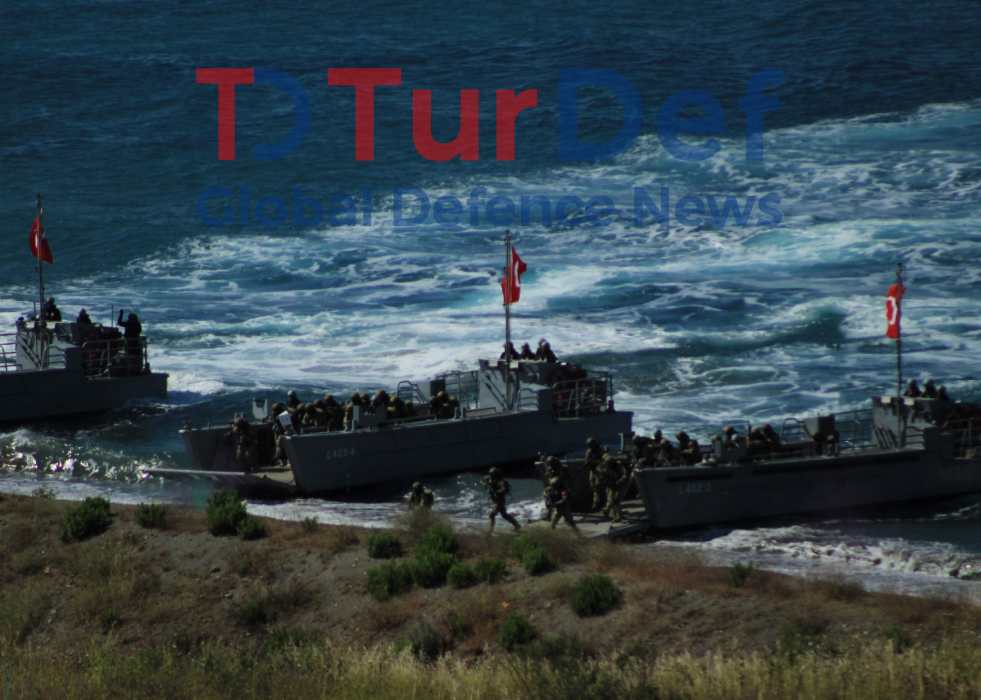
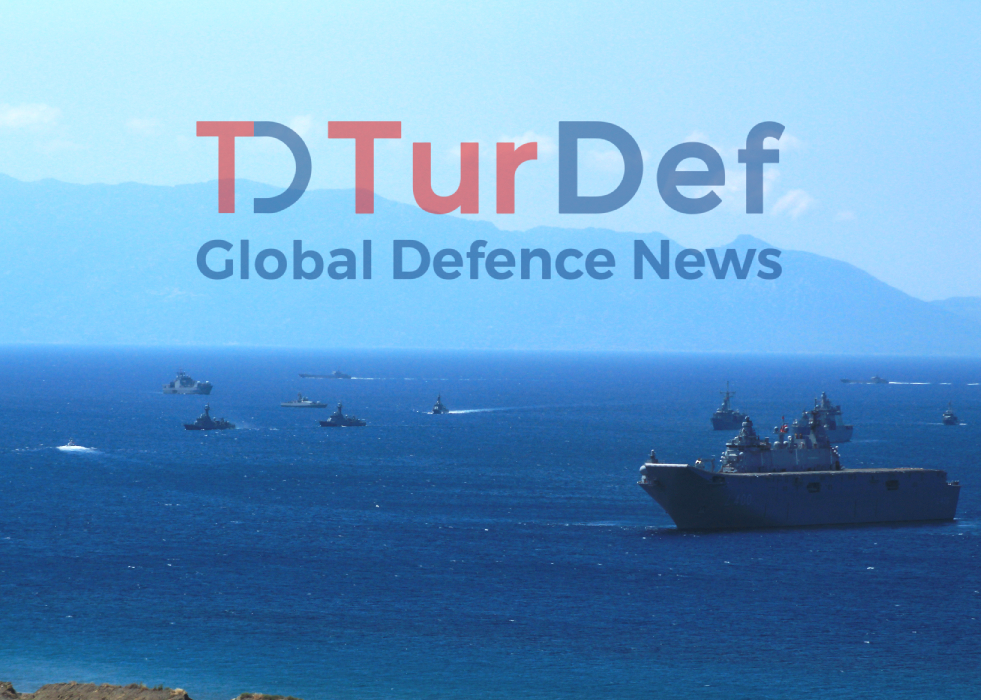
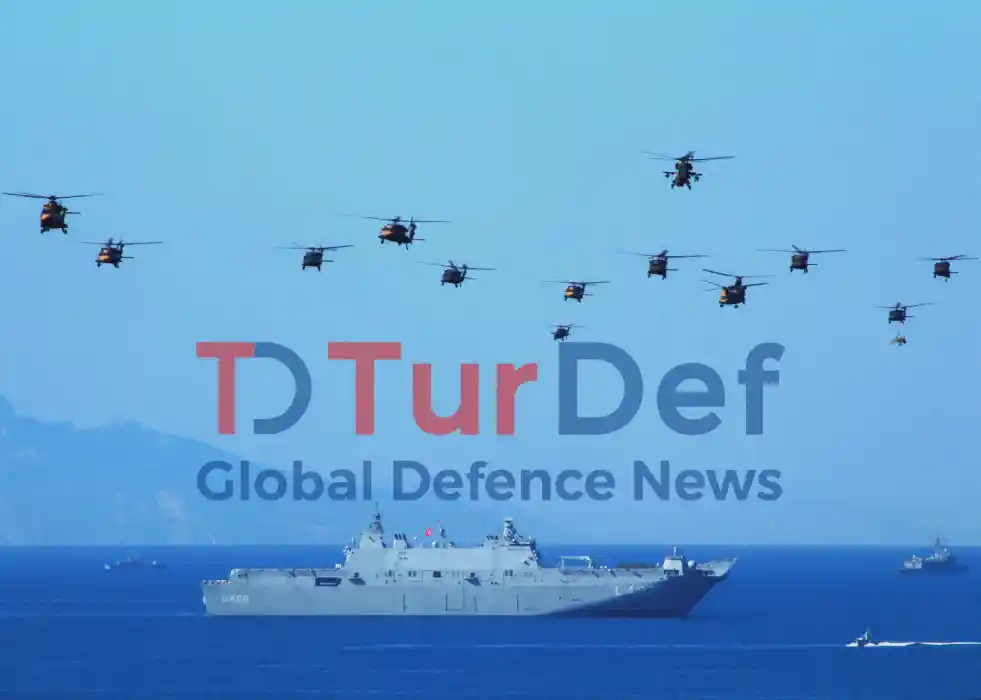
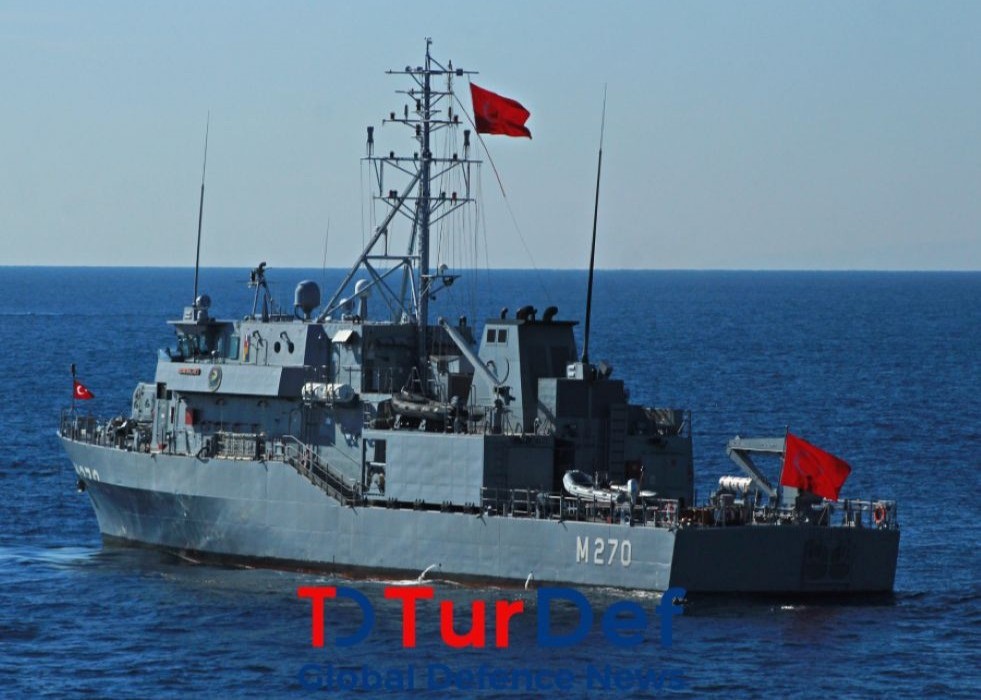
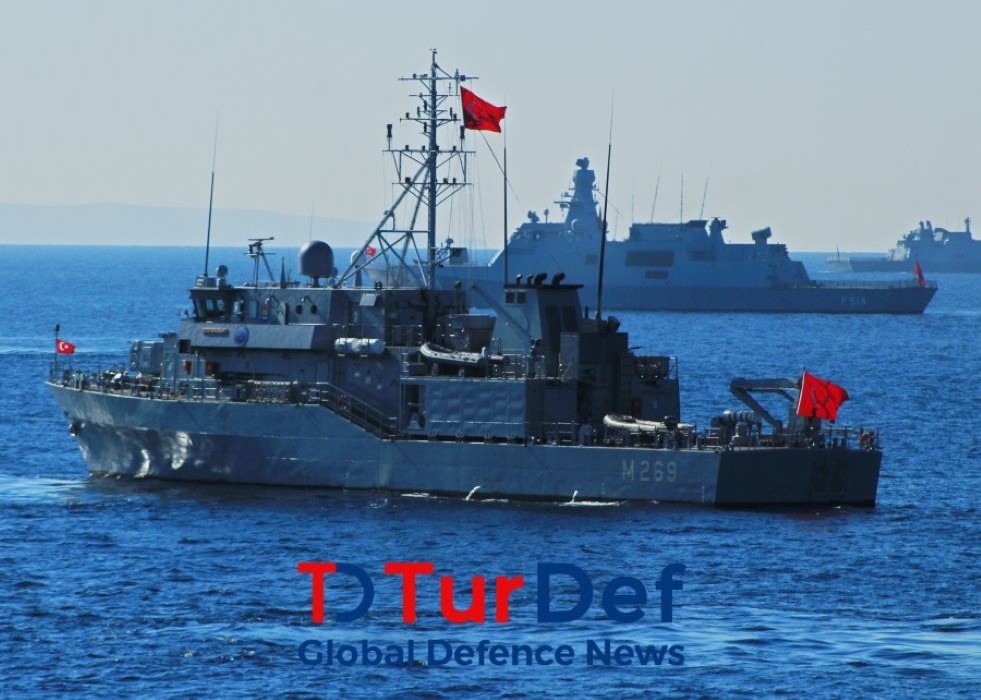
The Nusret 2025 Invitation Exercise was planned under the responsibility of the Northern Sea Area Command and conducted under the authority of the Mine Group Command and the Çanakkale Strait Command. The TCG Sancaktar (L 403) tank landing ship, the world's largest platform in her class, was constructed utilising domestic capabilities. It served as the command and control ship in the operation, which also involved the deployment of four Aydın (A) Class Mine Hunters, one Engin (E) Class minehunter, one Ada-Class Corvette, one Istif (I) Class Frigate, TCG Işın (A 583) and two TCG Akın (A 584) Salvage Vessels, three Rüzgâr Class Fast Attack Craft, three Tuzla Class Patrol Boats, TCG Beykoz (F 503) Test and Training Ship, four Coast Guard Boats, one SH-70 Seahawk Naval Helicopter, one unmanned aerial vehicle from Turkish Navy; two F-16 Fighting Falcons and one C-130 Hercules Transport Aircraft from the Air Force Command. The operation also involved two Underwater Defence (Sualtı Savunma / SAS) Units and two Light Autonomous Underwater Vehicle Teams (L-AUW / Hafif Otonom Sualtı Aracı / HOSA).
During the Mine Countermeasures Operation Phases of the exercise, mines laid as part of the exercise scenario were detected by the sonars of the mine hunters and autonomous underwater vehicles.
Disposal activities were carried out following a detection operation by mine warfare swimmers and unmanned underwater vehicles. Mines at different locations and depths were neutralised by Turkish SAS Team and HOSA units, as well as mine swimmers and PAP systems.
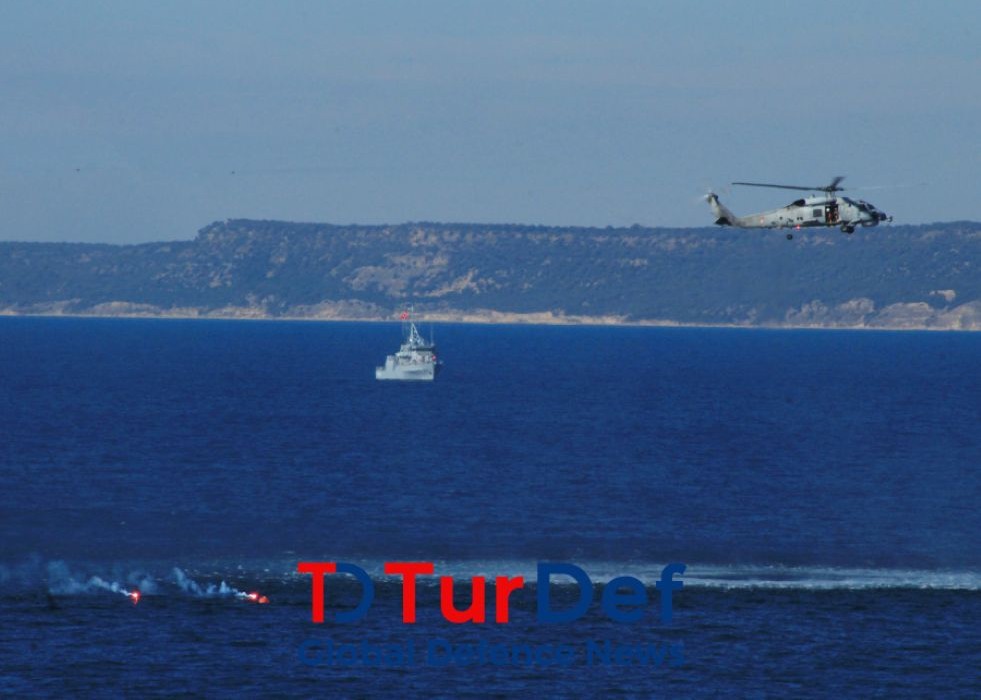
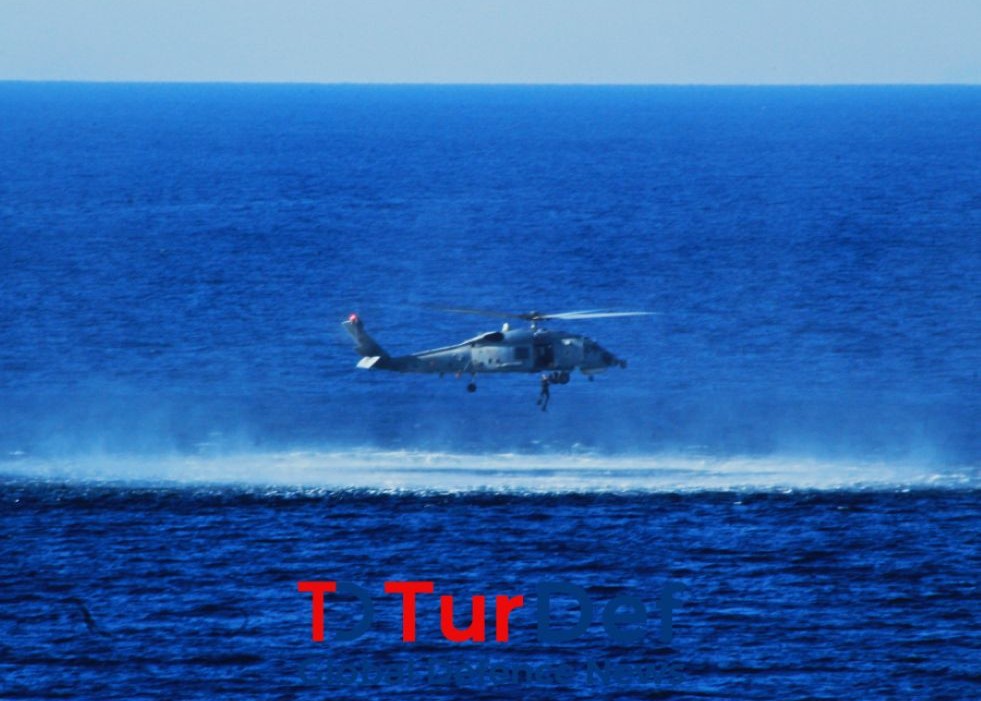
Throughout the exercise, all capabilities of the Naval Forces related to mine-countermeasures warfare were executed flawlessly and without exception, and international observers witnessed in a manner supportive of Ankara's regional and strategic interests. In the period following the Ukraine War, the drifting mine was detected by a Turkish Unmanned Aerial Vehicle (UAV). The subsequent disposal of the mine then followed this through the Tactical Claw Operation, a mission which involved the deployment of mine warfare swimmers from rotary-wing assets.
This operation is fundamentally based on the cooperation between UAVs and helicopters, enabling the rapid detection, identification and neutralisation of threats swept away by currents and rapidly drifting, by units that can swiftly deploy to the area regardless of location. This constitutes substantial evidence of the Turkish Navy's efficacy and adaptability in this domain.
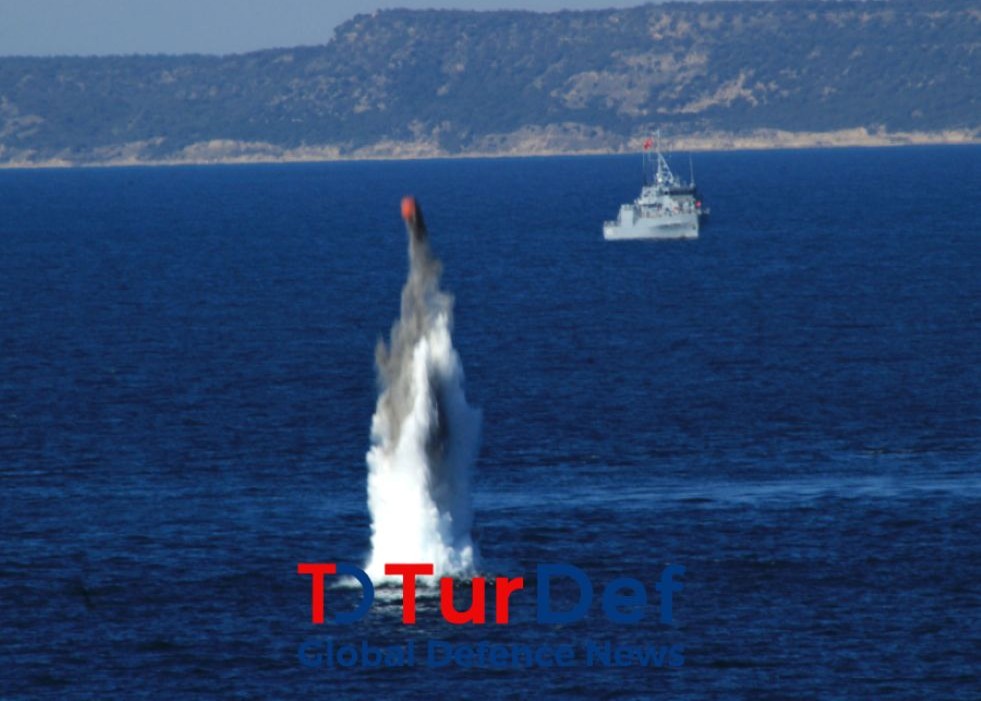
The location and subsequent disposal of the mines in the shallows were carried out by Underwater Defence (SAS) and HOSA units. Furthermore, Turkish SAS units engaged in further mine countermeasure operations in extremely shallow waters.
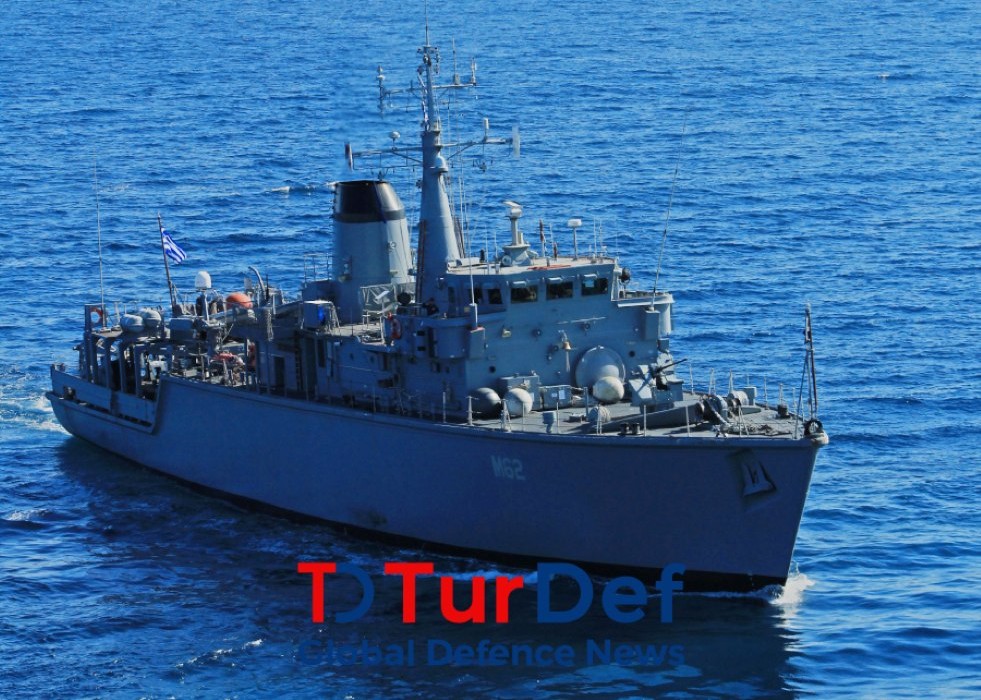
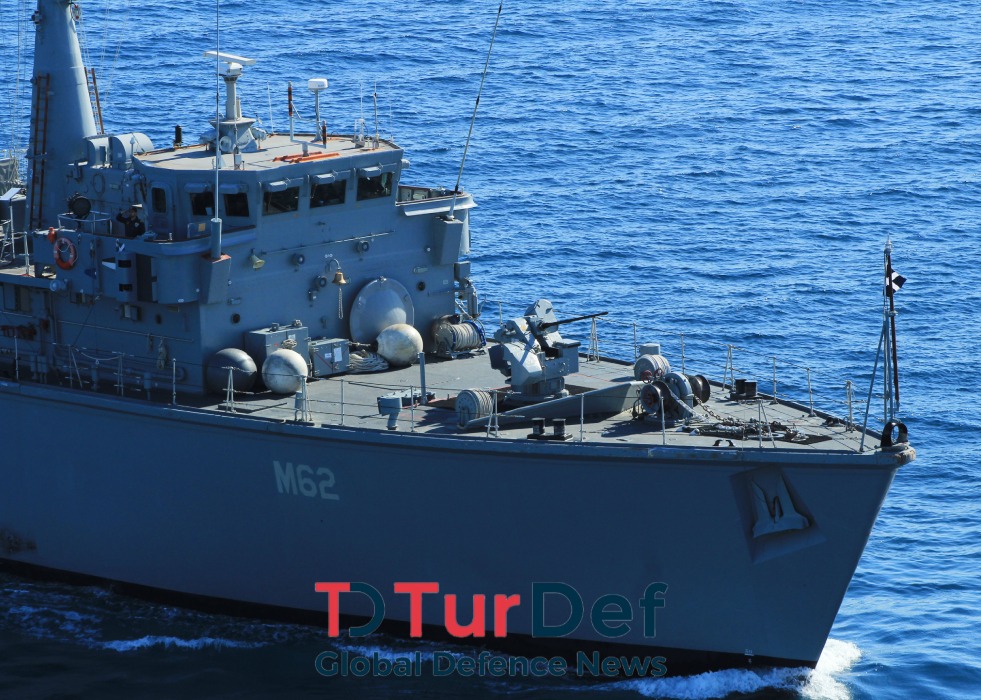
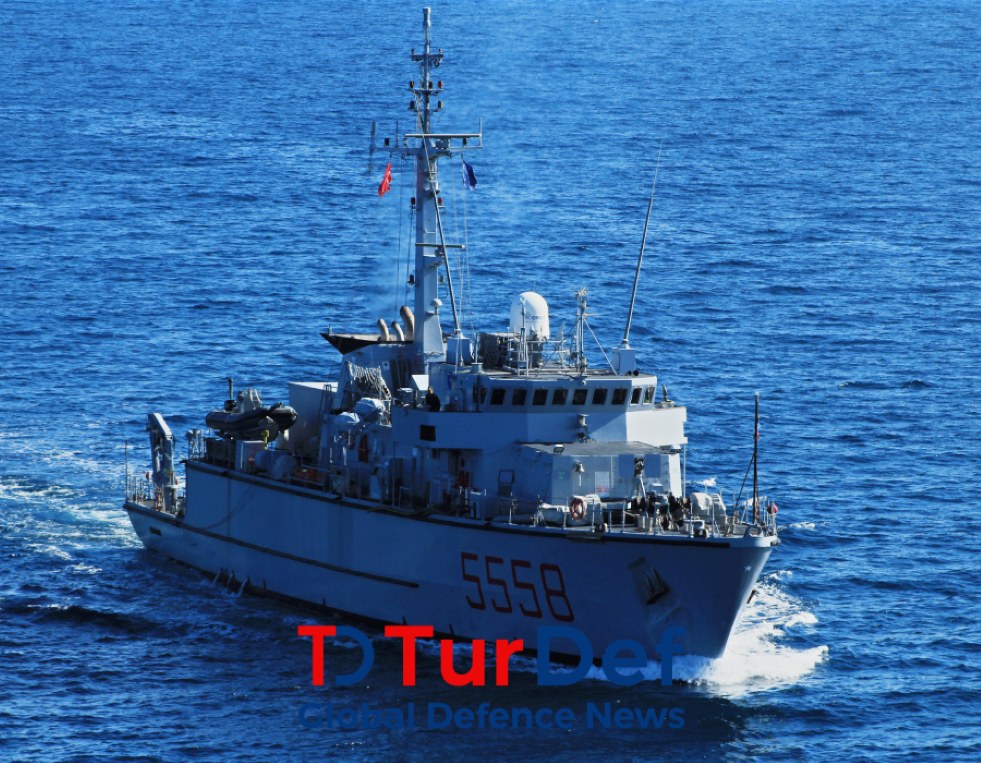
As INVITEX, Nusret-2025 also has an international dimension. The issue of demining in the Black Sea presented a significant opportunity for the Turkish Naval Forces to demonstrate their capabilities. The exercise programme was further enriched by the involvement of foreign elements, who participated to the event and benefited from the mutual exchange of knowledge and experience. NATO Standing Maritime Mine Countermeasures Group 2 (SNMCMG2) ships ITS Paolo Thaon di Revel (P 430 / Command Ship), ESPS Sella (M 32), ITS Crotone (M 5558), HS Evropi (M 62), and TCG Akçakoca (M 268) also participated in the Nusret 2025 INVITEX. The exercise comprised four visiting ships, 67 explosive ordnance disposal (EOD) units and distinguished visitors from 25 countries. Furthermore, France deployed EOD teams consisting of eight personnel, Romania deployed twelve personnel, and Spain deployed seven personnel as part of the Very Shallow Water Mine Countermeasures Exercise. Furthermore, 44 personnel from 21 countries observed training in place.
Turkiye's Position
Since the 2000s, Turkiye has been laying the foundations for its defence capabilities, and, as a result of rapidly increasing domestic industry investments in recent years, has been able to equip its armed forces with a highly modern infrastructure using its own resources. The Turkish Navy is also a beneficiary of these initiatives, with a considerable portion of the investments allocated to it.
The National Ship (MilGem) Project, which commenced with the Ada Class Corvettes, has evolved to encompass an amphibious assault ship such as the TCG Anadolu (L 400), which significantly enhances power projection capabilities, blue-water platforms such as the TF-2000, and even the initiation of aircraft carrier construction, culminating in the formal declaration of intent for a nuclear submarine. This visionary approach has permeated not only long-term planning but also modern auxiliary and support vessels such as minehunters and salvage ships.
The safety of sea routes in the western Black Sea and the approach waters of the Istanbul Strait is under threat due to mines laid during the ongoing Russia-Ukraine War. Since 2022, the Turkish Navy has been engaged in ongoing operations to address the threat posed by drifting mines. The primary objective of these efforts is to ensure the safety of navigation.
Ankara's position regarding the possibility of future offers of support from NATO members or non-NATO countries not bordering the Black Sea to address the mine issue in the region is that it should be resolved in a manner that consolidates the Turkish Navy's dominance in the Black Sea. As articulated by the Commander of the Turkish Naval Forces, Turkiye's fundamental stance is that the responsibility for mine clearance in the Black Sea should be shouldered exclusively by Turkish Mine Group Command. At present, NATO member countries with coastlines are also participating in cases of drifting that directly affect their own territorial waters.
The recently discovered hydrocarbon deposits in the Black Sea, coupled with its considerable potential, render it a site of considerable interest to many nations. The ongoing armed conflict between Ukraine and the Russian Federation has the potential to transform the region into a significant international geopolitical concern. While new discoveries do not disrupt the status quo between neighbouring countries, the concessions made by Kiev in exchange for the support and aid it receives are a significant factor that increases the number of unknowns. Nothing has been finalised yet. Nevertheless, endeavours by non-littoral actors to disrupt the prevailing balance and order may assume greater significance in the future. It is evident that Turkiye is averse to the augmentation of foreign presence in the region and has thus initiated measures to safeguard the Montreux Convention from both direct and indirect harm. Furthermore, it is to be expected that potential rivals would be averse to the Turkish Navy assuming leadership in the region, given its recent modernisation and the considerable momentum it has gained as a result. At this stage, the issue of mines in the Black Sea represents an important test in terms of the equations resulting in favour of Ankara.
Here, the Turkish Navy wants to solve the mine problem on its own. The Chief of General Staff, General Selçuk Bayraktaroğlu, and the Commander of the Naval Forces, Admiral Ercüment Tatlıoğlu, who participated in the exercise, clearly underlined in their press statements that the Turkish Naval Forces had the capability to solve the issue and that they would carry out the assigned tasks with the concrete determination.
The Nusret 2025 Exercise can thus be regarded as a pioneering turning point for Turkiye. It is evident that the high level of participation by foreign forces, in conjunction with the substantial involvement of NATO, proved to be of significant consequence, both in showcasing practical and capability terms to third parties. This was directly observed by distinguished foreign visitors during exercise. The flawless execution of operational scenarios in front of international observers, in conjunction with past successes in actual detection and disposal using innovative approaches such as Unmanned Aerial Vehicles (UAVs) and Synthetic Aperture Radar (SAR) detection, in addition to actual successes, clearly demonstrated that Turkish Navy is capable of performing this task post-war not only with conventional approaches, but also with near-perfect execution through its forward-looking vision.
Montreux Dimension
Turkiye's position on mine countermeasures is directly related to the Montreux Convention.
Ankara's position on this matter establishes a precedent that will influence future developments. During the 2003 Iraq War, the United States sought to utilise the Black Sea ports of Samsun and Trabzon as logistics centres and to initiate a ground operation through Turkish territory. This request, included in the '1 March Motion', was ultimately rejected by parliament.
Similarly, Washington attempted to send the hospital ships USNS Mercy (T-AH-19) and USNS Comfort (T-AH-20) to the Black Sea as military platforms during Russia's 2008 invasion of Georgia. In the context of the ongoing Russia-Ukraine conflict, Western powers have engaged in discussions concerning the provision or deployment of mine countermeasures vessels to the region.
Ankara has persistently upheld the Montreux Convention, which imposes limitations and oversight on the deployment of warships in the region by navies not bordering the Black Sea. Turkiye's recent declaration of its capacity to independently undertake all mine clearance operations is a strategic move aimed at forestalling any proposals that might contravene this sensitive arrangement. Although other NATO members have not yet established "post-war mine disposal policies" for the Black Sea, Turkiye is already taking action to shape this process. Ankara's stance is firm and clear: the Turkish Navy is going to clear the Black Sea of naval mines and other explosive devices. The logic is simple: to prevent ostensibly humanitarian missions such as "mine clearance" from becoming a pretext for non-Black Sea military presence in the region and protect Montreux Convention.Beyond legal and strategic considerations, demining operations are vital for ensuring maritime safety and protecting commercial shipping routes, offshore energy installations and the dense shipping traffic passing through the Turkish Straits. From the perspective of the international community, the issue can be considered to fall within two key areas of concern: security and trade. For Ankara, it is a matter of sovereignty: to preserve the Black Sea as a sea of peace in the spirit of Montreux and to maintain a balance that has deterred external powers for nearly a century.
Mine Countermeasures Warfare
Sea mines represent a significant weapon, capable of affording their operators a strategic advantage in a military context. These low-cost weapons represent a covert and intimidating factor for enemy elements and civilian vessels due to their stealth factor. In addition to the utilisation of the latest technological advances, even the most primitive models, seemingly taken from a museum and laid into the sea, offer extremely high effect, thus making them one of the rare weapons capable of directly determining the outcome of a naval battle. For these reasons, minehunters can be characterised as platforms that, despite their size, will influence the outcome of the battle both tactically and strategically, operating in parallel with naval warfare.
Three-quarters of the world is covered in water. This is also an important geographical indicator of how large an area is at risk in terms of the threat posed by naval mines. Despite their military designation, these systems can be laid from a variety of platforms, including warships and civilian surface vessels equipped with rudimentary hardware.
Mine countermeasures represent a specialised domain, necessitating bespoke solutions tailored to the threat profile. The human factor constitutes the key element in the realm of mine warfare, a domain that demands a substantial degree of expertise and precision.
Naval mines are divided into four main categories as chain, iron, magnetic, pressure-activated and acoustic. Another factor affecting the speed and efficiency of operations is, as mentioned, the identification and disposal methods for each type of mine.
The initial step in Mine Countermeasures Operations (MCO) is the implementation of specific disposal procedures for each munition type. This is contingent upon an understanding of the threat and its purpose at sea. In the absence of such a commitment, it must be acknowledged that the entire expanse of the sea is imperilled. When all factors are taken into account, it is evident that conducting a large-scale task at the indicated level is impractical.
Considering that the seabed, environmental conditions and water status are directly affected by many different variables, it can be said that MCM Procedures actually commence even before the operational necessity arises. Measures that can be taken against a multifaceted threat such as mines involve, in the first stage, the high-precision preparation of strategic areas such as ports, important sea routes, coastal areas, and vital straits and passages, keeping images up to date, establishing libraries consisting of underwater sonar images and continuously fed with new data, and activities such as identifying water salinity levels, wrecks, landforms, and unnatural objects. Indeed, the underlying objective of this meticulous preparation can be articulated as ensuring comprehensive familiarity with the intricacies of the region, thereby facilitating the swift identification of even the most minuscule of alterations and the expeditious determination of the optimal course of action.
The Mine Countermeasures Operation is an undertaking which extends beyond the neutralisation of targeted systems. The disposal of unexploded munitions or systems used in combat or training is a matter that increases target diversity, thereby complicating requirements and multiplying operational risk. Therefore, these activities actually encompass their own unique dynamics beyond general patterns.
The detection, identification and classification phases constitute the first stage of the Mine Countermeasures Operation. In this instance, the detection and classification of threats is conducted through the utilisation of the minehunter's sonar or autonomous underwater vehicle. Subsequently, the object identified by a mine warfare diver (MWD) or remotely operated underwater vehicle (ROV) is detonated from a safe distance and destroyed in a controlled manner, again using MWDs or ROVs. Mines in very shallow waters, up to 10 metres deep, are effectively detected, identified and disposed by EOD teams and Autonomous Underwater Vehicles (AUVs).
Author: Özgür Ekşi
The second part of this article can be accessed via the link provided.