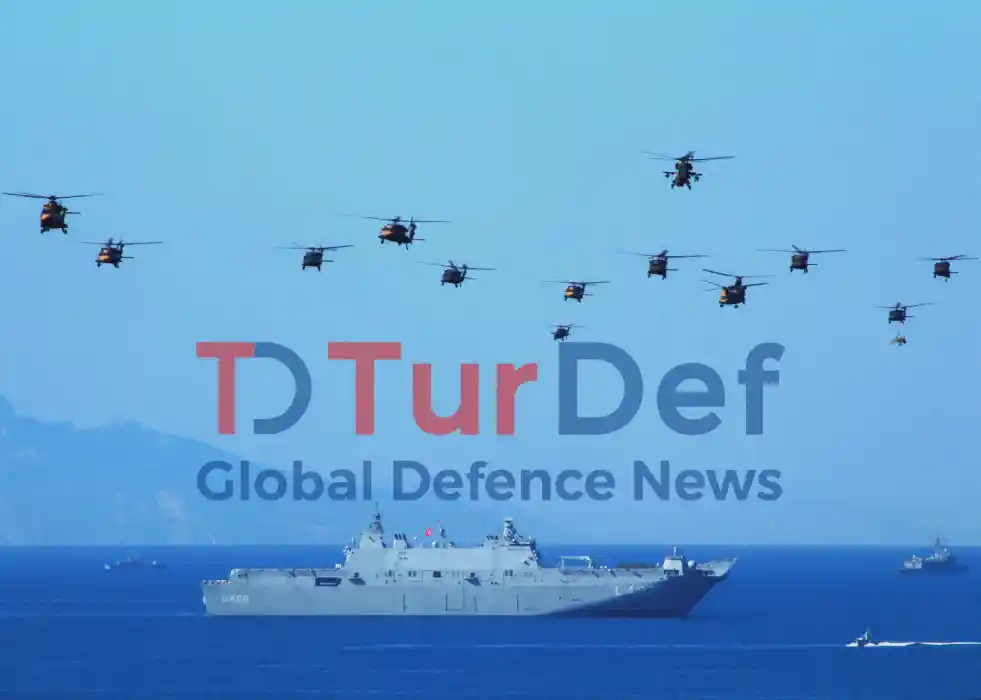
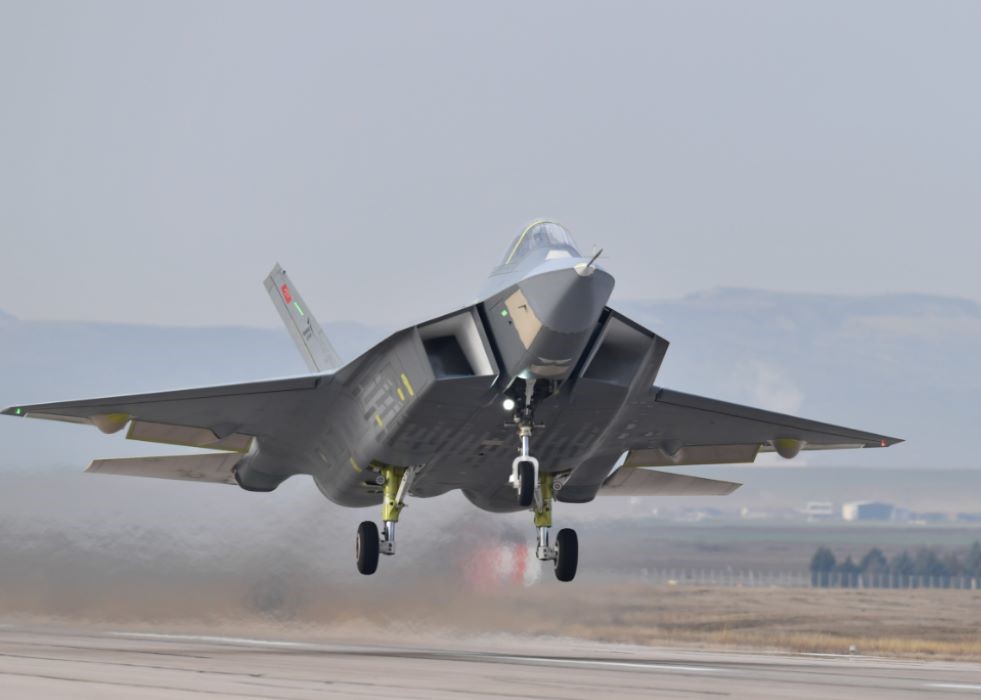
The balances have changed after Russia’s attempt to invade Ukraine. In the process going on since 2022, NATO has also been trying to keep up with this wind. The latest fruit of the efforts was the Ramstein Flag Exercise.
Greece hosted the event organised for the first time this year. Held at the Andravida Air Base, NATO countries had the opportunity to reinforce real-time training and coordination.
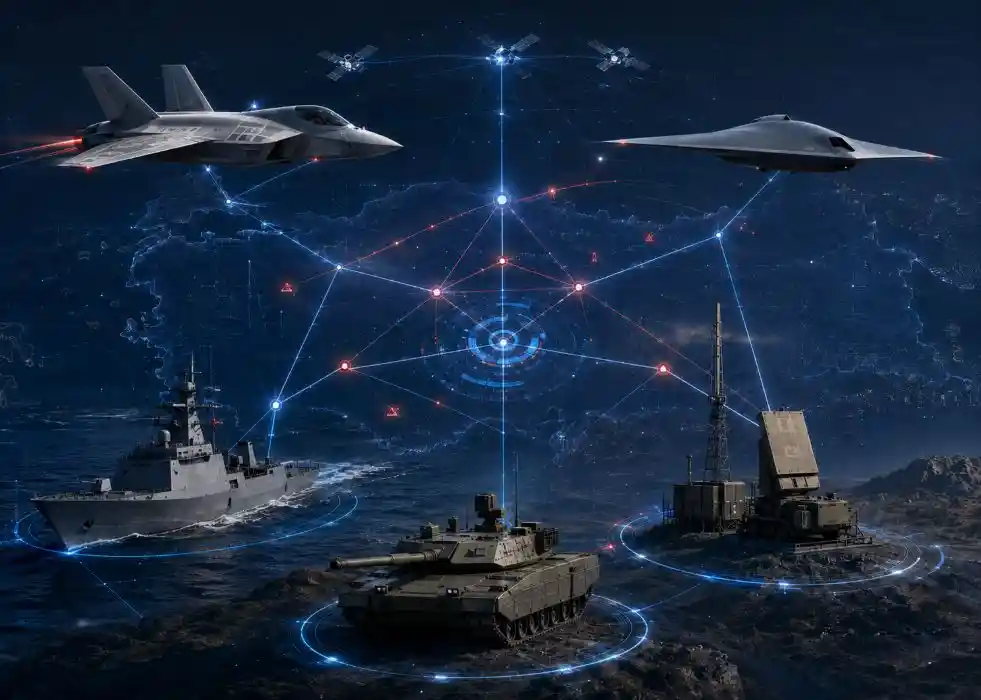
Ramstein Flag was developed from the “Red Flag” Exercise, which the USA has been organising since the 1970s and in which prominent allied countries participated. The most fundamental difference is that, unlike its predecessor, it is not an event focused solely on air forces but rather has a multi-domain structure. The air phase of the event was exhibited on 10 October, when the press was invited. It was learned that work was also carried out in the remaining land, sea, space and cyberspace areas in the other sections of the exercise. On TurDef’s side, it is worth noting that it was the only Turkish publication that had the privilege of following the exercise.
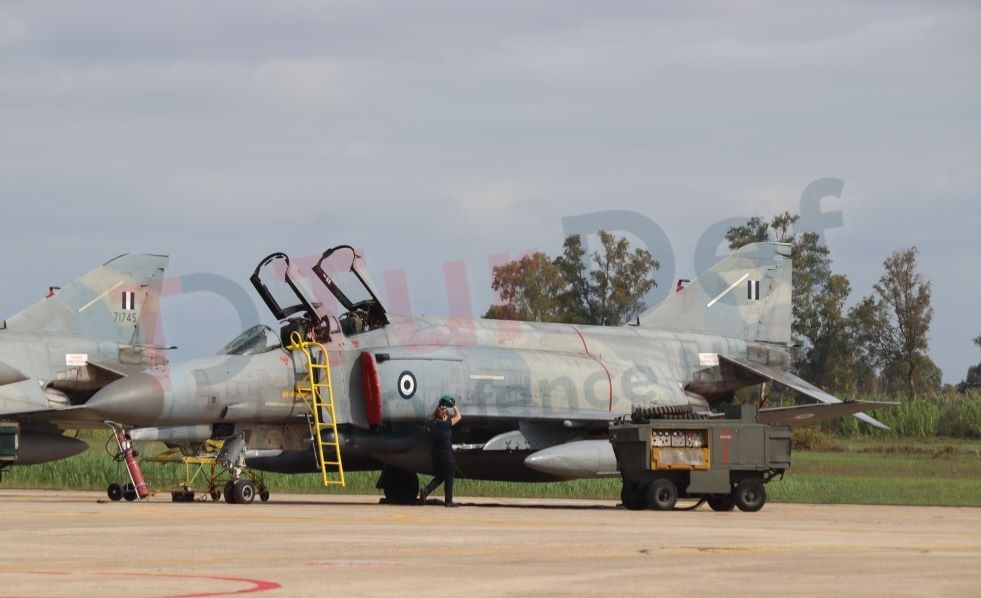
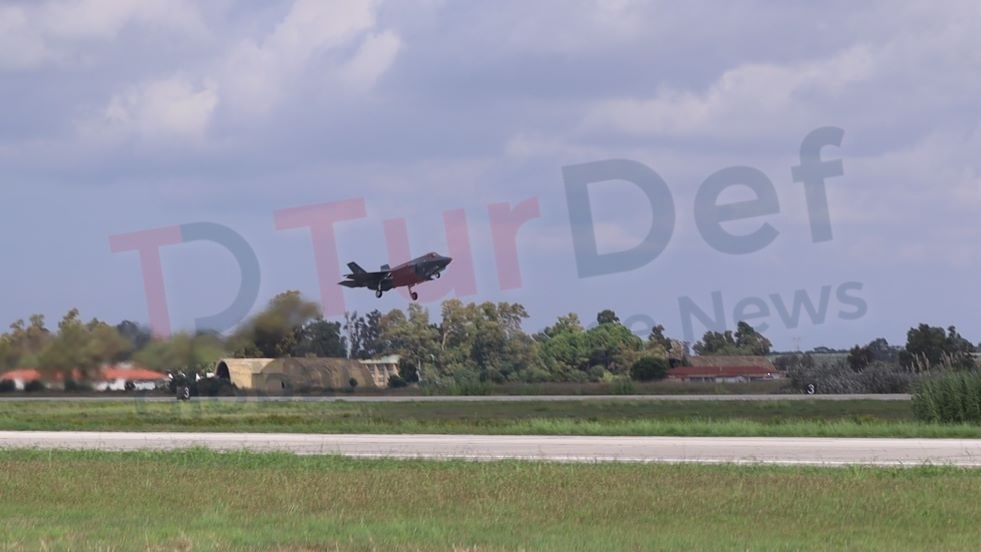
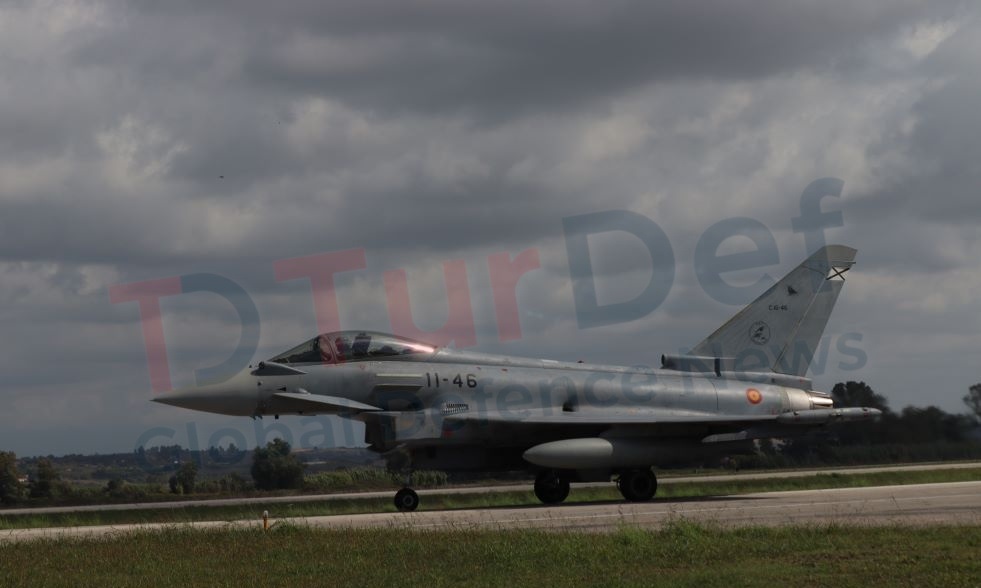
Fifth-generation F-35 Lightning IIs from Italy and the USA, fourth-generation Eurofighter Typhoons from Spain and Italy, Rafales from France and Greece, Gripens from Sweden and Hungary, and various variants of F-16 Fighting Falcon jets from Greece, Portugal, Poland and Romania participated in the activities conducted between 30 September and 11 October 2024. The ground attack, interception and multirole fighter-bomber “Red” missions at Ramstein Flag 2024 were carried out under the responsibility of the F-16 Fighting Falcon, Mirage 2000 and modernised F-4 Phantom IIs of the Hellenic Air Force. In addition, NATO RQ-4 Global Hawk, R.A.F. RC-135W Rivet Joint and Italy’s MQ-9 Reaper provided ISR support during the training. NATO and French E-3 Sentrys, Greek Erieye radar-equipped EMB-145H Italian SIGINT G550 aircraft participated in command and control activities. The Canadian CC-150HT, French A330 MRTT, Italian KC-767 and American KC-135 Stratotanker took their places in the scenario with aerial delivery, supply and logistic support missions. Again, we have seen conflicting information regarding USAF’s B-52 Stratofortress bomber/s participation in the exercise. This should also be read with a grain of salt in case of last-minute changes.
In the surface leg of the activities, the Hellenic Navy’s surface and coastal defence units, NATO Space Centre, U.S. and Greek Special Forces, and British Cyber Defence provided support. In addition, the Hellenic Army’s MIM-104 Patriot, MIM-23 Hawk, and Skyguard air defence units also participated. Various support systems and fire control equipment were assigned to the digital leg of the Ramstein Flag.
The fact that Hungary and Sweden were among the participants is one of the notable signs of the Ramstein Flag. The participation of Sweden, the newest member of NATO, in such a comprehensive event with a combat jet at the first opportunity is a step against the criticisms made against Stockholm. It can be said that Sweden, which joined the alliance after overcoming Turkish and Hungarian resistance, is trying to give the message that “Instead of waiting while NATO protects us, we will get our hands dirty.” On the other hand, it is known that Hungary had a rather idle army until a few years ago. Although its power is known for its closeness to Russia, Budapest made important acquisition attempts, especially after the pressure of at least 2 per cent of GDP. It is also important that the country, which is perhaps one of the weakest links in the pact, participates with the Gripen despite its close contact with Moscow. The participation of Romania, one of the former Iron Curtain countries, which started to transfer its air forces to the West with the F-16 Fighting Falcon relatively recently, is another important issue. In fact, when looked at in general, it can be said that the USA has somehow achieved the integrity it wants in the region along the Russian border under the roof of NATO.
When talking about contribution, it must be said that the Romanian Air Force conducted sorties from its own country to the exercise every day, refuelled without landing, and then landed back at its own base. The aerial refuelling capability is an important force multiplier. Longer patrol tasks are also in the benefits list for Bucharest when limited resources and lack of planning flexibility considered.
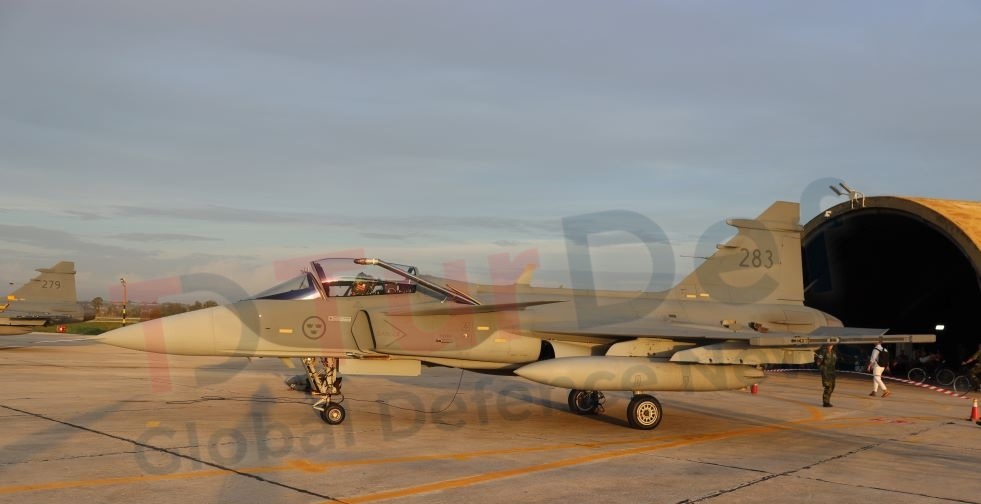
The fact that Gripen jets were particularly emphasised in the exercise raised the question, “Does NATO see them as the successor to the F-5 Freedom Fighter?” Sweden, which followed a balanced policy between the West and the East during the Cold War and preferred to remain neutral like Finland, is known for jets that can be procured and sustained at low costs due to the conditions required by the period in which it was developed. At this point, although it is important for Gripen to achieve optimum air-to-air and air-to-ground capabilities, its most important feature is sustainability. The platform, which can be acquired at lower costs than many NATO-made jets today, is suitable for operation even with take-off and landing from highways and very short distances. The most important result of the manufacturer’s attention to using limited human resources at an optimum level from the design onwards is that a two-person ground crew can send the aircraft back to duty within 20 minutes. In this way, the Gripens aim to make an optimum contribution by flying minimum three sorties daily.
However, time will show to what extent it can replace the F-5s, which are an icon in every respect. NATO explained in its statement that Greece was chosen as the host country because it is located in a compact area with sea, plains and mountainous terrain and that training can be carried out simultaneously in three locations. It can definitely be said that the resistance to be shown against Moscow’s aggression, especially against Russia, was rehearsed. It is important in this respect that the aircraft in the red missions are models that can perform both air-ground and air-air simulations. Real fire opportunities were provided to targets, and a working environment was created in complex tactical areas in the scenarios designed mainly for air forces. The activities were designed on the Anti-Access / Area Denial (C-A2AD) mission. In particular, the integration of fourth and fifth-generation aircraft, command-control and ISR elements, coordinated activity and real-time operation capability in a multinational environment can be considered the most important point of the exercise. In addition, a calculated scenario, for example, up to laser-guided bomb usage for a GPS-denied environment, is commendable. Nevertheless, avoiding simulation in important matters is a minus factor that reduces the realism factor.
According to the official documents shared, NATO has decided to organise the Ramstein Flag to test what has been developed since 2022 against Russian aggression. The activity, where current tactics and doctrines were implemented for the first time at the North Atlantic Organization level, can also be described as a step that can be considered a military marker of a return to the Cold War days. However, it should be kept in mind that the asymmetric element scenario is missing, and in particular, there is no statement, preparation, or demonstration against drone attacks. In an environment where the focus of power has been shifting to the Far East due to Chinese influence for a long time, it would not be wrong to say that the U.S.’s lost interest in Europe has had to increase with the invasion attempt of Ukraine. Exercise can also be considered an indicator of this. However, it is difficult to see the saviour U.S. of the past years here. Due to the current capacity and power distribution, it would be better for Washington to organise Europe against Russia and ensure its integrity through NATO as a cementing factor. In fact, the integration factor is an argument that is especially and repeatedly emphasised in the documents shared. In fact, the current situation also provides suitable ground for inferences that a possible two-fronted Third World War could take place in the Pacific, advancing under the responsibility of the U.S. and a European leg advancing by the Allies and Washington. Of course, it should not be forgotten that Japan’s side will be different this time. Nevertheless, it is difficult to predict who will benefit from the chaos in the region.
The fact that 130 aircraft and approximately 2,100 personnel from 12 countries took part in the activities, which were observed to have deficiencies at various points as they were the first performance of the series, is an important factor. When considered proportionally, it can be said that in a real war situation, NATO can gather 6,000 to 8,000 soldiers, excluding surface elements, and 500-700 aircraft for various purposes in two weeks. These numbers are significant when the worn-out European and NATO arsenals from the ongoing war in Ukraine are considered and the army stocks that have been liquidated after the Cold War years.
The two important shortcomings of this exercise are the Turkish contribution and the lack of US F-22 aircraft.
The Turkish Air Force’s combat experience has an undisputed place in NATO. Therefore, the answer to the question of what Turkiye’s participation would have contributed includes a long answer. On the other hand, the answer to the question of why it did not participate is extremely political and based on bilateral relations. According to the news that emerged before the exercise, Greece requested the Turkish Air Force to fly according to the FIR briefing. FIR is an information method applied to civil aircraft and is generally not applied to state and military aircraft. There are rare examples in the world of this being applied to state and military aircraft, too.
On the other hand, due to Greece’s claim of 12-mile airspace, it is not possible for Turkiye to respond positively to this request because it would mean implicitly accepting the Greek claims. It may be considered normal for Greece to make this request in order to maintain its own position, but it is part of diplomacy for Ankara to give this reaction. As a result, since the Republic of Turkiye cannot meet Greece’s revisionist demands, NATO could not benefit from the Turkish experience in this exercise, to which it attaches great importance.
The second shortcoming of the exercise is that the U.S. Air Force’s most important air domination aircraft, the F-22 Raptors, whose exports are prohibited, are not included in it. The absence of such an interceptor indicates that the U.S. has its own plans to combat Russia or potential partners/aggressors, that it will engage F-22s to defend its own territory and the Asia Pacific side, as in past World War III scenarios, and that it aims to provide Europe with the ability to defend itself.
The activities, which also emphasise Aristotle’s words, “Well begun is halfway done”, can be described as an important vision to ensure the integration of the fourth and fifth generations in the multinational domain. The fact that this has been tried internationally, especially at a time when even user countries cannot keep up the desired tempo within themselves in the process of understanding and transitioning to the fifth generation, is important in any case as it is the first step. On the other hand, it could have been expected that more naval and land elements would be included in the A2/AD scenario organised with the motto “Deter and Defend”. At this point, NATO has also accepted that the exercise will be a step in determining the deficiencies for the next steps due to its name being the first activity. In fact, it would not be wrong to say where the Ramstein Flag will go after the 2025 Netherlands leg. Considering that the exercise has an infrastructure where it will be held in a much more realistic way in Konya and over the complicated terrain of Turkish soil, it would not be surprising if the third stop would be Anatolia, the home of “Anatolian Eagles”.
In general terms, when we consider the multi-domain exercises organised by the USA in the Pacific, Ramstein Flag 2024 has ultimately remained an activity in which NATO has blown away the cobwebs and flexed its muscles for this area. In the coming years, implementing an A2/AD setup that will include more land and sea elements according to the geography requirements where the activity will be held may yield more suitable and reliable results for the exercise. In addition, making as few simulations as possible and increasing the real activity rate may constitute a matter that will increase the combat readiness rate and the soldier’s experience. Finally, a wider integration of battlefield asymmetry in the Ramstein Flag will mean fewer factors to overlook in real combat.