The Turkish public has recently come face to face with the darker, less visible side of unmanned systems employed in the war unfolding to the north of the Black Sea. One unmanned aerial vehicle (UAV) approaching from the Black Sea was neutralised in mid-air. Another, believed to have originated from the same direction, landed on Turkish territory. They did not cause damage. Official sources have so far made no statement regarding the identity of the first platform. The second, however, leaves little room for doubt at first glance: a Russian roundel is clearly visible on its wing, and the UAV has been identified as the Orlan-10.
Does this information automatically place Russia in the role of the usual suspect?
The Orlan-10 typically carries only an intelligence, surveillance and reconnaissance (ISR) payload. With such a configuration, is it technically feasible for the platform to achieve a ferry range of 600 kilometres? In December weather conditions over the Black Sea, covering such a distance with this payload does not appear theoretically plausible.
With an operational range of approximately 120 kilometres, this UAV is also extremely difficult to detect on radar. This raises alternative possibilities. The platform may not have originated from deep over the Black Sea at all. It could have been launched from a ship nearby, a nearby littoral state—or even from within Türkiye. The presence of the roundel itself may have been a deliberate choice.
This article is not concerned with any of these speculative scenarios. Instead, it focuses on the lessons Türkiye must draw from these incidents.
Opportunities for Turkiye to Form an Airborne UAV Defence
In light of the recent UAV incursions into Turkish airspace and the success of new airborne solutions for C-UAS, Turkiye can go for a new defensive line.
Two consecutive reports of UAV incursions into Turkiye’s airspace, with the first one being thoroughly monitored and ended in a way to preserve the civilians’ safety by TuAF F-16 fighters, it can be said that Turkiye might go for a new layer of defensive line that starts from the airspace for early detection, identification, and neutralisation as these incidents are less than likely to be the last.
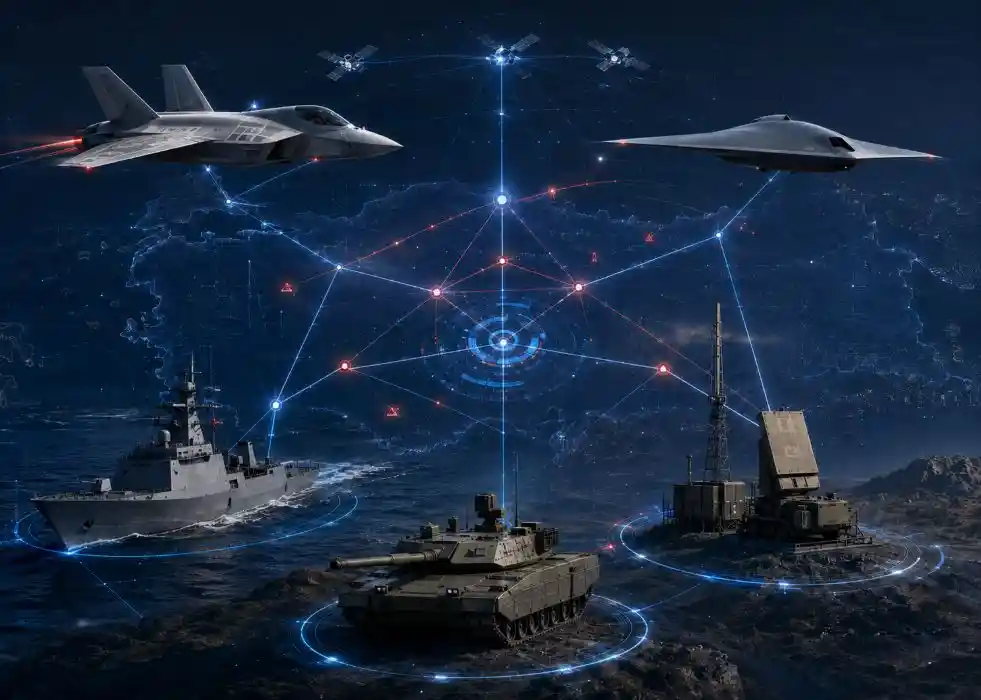
While the Steel Dome IADS has a dedicated layer for C-UAS incorporating both soft-kill and hard-kill solutions, there are limitations to ground-based defence in terms of coverage and identification.
On the other hand, using the highly capable but expensive to operate and maintain fighter jets is not a sustainable approach when the potential regularity of the UAV incursions in the near future is considered.
Considering the developments around the world and Turkiye’s own investments, there are a few ways that Turkiye can implement an airborne layer to the integrated air defence it is building up.
Interceptor Kamikaze UAVs and Notes from Ukraine
Using a kamikaze UAV to shoot down other UAVs has been an idea put to work over the course of the advancing years following the breakout of the war in Ukraine. In addition to low cost per interception, the real-time transmission through optics provides a close look at the target before impact, which provides high-quality identification. Beyond the operational-level identification, this last-minute observation has provided intelligence as Ukraine has used the footage to analyse developments on Russian UAVs.
The idea of UAV-on-UAV kill initially involved ramming FPVs with either explosives or sticks into slow-flying UAVs. Later on, ‘bullet’ kamikaze UAVs launched from ground or even other UAVs were developed by both sides and have seen considerable success due to their higher speed.
This new type of kamikaze UAV dedicated to C-UAS uses four rotors like the average FPV that can be found in the field, adjusting the rotor speeds to manoeuvre as well. However, the bullet-like shape and forward-focused thrust from rotors give these kamikaze UAVs far higher maximum speed, allowing for the interception of faster targets. As an example of this advantage in speed, a recently fielded Ukrainian kamikaze UAV of such type, named Sting, has managed to intercept turbojet-powered Geran-3 kamikaze UAVs.
Considering these advantages, it would not be far-fetched to say that this is a method worth including in the airborne defensive layer, as it can be quickly produced and put into use.
When it comes to how Turkiye can implement it, it is worth mentioning that Turkiye has multiple firms that have developed fixed-wing kamikaze UAVs, adaptable for use against other UAVs, as well as some firms working on kamikaze UAVs meant to take out other UAVs (Such as DASAL having shown its ALKARA quadrotor kamikaze UAV). While there are multiple options to produce interceptor UAVs, it is also important to ensure they work in coordination with the established air defence structure.
HÜRKUŞ and Armed Helicopters
Another idea that has popped up during the war is using light aircraft and helicopters, which are easier and less costly to operate compared to fighter jets, to shoot down incoming UAVs at close range.
Even before the war, it was found that fighter jets to shoot down breaching UAVs were not sustainable and were a waste of both resources and capable missiles.
Ukraine, lacking in terms of a fighter fleet size, resorted to what came unorthodox initially for close range interceptions with modified light aircraft (Crop dusters, other commercial propeller aircraft) and helicopters fitted with machine guns, which are abundant and cheap. In addition to low cost for operations compared to fighter jets, these aircraft also demand less or no (In helicopters’ case) runway length and quality, making them ideal for quick deployment in the field.
Alongside Ukraine, some of the navies involved in the operations at the Red Sea against Houthi UAV/Missile threats employed shipborne helicopters with machine guns to shoot down UAVs at close range instead of firing expensive air defence missiles.
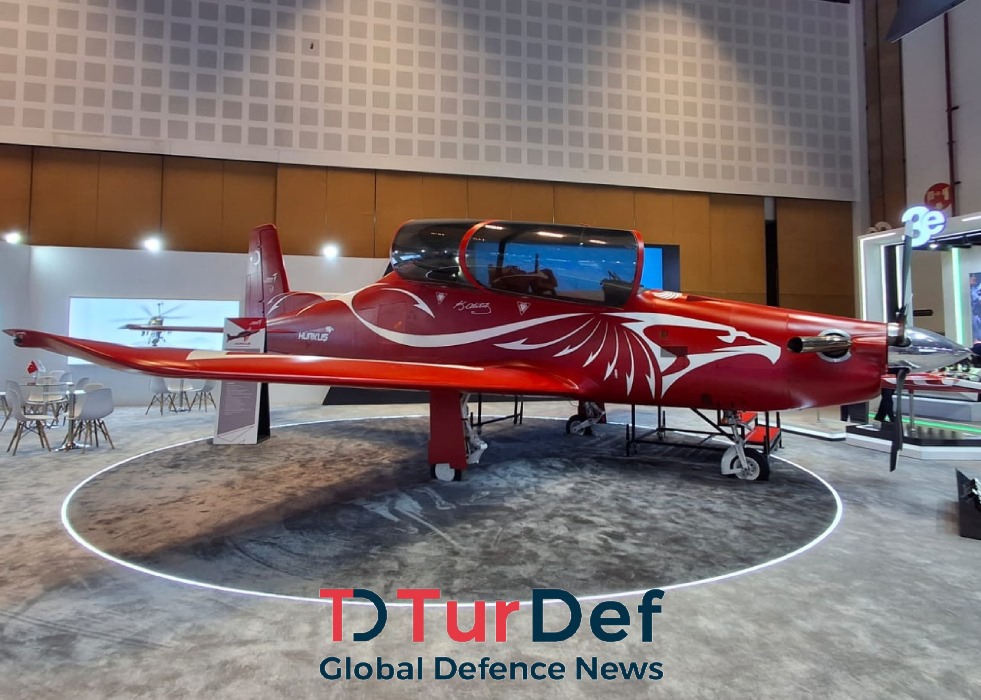
TUSAŞ HÜRKUŞ can be described as a candidate for the fixed-wing part with high agility as a trainer, compared to commercial propeller aircraft and its existing provision to mount weaponry. In addition to machine gun pods developed by TR Mekatronik and UNIDEF, HÜRKUŞ can also benefit from small guided missiles like SUNGUR MANPADS or even CİRİT laser-guided missile, which recently shot down a UAV during a ground-based test.
On the helicopter’s side, Turkiye already operates a large number of helicopters with door-mounted machine guns. The only possible addition would be implementing guided missiles, as mentioned earlier.
Using slow-flying manned aircraft with close-range weaponry can be said to involve more tactics development and exercises with representative targets due to the abundance of ammunition and platforms (If not abundance, easy production).
UAVs with Air-to-Air Missiles
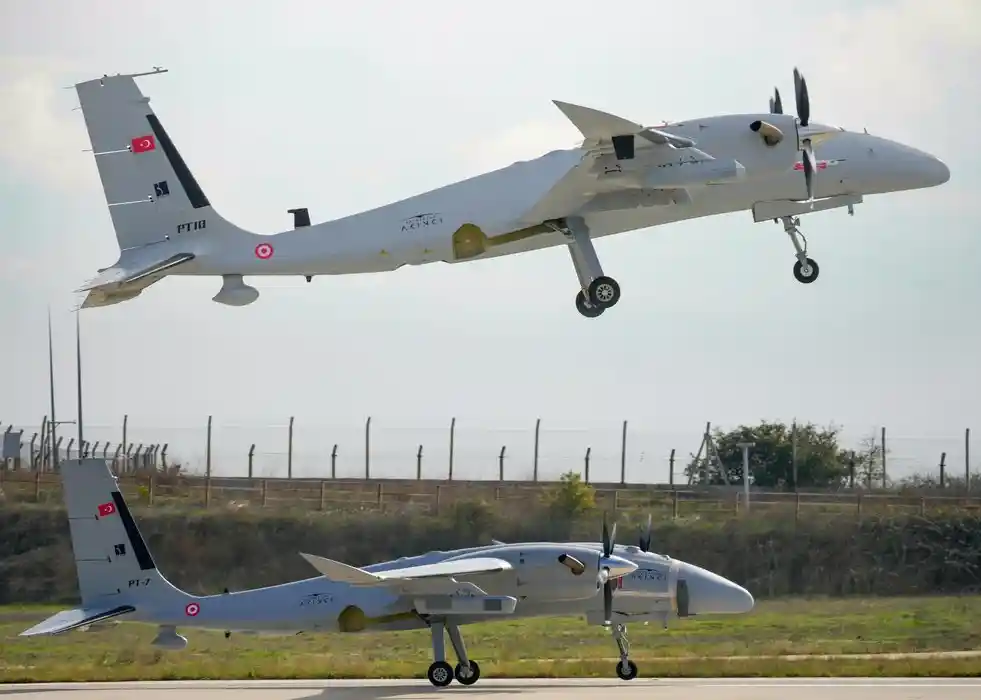
Using UAVs fitted with air-to-air missiles of various types has already been a subject that has been discussed for a long time in Turkiye, with AKINCI UCAV starting the years-long debate. Initially, the idea kept a low profile due to the airborne threats, mostly consisting of fighter jets and cruise missiles. However, today, the threat has expanded to UAVs that can be launched at targets hundreds of kilometres away in numbers and at a considerably lower cost than cruise missiles.
Proposals in Turkiye for armed UAVs/UCAVs with air-to-air missiles include:
-AKINCI with BOZDOĞAN WVRAAM, GÖKDOĞAN BVRAAM, and SUNGUR (Two-round pods) missiles
-Bayraktar TB2 and Bayraktar TB3 with SUNGUR missiles (Single pods)
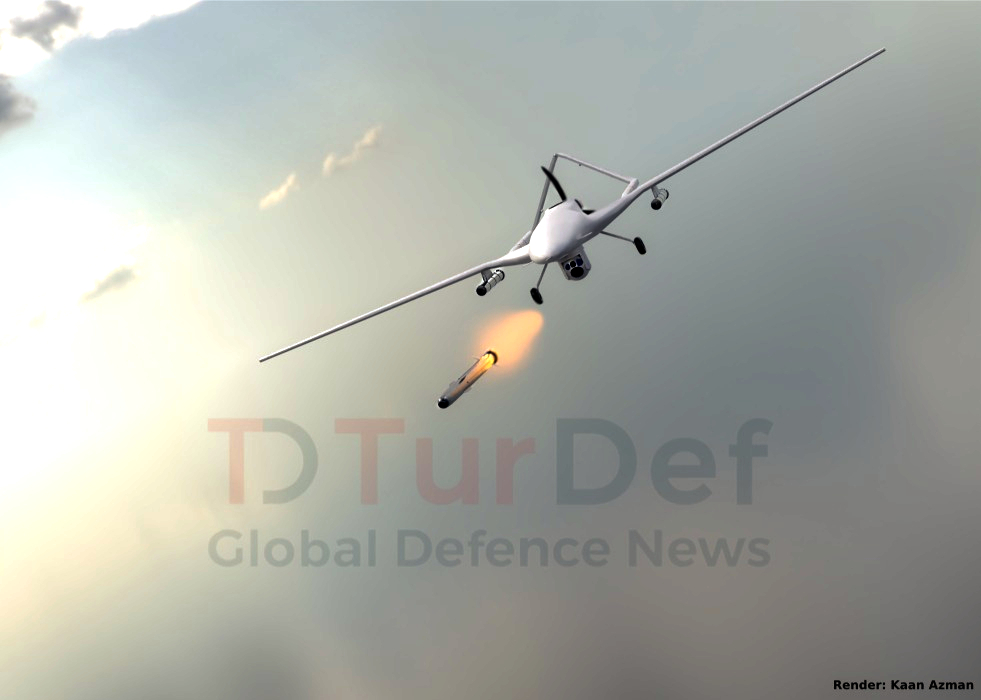
The prominent advantage of UAVs with air-to-air missiles is the fact that the endurance spans hours, far exceeding that of fighter jets, at a fraction of the operating costs.
Another important thing is, AKINCI is capable of carrying the MURAD 100-A AESA radar, which is of fighter jet-grade, can not only engage but also detect and identify (By combining with onboard EO/IR) incoming UAVs from a long distance.
Air-to-air missiles available to UCAVs for different ranges can achieve interceptions at extended ranges quickly, especially against faster kamikaze UAVs with turbojet engines that sit on the border of cruise missiles.
However, it should be noted that this approach has more distance compared to the previously discussed ones in terms of availability, as none of the three UAVs mentioned above have performed firing tests with air-to-air missiles yet. However, the successful firing test of GÖKDOĞAN BVRAAM from KIZILELMA unmanned fighter at a target shows promise for the concept.
ASELSAN’s Electronic Warfare Pods for UAVs
While hard-kill has been talked about for the most part, some of the electronic warfare pods from ASELSAN intended for UAV use also have the potential to be included in the airborne defence against UAVs.
ANTIDOT 3-U communication/GNSS jamming pod based on the ANTIDOT 2-U mini EW pod and GERGEDAN 4-U communication EA system for large UCAVs can be utilised to break the control link to restrain the target UAV if not down. Due to the long range, fibre optic cables that are jammer-proof can not be used for a UAV used in intentional incursions.
On the other hand, electronic support pods with SIGINT/ELINT capabilities can be used to detect and identify UAVs through the signal emissions.
ASELSAN has tested or delivered some of its electronic warfare pods as of 2025, which means they can be tested for the purpose if not deployed in the short term.
Can KIZILELMA be Included?
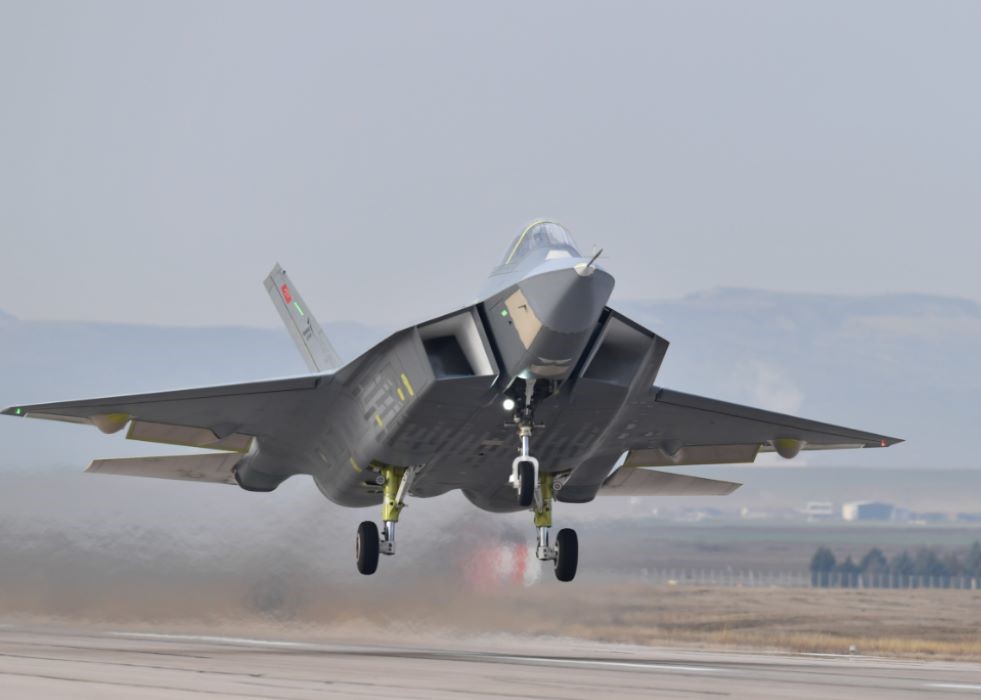
Considering KIZILELMA’s potent onboard sensors, MURAD 100-A AESA radar and TOYGUN 100 EOTS, as well as its design emphasising air-to-air combat, whether it could be utilised in countering UAVs should also be questioned.
Compared to the previous options discussed before, KIZIELMA can be described as sitting between air-to-air missile-armed UAVs and manned fighters in terms of cost and deployability. On the other hand, at least for now, the reaction speed would be close to fighter jets due to the speed being limited to the high subsonic regime.

While KIZILELMA leans towards the fighter jet side, it might not be limited to high-end weaponry like GÖKDOĞAN or BOZDOĞAN, like F-16s. Two low-cost (In KIZILELMA’s standards) air-to-air capable munitions are planned or considered for KIZILELMA as EREN and SUNGUR. SUNGUR’s possible integration was mentioned during SAHA EXPO 2022 by İsmail Demir, who was the Secretary of Turkish Defence Industries at the time, while ROKETSAN CEO Murat İkinci recently mentioned EREN’s integration. SUNGUR, compared to BOZDOĞAN, can be regarded as cheaper and suitable for multi-carriage per hardpoint. On the other hand, EREN, as a turbojet-powered loitering munition with an IIR seeker, has the capability to engage slow-flying aircraft.
Considering it will take time to mature KIZILELMA for air-to-air combat, not only in terms of equipment but also in critical autonomous features to require minimal human intervention, a less risky mission could indeed be inspecting and shooting down UAVs in place of fighter jets at times.
Conclusion
With the threat of mysterious UAV breaches into the airspace that pose risks to not only military or civilian assets but also air traffic safety, as evidenced by the recent incidents in Europe, starting the defence from the front of the border is something to start considering in a louder tone.
The developments in the Turkish defence industry and the trials for new ideas in the field (Especially in Ukraine) shed light on what routes can and should be taken if the shield is to be extended beyond existing means.
Author: Kaan Azman
Editor: Özgür Ekşi