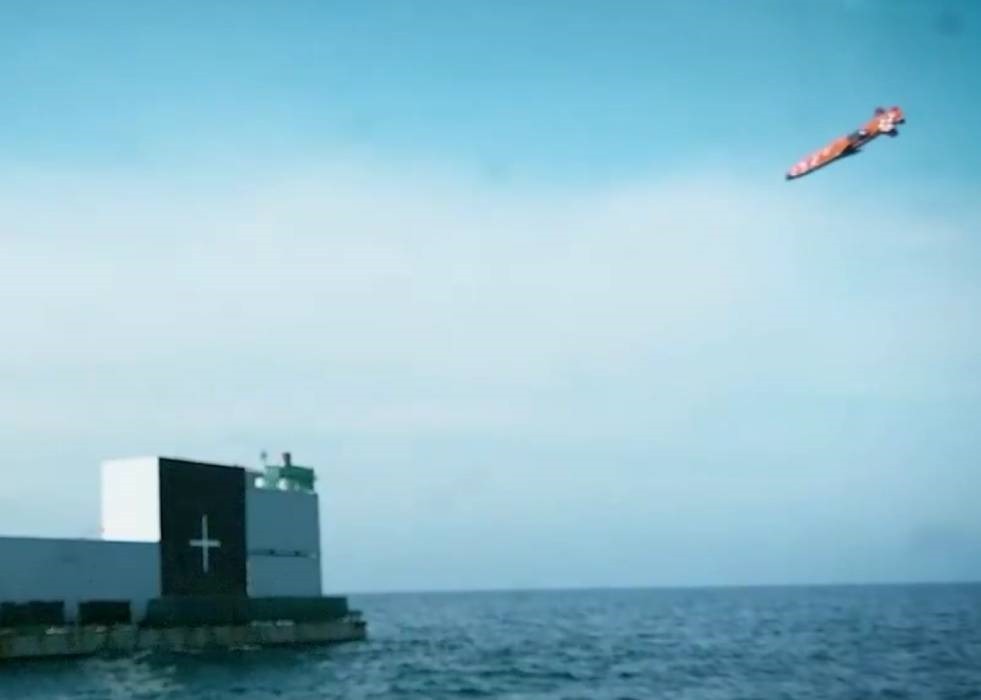
SOM-J cruise missile launched from an F-16 fighter jet of the 401st Test Squadron successfully hit a sea target in its first anti-surface warfare firing test.
The test is an important step for arming the future low-observable aircraft of the Turkish Air Force: the KAAN fighter, Kızılelma unmanned fighter, and Anka-III stealth UCAV.
SOM-J was originally developed for the F-35 JSF programme to fit inside the internal bays of all F-35 variants with a different airframe compared to the SOM cruise missile.
With Turkiye’s one-sided removal from the programme and the blockage of the fighters, Turkiye shifted its focus for SOM-J towards integration into locally-developed low-observable combat aircraft as they also need a stand-off air-to-surface weapon.
SOM-J incorporates the anti-ship capability that the SOM-A and SOM-B cruise missiles lack other than its compatibility with internal weapon bays. This will allow the aforementioned low-observable aircraft to be adopted to strike both land and maritime targets with similar levels of efficiency using the same missile.
For anti-ship missile use, SOM-J incorporates a two-way data link with target updating and communication suppression capabilities and a reworked warhead to optimise lethality against warships.