ULAQ Global is proposing the ULAQ Anti-Drone Warfare system with a flexible architecture to protect high-value assets on land or sea against mass UAV attacks.
ULAQ Global’s Naval Systems Coordinator Hasan Özyurt shared a comprehensive article on the adaptation of the ULAQ line of USVs to counter massed kamikaze UAV attacks against critical assets under the ULAQ Anti-Drone Warfare (ADW) system.
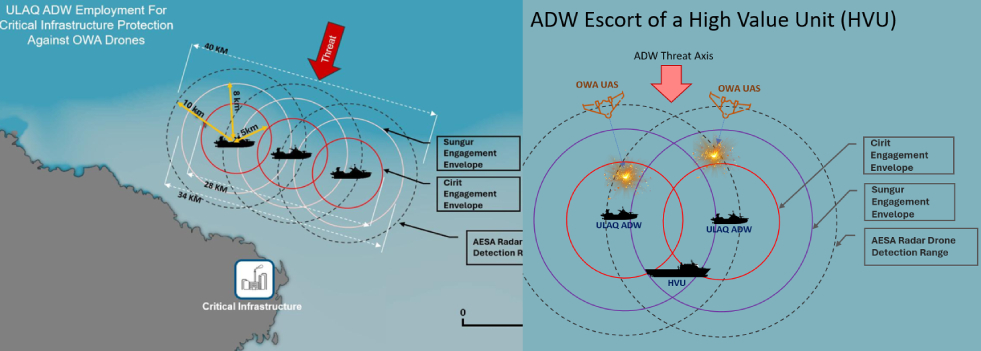
The main idea behind ULAQ ADW can be described as forming a sea-based defensive perimeter with USVs fitted accordingly to shoot down incoming UAVs in a coordinated manner.
As USVs are the platforms, the system can be utilised to defend critical assets on the shoreline or escort high-value ships.
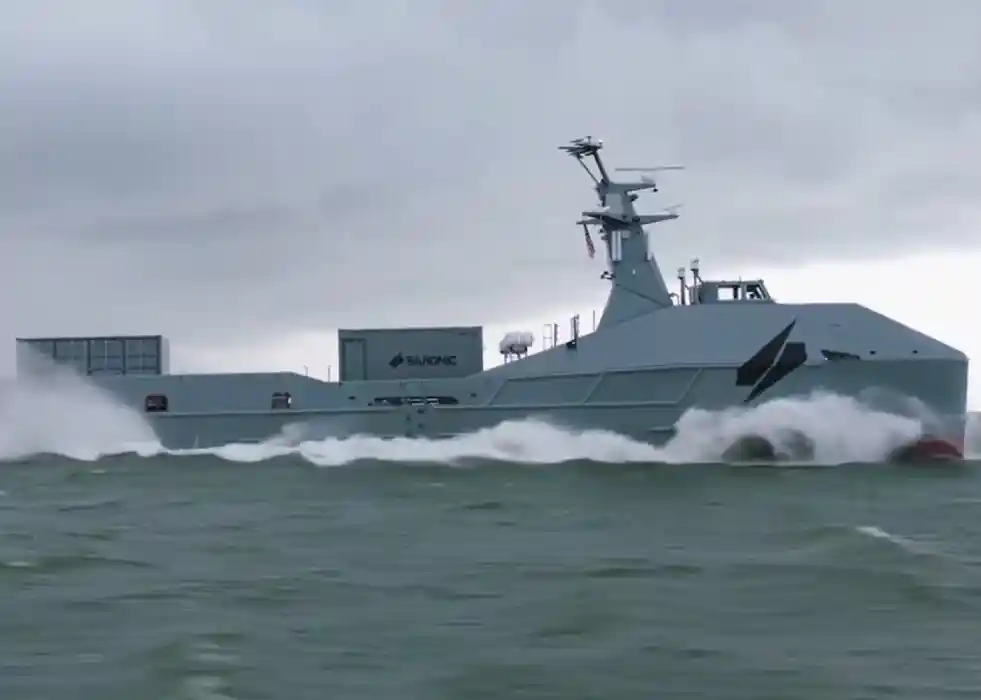
ULAQ 11 ADW and ULAQ 12 ADW Variants
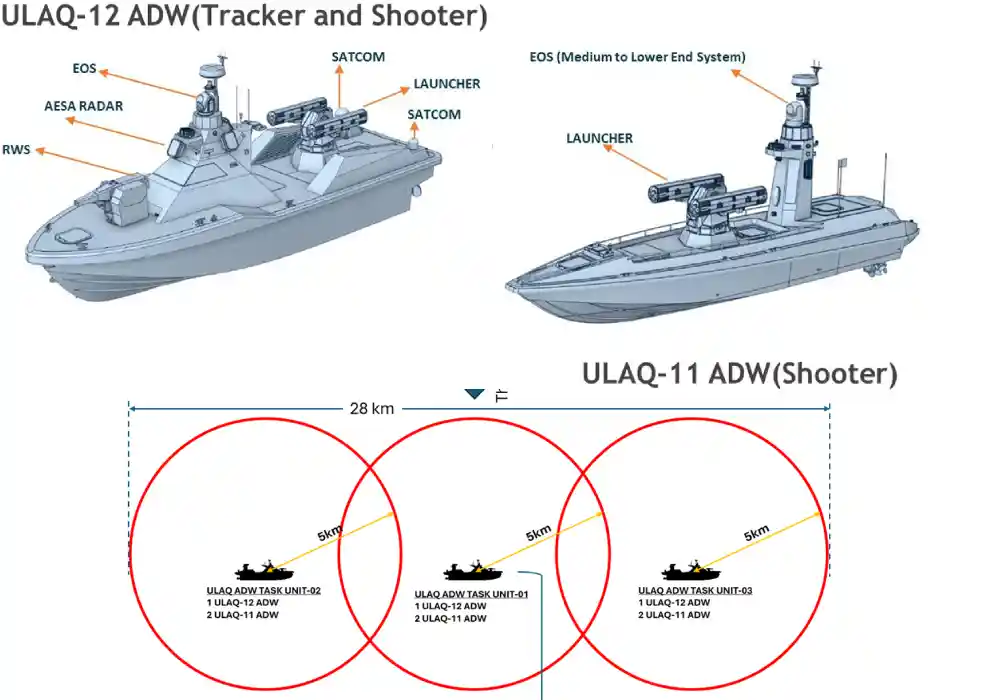
The platforms for the ULAQ ADW system are ULAQ 11 ADW based on ULAQ PSV and ULAQ 12 ADW using the newer two-slot ULAQ 12 chassis. Both variants are to carry a turreted launcher for four to eight CİRİT C-UAS and/or SUNGUR missiles.
ULAQ 11 ADW is the “shooter” in a simple layout with a medium-grade EO/IR; ULAQ 12 is the “sensor” fitted with compact AESA radars and an EO/IR system of higher end as well as an RCW for point blank engagement.
Armament
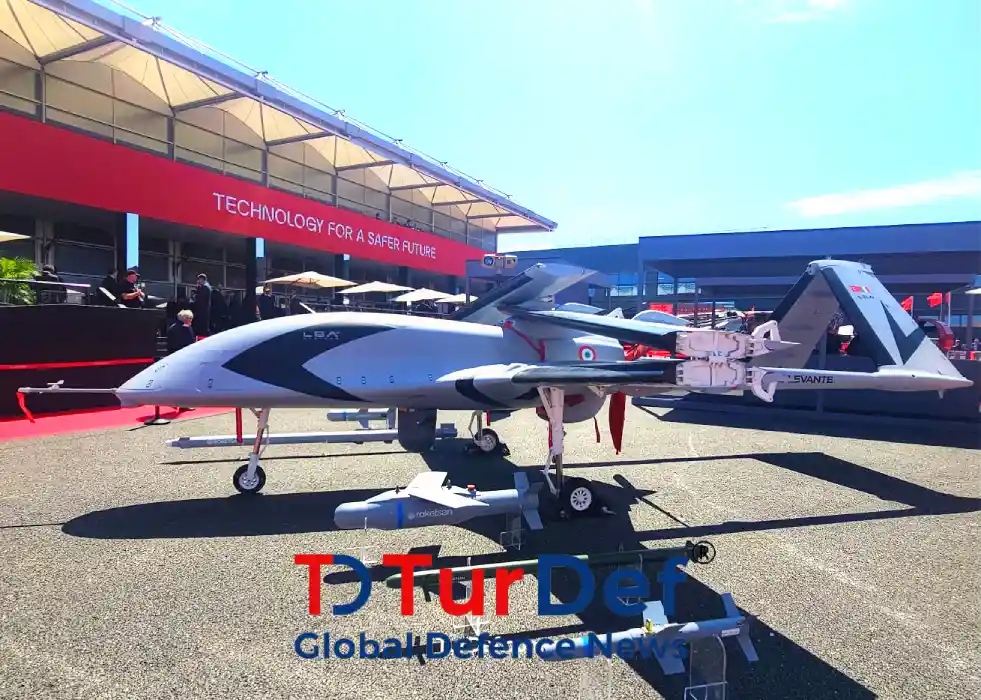
CİRİT C-UAS, recently shown at SAHA EXPO 2026, is an adaptation of the CİRİT laser-guided missile with reworked flight control and an RF proximity fuse, with a range of five kilometres to provide a cost-effective alternative to capable but costly air defence missiles.
SUNGUR is a short-range air defence missile with an IIR seeker and semi-armour-piercing warhead with a range of eight kilometres. The missile is in service with the Turkish Armed Forces in man-portable and vehicle-mounted configurations.
It can be said that the armament consists of two missile types to have a balance of cost-effective and high-performance engagement, as kamikaze UAVs come in many forms, like the slow but cheap propeller-powered types and the faster ones using turbojet engines.
Flexible Structure
ULAQ ADW is proposed with three operating layouts: as a single unit (One ULAQ 12 ADW), a task unit (One ULAQ 12 ADW + Two ULAQ 11 ADWs), and finally the multi-unit.
Özyurt discusses that while a single unit or a task unit can reliably defend against small salvos, larger salvos from multiple vectors and with long duration require multiple task units with proper coordination and integration with the larger air defence structure on the mainland. For this reason, the ULAQ ADW concept can be taken as an operationally scalable system rather than just a line of air defence USVs.
Author: Kaan Azman
Editor: Özgür Ekşi