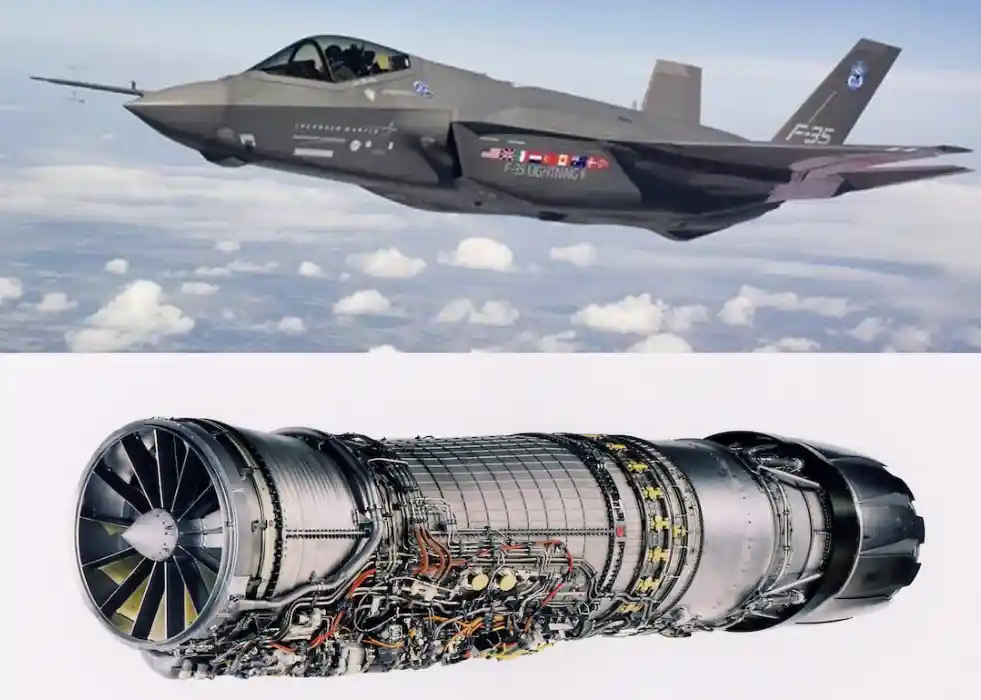
U.S. President Donald Trump announced the development of a twin-engine derivative of the F-35 JSF, titled F-55, during his speech in Qatar’s capital, Doha.
Trump stated that F-55 would be a substantial upgrade to the F-35’s design with two engines, in addition to the usual upgrades on the F-35. Trump gave his reasoning for F-55 as the reliability issue of single-engine fighters in the event of an engine failure, despite the performance of the F135 turbofan engine.
He also added that F-22 would be upgraded as well with “modern technology”, which likely means more interoperability, more capable weaponry, and new avionics. It is known that the USAF has been planning for a modernisation of its F-22 fleet for the past few years.

F-55: Why and How?
While Lockheed Martin could develop the F-35 as a twin-engine fighter from the beginning, it insisted that one engine would be enough and engine failure should not be a subject of concern. However, nothing in the world is immune to malfunction.
In fact, one might understand why the U.S. Navy is continuing its interest in acquiring more F/A-18E/F Super Hornet Block III fighters and adding new equipment such as the AIM-174B long-range BVRAAM.
While Trump said a twin-engine F-35, it does not necessarily mean F-55 will have two F135 engines putting out 43000 lb of thrust each. This is due to F-35’s geometrical properties, which would make a twin-engine derivative beyond the point of a design upgrade, but a whole new design that is significantly larger, invalidating an upgraded F-22.
Considering Trump’s underlining of solving the reliability problems, it is likely F-55 will be a solution that requires the least amount of design changes. To be clearer, F-55 might not diverge from F-35 in terms of overall size and weight to significant levels.
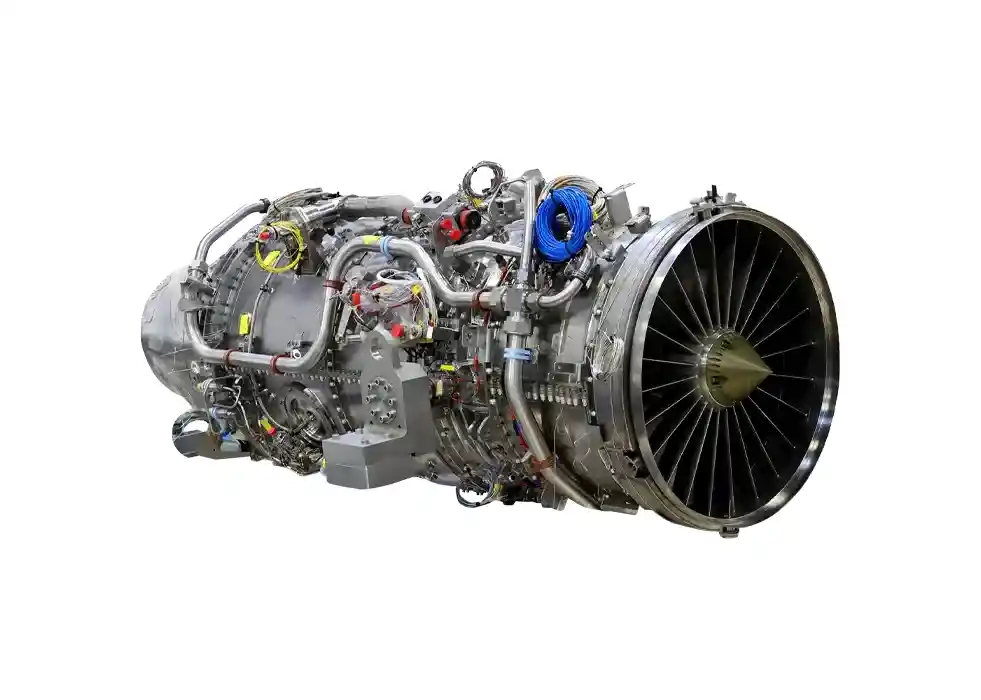
This might be achieved through F414 EPE, the proposed variant of the widely used F414 turbofan engine, putting out 26000 lb of thrust each (Resulting in a total of 52000 lb, more than F135 individually), with considerably less diameter than the F135 at 35 inches (F135’s diameter reaches 46 inches). The weight of two engines would be a disadvantage when it comes to MTOW but total thrust would be an answer to F-35s existing accelerations disadvantages. Once it flies at subsonic speed, F-35 needs more time to reach to supersonic speeds in comparison to similar weight/trust ratio aircraft due to its single engine.
Using two engines would bring more than just improved reliability. The first of the other gains would be combat radius, which has become a subject of utmost importance for the USAF and has steered F-47’s design requirements. Secondly, having your thrust divided into two individually less powerful engines can reduce the maximum temperature, which contributes to low observability in the IR band. F135’s turbine inlet temperature reaches as far as 1980 degrees Celsius, which has caused thermal damage over time and necessitated an engine upgrade (fix to be more precise).
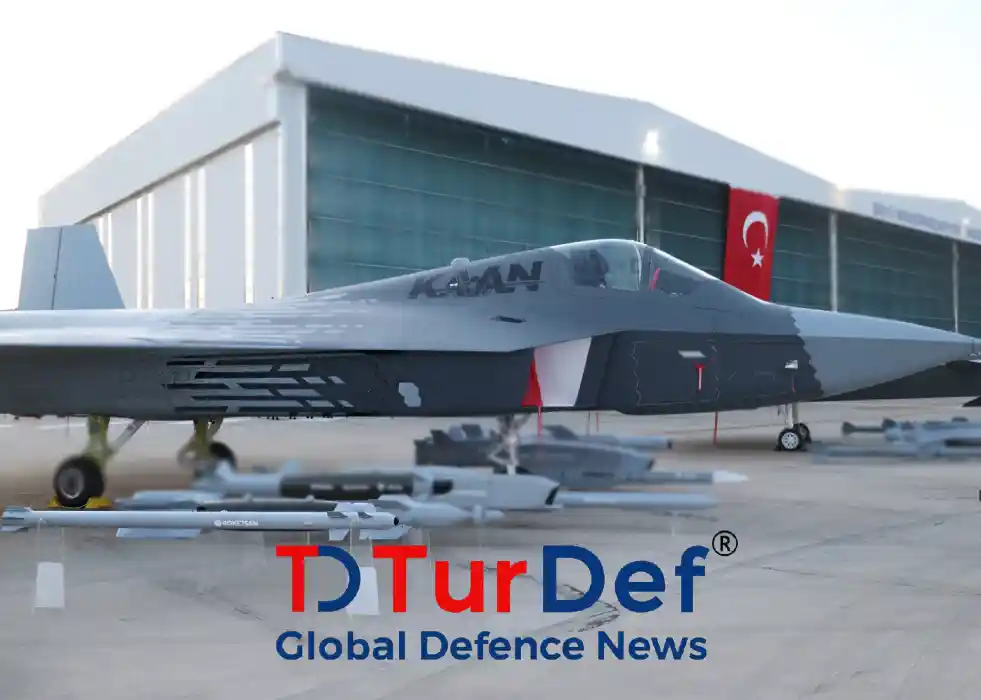
In the end, F-55 can be expected to be something similar to Turkiye’s KAAN and ROK’s future KF-21EX, both of which are envisioned as multi-role fifth-generation fighters that are not as dedicated as F-22 for the air superiority role with more extensive air-to-surface munition and sensor options.