The Istanbul Shipyard Command, the Turkish Navy's largest shipbuilding and maintenance facility, is responsible for the maintenance and repair of over 200 platforms in its inventory and more than a thousand systems installed on these vessels. The Design Project Office (DPO) is at the heart of the National Warship Construction Programme MilGem, the TF-2000 Air Defence Destroyer and the National Aircraft Carrier (MUGEM). Guided by the motto “He who rules the seas rules the world”, the DPO is shaping the future of the Turkish Naval Forces.
Design Project Office: Where the Indigenous Warships Develops
The engineering and construction studies, guided within a diverse array of disciplines, are pivotal to ensuring the long-term maritime operational superiority of the Turkish Naval Forces. The institution, which commenced operations in 2004 under the appellation MILGEM Project Office with the objective of meeting the navy's warship requirements through the utilisation of domestic resources, continues to operate under the designation Design Project Office. DPO's possession of significant knowledge and experience gained from the Ada Class Corvette programme has resulted in the acquisition of comprehensive combat element design capabilities.
The Office houses a cadre of engineer officers meticulously selected by the Turkish Naval Forces from diverse branches and who have undergone rigorous training in both domestic and international programmes. It also comprises petty officers who have accumulated extensive years of service on ships, alongside civilian engineers and draughtsmen. The ship's steel structure alone is not being worked on using known methods and conventional techniques here. The Command, a veritable hub of naval systems engineering, employs personnel specialised in numerous fields, including construction, propulsion systems, electrical and electronic systems, weapon systems, survivability, shock, acoustics, RF, and electromagnetics. The scope of their operations encompasses the management of numerous processes, including the design, development and optimisation of almost all vital components of a ship, such as combat systems, navigation equipment, fire control structure and living quarters etcetera.
Turkiye's 20th-century aspiration to construct an entirely Turkish-engineered and Turkish-built major combatants is the present-day task of the Design Project Office and survivability is the first-in-line priority in all their efforts. The primary objective of a vessel is to execute the designated task in its entirety. In today's military environment, which is marked by asymmetry, military systems face a wide range of enemies with different capacities and goals. The most important thing for a ship to do is to carry out its mission without any problems. But the growing number of dangers is making this task more and more difficult. Because of this, the Design Project Office puts a lot of focus on survival and sustainment.
It is imperative to emphasise that the platform's integrity and her capacity to reach the nearest port in the event of a potential impact or damage are placed under them. Ensuring that a vessel, which becomes mission-killed in combat, still meets the minimum vital requirements of her propulsion systems and transports personnel to the closest port, despite all the adversities encountered, entails the synchronisation of hundreds of variables in an extremely complex manner, requiring the entire system to operate in harmony within the specified parameters. The Office also aims to expand this capability, which can be regarded as its specialised field, internationally.
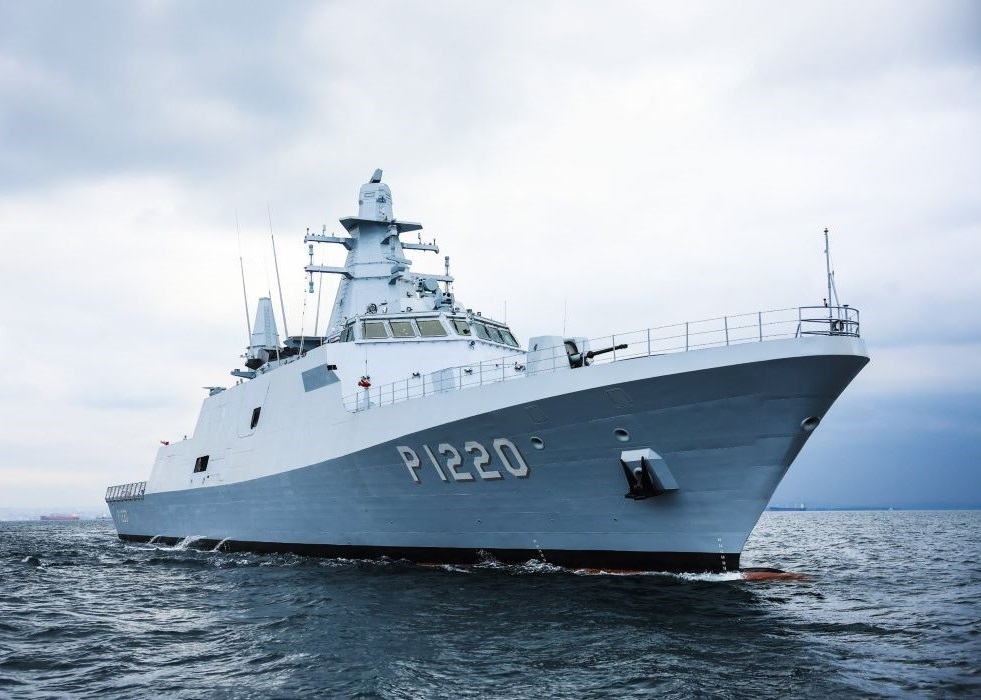
The Design Project Office is also undertaking activities to go beyond being merely a naval unit that designs ships. Two most significant elements contributing to the potency of a force are undoubtedly memory and continuity. This necessitates training junior staff and initiating educational programmes to cultivate the future workforce, encompassing the transmission of knowledge and expertise. Given that more than 30 Turkish Navy warships and support vessels are currently under construction, a pressing need exists to meet the demand for engineers with a domestic solution swiftly. The Turkish Navy and DPO have taken a highly visionary step by establishing the Department of Total Ship Systems Engineering, which will train tomorrow's personnel in line with the ‘National Ship’ aim. The provision of postgraduate programmes is to be facilitated in collaboration with the Council of Higher Education. The two-year programme is designed to provide students with a comprehensive education across a range of disciplines, including concept and military ship design training. In addition, the programme incorporates survivability, electronic warfare, ship electrical and electronic systems, damage control, combat systems, systems engineering and ship design training. It is aimed at equipping students with the skills and knowledge necessary to become architects of the future Turkish Navy. Previously, the Turkish Navy had relied on deploying personnel abroad to address training requirements of a similar nature. The new programme will see a significant retention of resources within the country, with education being tailored to Turkiye's specific needs. This will provide the flexibility to address future requirements swiftly and effectively. The training programme is to be expanded to include a course on survivability, which is of paramount importance for the DPO and is not currently offered in overseas programmes. This initiative is designed to lay the foundations for the centre to become a leading institution on a global scale and to present a visionary approach that will have a significant impact.
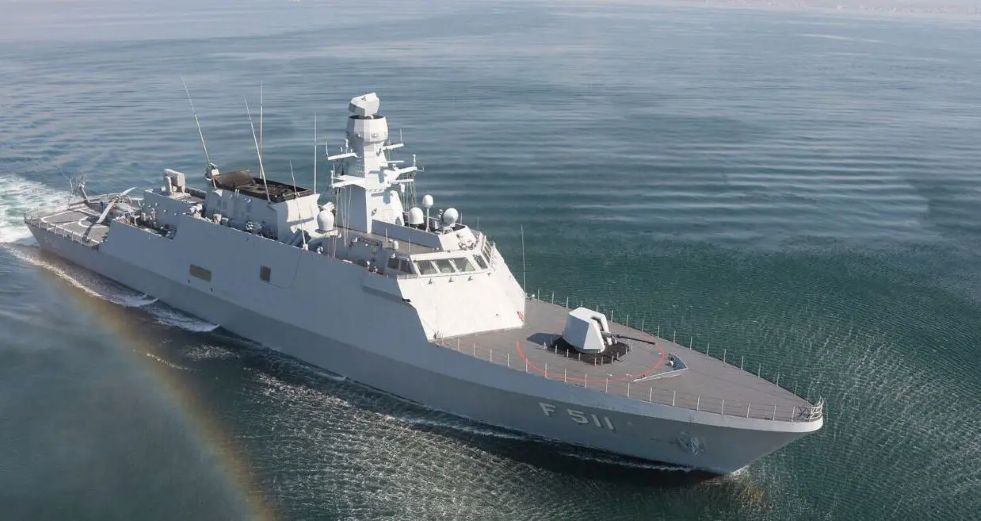
(First MILGEM Ship Ada Class Corvette TCG Heybeliada 511)
Another significant capability of the Design Project Office pertains to engine capsule design. The true aptitude of a structure that has achieved a high level of capability in this field is evidenced during anti-submarine warfare. It is crucial to recognise the pivotal role of the factor that directly affects the vessel's acoustic signature. Noise and vibration from the propulsion system are directly correlated with the detectability coefficient. Consequently, the distance at which the vehicle will be detected by sonar or the extent to which it will constitute a target for underwater weapons is directly dependent on the parameters under consideration. In this instance, the measures to be taken vary depending on the wavelength of the sound and vibration. Each factor in the system is evaluated individually, and solutions involving reflection with a soft wall, absorption with a rigid wall, or hybrid solutions, depending on the environmental conditions, are developed based on highly precise analyses and calculations.
The DPO has also carefully considered acoustic requirements for the Ada-Class Corvettes, the inaugural platforms of the MilGem Programme. When designing ships, a very important choice has to be made between shock resistance and vibration isolation. Through thorough study and testing, the most efficient compromise between these two criteria has been determined and executed, guaranteeing that neither durability nor strength is sacrificed.
Another notable aspect is the maintenance of optimisation at a high level through joint studies conducted separately and at intersecting points in the fields of shock, electromagnetic resistance and underwater acoustics. It is important to note that the vessels constructed under the MilGem Programme, particularly the Ada-Class Corvettes, possess the lowest acoustic signature in the inventory of the Turkish Naval Forces Command. This means that they are the quietest platforms available. These characteristics position the Turkish Navy's national corvettes among the most advanced vessels globally. Non-state groups now have access to anti-ship missiles that were only available to some conventional military forces before. An anti-ship missile hit the Saudi Arabian Navy Madinah Class frigate Al Madinah (702). The missile was fired by terrorists in Yemen. Even though Riyadh's official statement about the event said that three boats carrying explosives were involved, the evidence points to an irregular group being responsible for the attack, which severely damaged and disabled the ship, forcing it to be taken out of operation. The French Navy's remark is another example that shows how big the difference is. FREMM-Class frigates in the Gulf were attacked with rockets, guided missiles, and unmanned aerial vehicles. The situation got so bad that Aster 15 missiles had to be fired to stop the danger. At this point, the threats have become clear on the platform.
Consequently, both the Turkish Navy and foreign navies are demanding low-cost ship solutions that have been proven. Design Project Office and the Turkish Naval Forces have demonstrated their value, with solutions such as the Ada-Class Corvettes, the Istif-Class Frigates and the TF-2000 emerging as key contributors.
Given that the economic lifespan of a ship is typically 30 to 40 years, it can be considered a reasonable demand for a ship to be expected to withstand at least two generations of perceived threats. In the contemporary era, characterised by the rapid evolution of threat perceptions, it is accurate to assert that the range of hostile armaments and elements encountered by a platform is likely to undergo significant changes and diversification on at least several occasions within the initial year of her operation.
At this point, customers need the design to be able to change to meet both current and future demands. This means that things like modularity, design flexibility, and the capacity to adapt to modernity must be taken into account. When looking at how volatile perceived threats are, one could argue that even if a warship were launched today with the best technology and the widest view, it might still need upgrades in the meantime before it reaches its mid-life upgrade point.
The Design Project Office has prioritised this perception in the Ada, İstif and TF-2000 Class ships, adopting an approach that could also be described as a ‘vision of vision’. Structures designed using modular blocks can be quickly equipped with various electronic hardware, combat management systems, radars, weapons, and propulsion infrastructure to meet user requirements. From this perspective, the MilGem vessels guarantee the future of the Turkish Naval Forces and represent significant potential in the export market thanks to their highly competitive designs. The fact that these vessels have been serving in the Turkish Naval Forces almost flawlessly and successfully for many years is a good reference point for foreign users. In this view, MilGem can be considered as a superior option compared to the earlier German MEKOs.
Author: Özgür Ekşi