By Özgür Ekşi
Spanish news outlet “La Razón” has recently unveiled how Turkiye would acquire Eurofighter Typhoon aircraft. The article reads, “ Turkiye intends to buy 40 Eurofighter Typhoon aircraft in two stages: an initial batch of 20 from the United Kingdom, followed by 20 freshly manufactured planes. The first deliveries are scheduled for 2026, with full operating capabilities projected by 2030.”
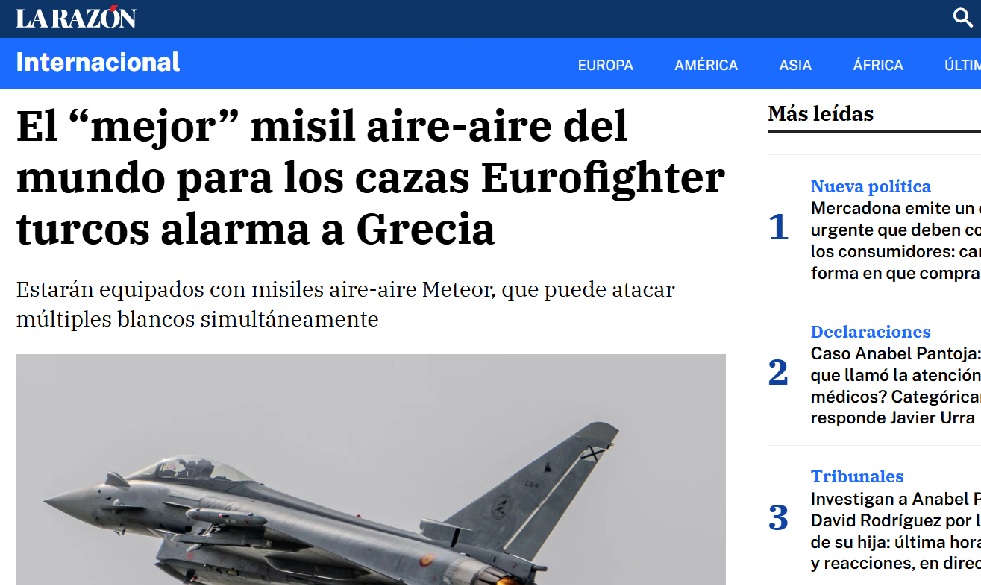
However, the report suggests that the 40 aircraft will consist of Tranche 1 and Tranche 4 configurations. This contradicts Turkiye’s stated expectations, which focus on acquiring Tranche 4 and potentially Tranche 5 aircraft.
The most striking detail in the report is the proposal to transfer 20 second-hand aircraft from the Royal Air Force (RAF) inventory to the Turkish Air Force. This implies the inclusion of Eurofighter Tranche 1 jets, which conflicts with several previously known statements.
Turkish Minister of National Defence Yaşar Güler has explicitly stated that the aircraft to be procured will be the latest models. This statement appears to rule out the acquisition of Tranche 1 aircraft. Furthermore, there has been no mention of any planned modernisation for these jets, despite previous discussions involving Turkish Aerospace and Turkish Defence Ministry's Eskişehir 1st Air Maintenance Factory Directorate about the potential for such upgrades.
In this scenario, TurDef questions an alternative approach that does not constitute a direct purchase but still allows Tranche 1 aircraft to enter the inventory: leasing.
If Turkiye were to lease 20 retired Tranche 1 aircraft from the RAF, these jets could serve as an interim solution until the expected arrival of Tranche 4 aircraft in 2027. Turkiye would benefit from the air-to-air combat capabilities of these aircraft for a limited period before returning them to their original owner. Meanwhile, if Tranche 5 models are eventually introduced into the inventory, Minister Güler’s statement would remain technically accurate, and the Turkish Air Force would successfully bridge a critical capability gap with a cost-effective "gap filler" solution.