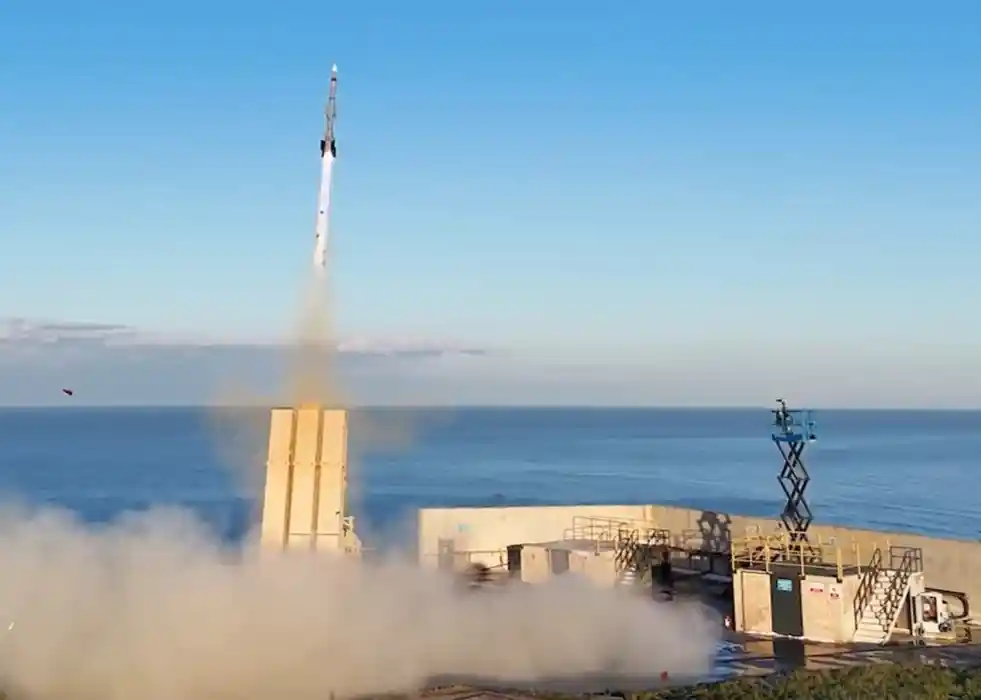
The upcoming spaceport in Somalia is the next step following the missions of the first Turkish astronauts and the launches of various start-up satellites.
Turkiye’s cooperation with Somalia for a spaceport has been an interesting point for the Economist. Turkiye’s new launch site, being built in an African country with strong economic and political cooperation, is an important step toward greater heights, which includes further increased presence in space and lunar landings.
Turkiye’s preference for Somalia as the location has a political and technical background.
When other examples of space-faring countries setting up their spaceports in remote locations are inspected like France uses the French Guiana in Latin America. USA uses Cape Kennedy Space Center.
Russia is the exception, with the Baikonur Space Centre in Kazakhstan. Baykonur lies about 45° north latitude, which offers the chance to vary satellite orbits. Although launching from a site nearer the equator—such as Kourou, French Guiana—benefits equatorial orbits, Baykonur is appropriate for polar orbits and other inclined orbits.
The Earth’s geoid shape gives the equator’s location the highest velocity, making placing payloads into the orbit easier.
In addition, geographically speaking, Somalia has a coastline that goes to the Indian Ocean. Space launches are usually made in an easterly direction because the Earth’s rotation gives extra speed in that direction. This heavily negates the risk of launch debris (Decoupled stages, etc.) hitting civilian areas to zero. Having a launch site bordering the ocean would also allow Turkiye to perform tests for long-range missiles without adjusting the trajectory tightly.
Finally, Somalia’s arid climate is an advantage for space launch vehicles. Humidity is undesirable for safety reasons, as it can corrode structures.
Establishing a spaceport is among the major goals of the Turkish space sector. Establishing a space industry ecosystem is also progressing, with new firms such as Plan-S and Baykar’s Fergani launching satellites recently by SpaceX. The latter also plans to set up a constellation of GNSS satellites to provide self-sufficiency in global positioning.
Turkiye’s New Spaceport: Why Somalia?