KIZILELMA’s PT-3 and PT-5 prototypes demonstrated the autonomous formation flight capability at a very close proximity, which is highly important for teaming.
Two of KIZILELMA’s prototypes in updated configuration, PT-3 and PT-5, performed autonomous formation flight at a proximity of 15 to 20 m through the use of the Azra National Data Link system, with which the two unmanned fighters can communicate.
Turkish Secretary of Defence Industries Haluk Görgün stated that the formation flight test simulated an air patrol mission.
KIZILELMA has entered a phase of advanced testing in 2025 with the beginning of weapons integration, tests with sensors like MURAD 100-A AESA radar and TOYGUN 100 EOTS and the formation flight test is among the more advanced tests compared to the pre-2025 tests, which mostly involved flight performance and systems validation.
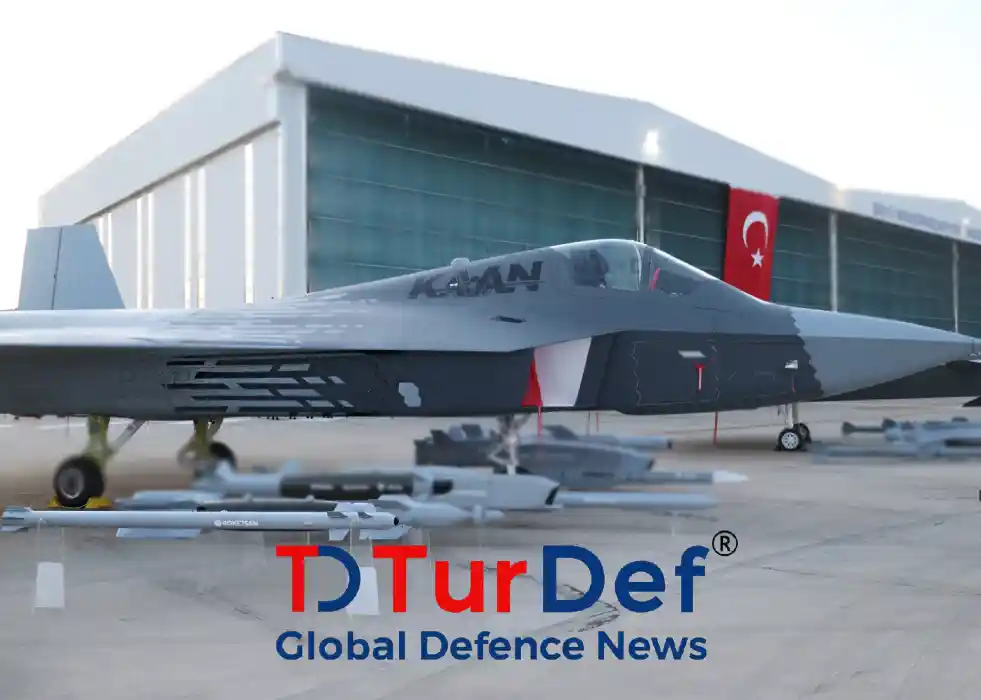
The formation flight is an important capability for the KIZILELMA unmanned fighter, which is projected to operate in coordination with manned fighters or all-unmanned groups. The next stages in this regard can be expected to involve different shapes of formations with more than two KIZILELMA unmanned fighters. TUSAŞ’s OKU MUM-T system for the KAAN fighter jet will include KIZILELMA alongside the deep strike-oriented ANKA-III stealth UCAV and supportive ŞİMŞEK UAV.
The teaming capabilities of KIZILELMA are also important beyond use by Turkiye, as Italy is considering the unmanned fighter as a loyal wingman for the GCAP programme as well.