Britain has highlighted Türkiye’s C-130J programme as part of its record defence export performance, presenting a £550m figure that blends contract value with wider industrial impact.
The UK Government has included Türkiye’s C-130J Hercules programme among the flagship examples underpinning its claim of record British defence exports. The package related to Türkiye is said to be worth £550 million to UK industry in official messages.
It is also used by the government to illustrate how defence exports are presented as supporting jobs, skills and industrial continuity.
The government says that the £550 million amount covers work on 12 C-130J aircraft and is portrayed as supporting around 1,400 skilled jobs, primarily through activity carried out by Marshall Aerospace in Cambridge. The initiative is framed as a concrete example of how defence cooperation with Türkiye is said to support the domestic economy.
However, the way the figure is presented leaves room for interpretation. The headline number does not correspond to a simple aircraft acquisition cost. Instead, it aggregates several elements into a single total, including modernisation, refurbishment, maintenance and long-term sustainment work. As a result, the boundary between the core contractual value and the broader industrial activity expected over time is not clearly delineated.
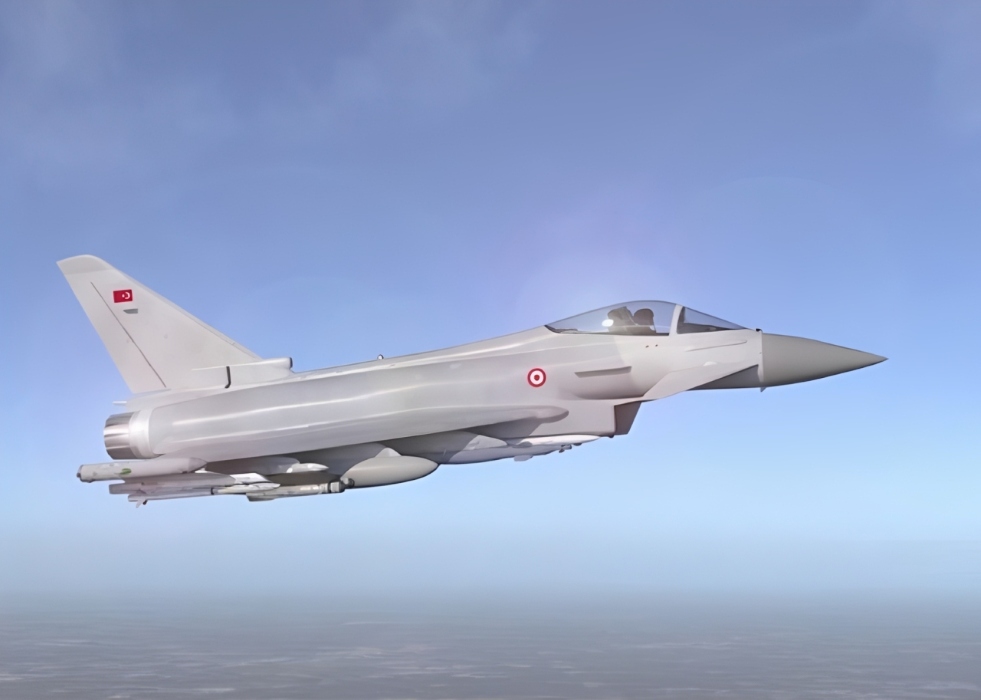
This presentation mirrors the approach previously used in communicating fighter aircraft exports to Türkiye. In the Eurofighter Typhoon case, the government emphasised an £8 billion “boost” to the UK economy, while BAE Systems disclosed an underlying contract value of approximately £5.4 billion. The higher figure reflected the inclusion of projected supply-chain activity and through-life effects rather than money paid directly under the contract.
Such framing also serves a wider domestic narrative. At a time when continuity at key aerospace and defence facilities has become politically sensitive, presenting export programmes in terms of long-term economic contribution rather than narrow contract value allows governments to underline the role of defence projects in sustaining industrial capacity, skills and workforce stability at strategically important sites such as Warton.
In that light, the C-130J figure may follow a similar logic. While the £550 million headline is presented as the value of the programme, the blending of contractual cost with modernisation work and wider supply-chain effects risks creating a deliberately blurred picture. As with the Typhoon programme, the political narrative amplifies perceived value beyond the core financial reality, raising the possibility that a comparable degree of conscious ambiguity has been introduced into the C-130J pricing story as well.
Author: Özgür Ekşi