The US Air Force marked a new milestone on 1 April as the last F-16 Fighting Falcon to be modified under its Viper Experimentation and Next-gen Operations Model (VENOM) programme arrived at Eglin Air Force Base, Florida. The initiative aims to transform legacy F-16s into testbeds for cutting-edge autonomy systems, bridging the gap between crewed and uncrewed fighter operations.
Transforming the F-16 into an Autonomy Testbed
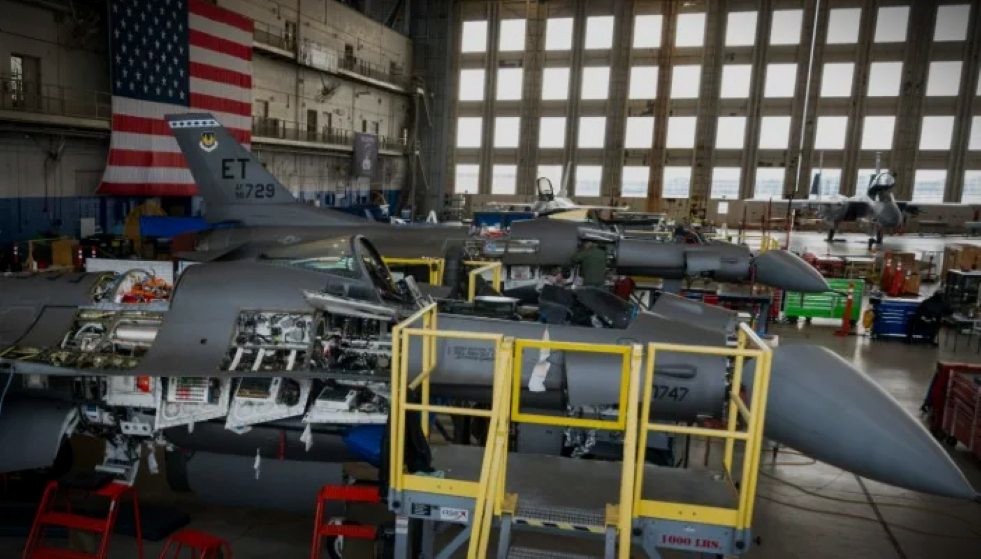
Three F-16s are currently undergoing modifications at Eglin AFB. Engineers are integrating systems such as autothrottle, enhanced flight controls, and onboard instrumentation to support autonomous operation. These upgrades will enable the aircraft to perform flights managed by onboard artificial intelligence, including controlling thrust and flight surfaces without pilot input.
The VENOM programme will provide a test environment for the future development of combat-capable, autonomous behaviours operating in conditions that closely mirror real-world air combat scenarios.
VENOM against the “Q” Conversions
Previously, the US military converted earlier fighter planes—like the F-4 Phantom and F-16s—into Q-variants (e.g., QF-4, QF-16) to use as remotely piloted aerial targets. Primarily for weapons testing and live-fire drills, these planes are run via ground control systems.
On the other hand, VENOM is not a target drone conversion initiative. Rather, it is concentrated on autonomous decision-making, therefore enabling onboard AI systems to fly the plane with little or no outside influence. Although Q-variants are remotely piloted, VENOM aircraft operate with embedded autonomy, capable of assessing mission situations and performing tactical moves independently.
Operational Significance
Part of the US Air Force’s larger drive to include Collaborative Combat Aircraft (CCA) ideas, the VENOM programme enables manned-unmanned teaming ( MUM-T) and improves the survivability and effectiveness of future air combat operations. Before inclusion into sixth-generation platforms like NGAD (Next Generation Air Dominance), the autonomous F-16s are anticipated to be excellent platforms for assessing AI-driven systems.
Author: Özgür Ekşi