Following the uncertainties in the NGAD programme, officials have proposed a new generation of adaptable light fighters.
During his RAeS presentation, U.S. Air Force Chief General David Allvin stated that a paradigm shift from lasting to adaptable should be made for the future. Allvin’s main argument for this change is that lasting platforms are more prone to lose their relevance quickly with a more static state, while something with adaptability as a priority can keep up with the rapidly changing environment. The presentation featured a light fighter design similar to the F-35 but simpler overall.
General Allvin stated that emerging technologies like open systems architecture, modular design, digital engineering, and additive manufacturing would be included to achieve the stated goals. To open these technologies up by their functionality in the ‘adaptive and affordable’ doctrine, open systems architecture and modular design would allow for easier integration work (of munitions, sensors, engines, etc.), while digital engineering and additive manufacturing can shorten the design, production, and testing phases.
Financial challenges and doubts about the NGAD programme’s intended complexity have a high chance of pushing the USAF towards something more affordable, adaptable, and mass-produced.
Despite the F-35’s significant progress in mass production with the 1000th aircraft, expensive maintenance and long integration processes remain prime issues. This isn’t the first time that the idea of a light fighter is trying to be revived in the USAF.
Before the issues with NGAD or flexibility came into focus, the F-20 Tigershark, an F-5 fighter derivative, was presented as what General Allvin presented in his RAeS presentation but ultimately cancelled due to not being a high-performance fighter and the Cold War continuing.
Today, some countries have managed to revive light fighters in a modern fashion, such as Pakistan with the JF-17, Sweden with the Gripen, and ROK with the FA-50. Despite not standing up to full-sized fighters like the F-16 and others, these aircraft can perform most of the duties they perform with their loadout and are considerably cheaper to acquire and maintain.
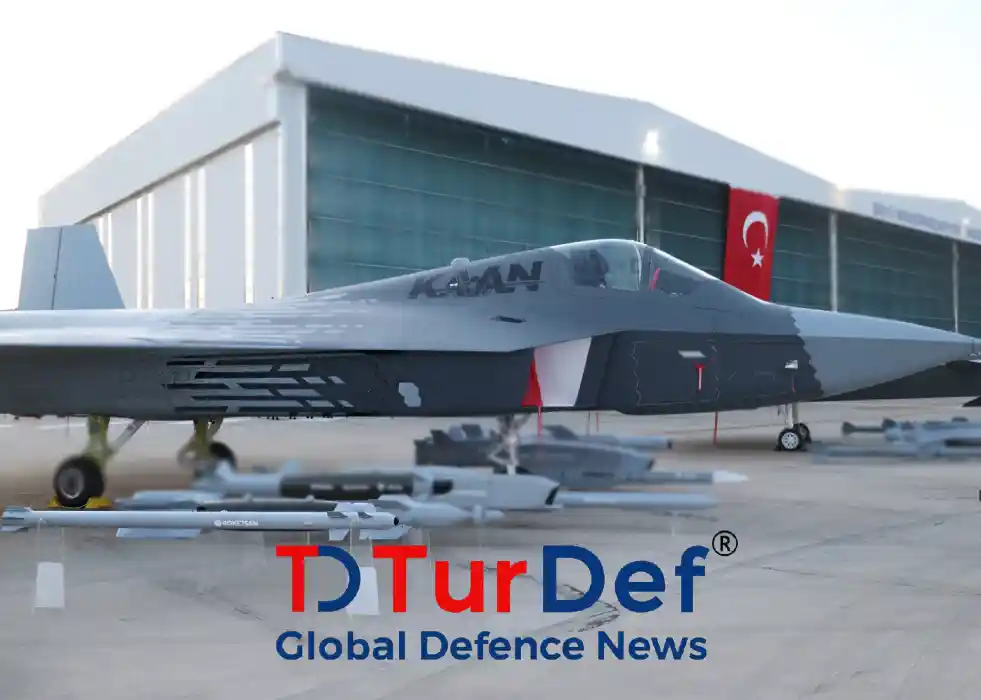
Turkiye is following a similar path with the upcoming light combat aircraft version of its Hürjet trainer and, additionally, the less conventional Kızılelma unmanned fighter with low observability and a wide array of sensors.