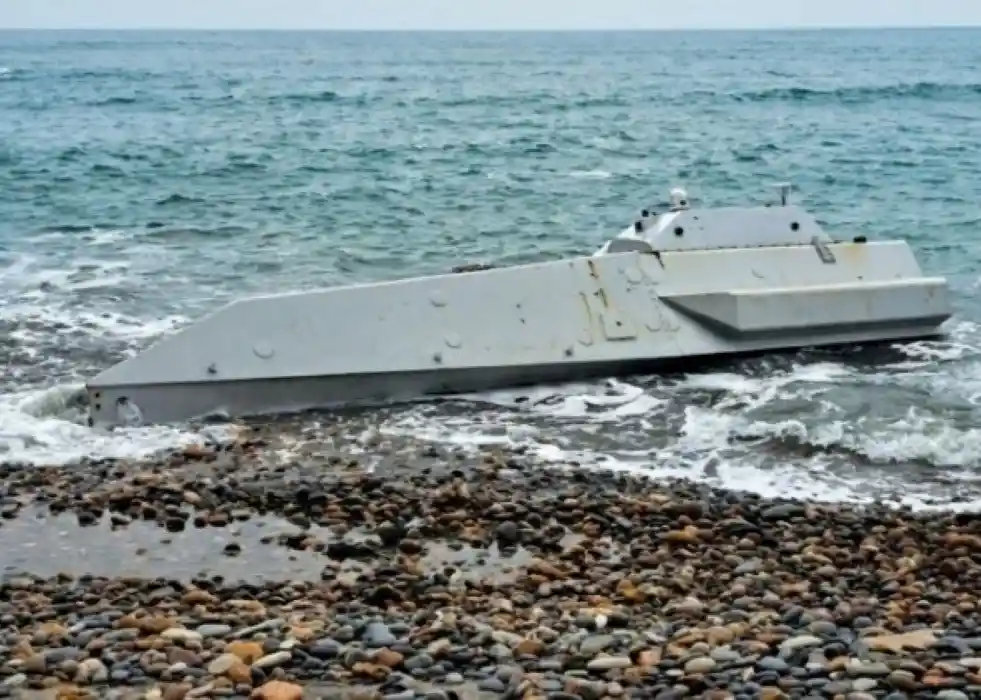
The effects of the war in Ukraine have once again reached Türkiye’s Black Sea coastline after an unmanned surface vessel (USV) identified as the Aegir-W was discovered near Ordu province. The incident adds to a growing list of unmanned systems and sea mines that have drifted into Turkish waters since the start of the conflict in 2022.
According to information obtained from the scene, the vehicle was later taken approximately two nautical miles offshore and destroyed in a controlled detonation by security authorities. The explosion produced a loud blast that was reportedly heard across parts of the coastline, drawing public attention to the unusual discovery.
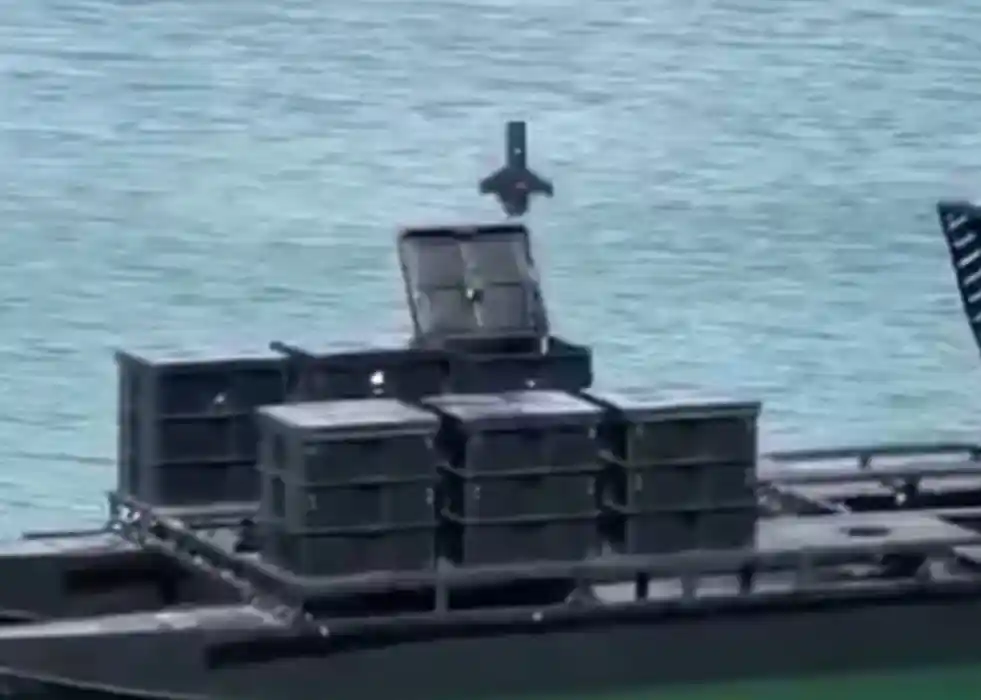
The Aegir-W is an unmanned surface vessel (USV) developed by the US-based Sierra Nevada Corporation (SNC), which is owned by Turkish entrepreneurs. It was discovered by civilians in Ordu province, which is located on Türkiye’s Black Sea coast. Designed for military use, the Aegir-W is capable of carrying out various tasks, including electronic warfare, assault, reconnaissance and surveillance, in challenging environments.
Measuring approximately 10 metres in length, the USV can reach a maximum speed of 25 knots and has an operational range of 500 nautical miles with its diesel propulsion system. Thanks to its lightweight, modular design, the system can carry a payload of up to 300 kilograms, enabling it to be used not only for explosive payloads for attack purposes, but also for resupply and sensor missions.
There is no verified data regarding the official operational deployment of the Aegir-W. However, the Ukraine war has become a major testing ground for unmanned maritime systems supported by Western partners.
In the ongoing conflict, Ukraine is making extensive use of unmanned surface vessels converted from commercial platforms against Russian naval assets. While concepts capable of significant achievements, such as sinking major naval vessels, are being developed, solutions designed specifically for military purposes are also being tested in the field.
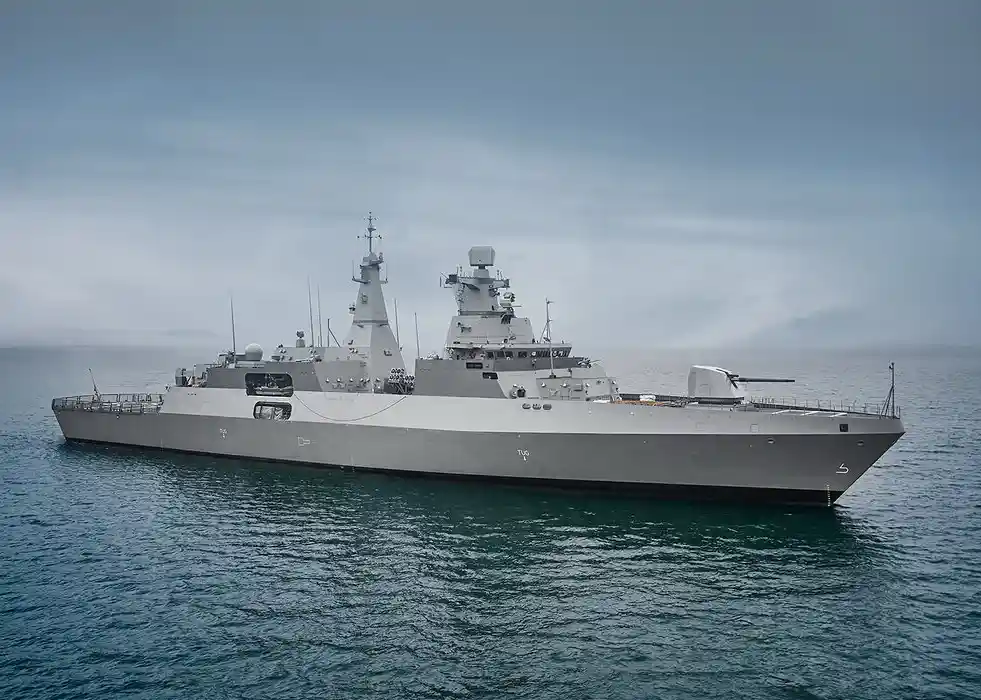
Türkiye, which is modernising its vast naval domain and utilising its operational capabilities to the full capacity, is also carrying out studies on USVs. Currently in a period of rapid advancement regarding unmanned solutions, Ankara has progressed from merely following the concept to actively developing it to a certain extent. The Turkish Navy considers unmanned maritime vehicles to be a viable alternative in line with the ‘Blue Homeland’ concept due to their low costs, rapid production capabilities and adaptability to different missions.
It is worth remembering that unmanned systems such as maritime drones, cruise missiles and electronic warfare equipment are often equipped with anti-tamper mechanisms designed to prevent sensitive technology from falling into foreign hands. These safeguards may include automatic deletion of operational software and sensors that trigger a self-destruct sequence if the platform is opened or tampered with. As a result, attempting field-level reverse engineering can pose significant risks to explosive ordnance disposal teams while offering limited technical gain. For this reason, controlled destruction is a common procedure when such systems are recovered outside controlled laboratory conditions.
Author: Özgür Ekşi