China has officially introduced its new arsenal of hypersonic missiles, most of which are anti-ship missiles, during the Victory Day Parade of 2025.
China has unveiled a wide array of new missiles during this year’s parade, including anti-ship missiles, air defence missiles, and ballistic missiles. However, the hypersonic missiles have been in focus with the unveiling of a diverse range of systems.
CGTN live-streamed the parade, which split the equipment into different groups. The notable hypersonic missiles present in the parade are YJ-17, YJ-19, YJ-20, YJ-21, JL-1, and possibly CJ-1000.
YJ-19
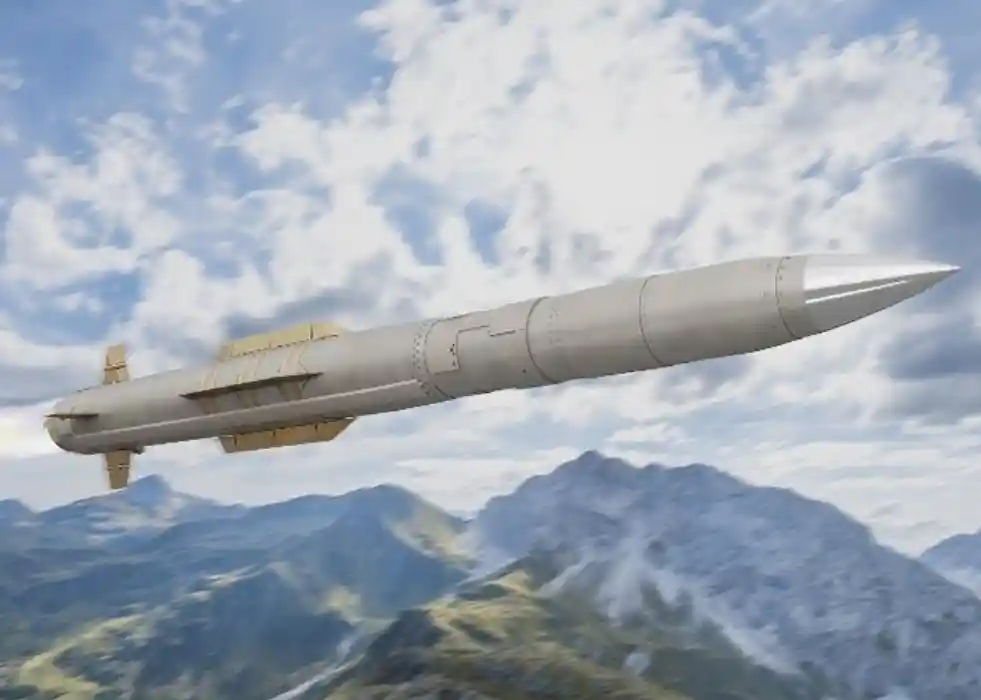
YJ-19 is seen to be a hypersonic anti-ship cruise missile with a large booster and a scramjet. The main missile is conical instead of rectangular in terms of cross-section, with the split air intake located at the middle.
The booster size relative to the missile part suggests that it is intended for warships and land platforms, as larger boosters are required to propel the missiles to sufficient speeds for scramjet activation.

Hypersonic cruise missiles mostly fly at altitudes too high for atmospheric interceptors, but outside the exo-atmospheric ones’ coverage. This, coupled with immense speed and manoeuvring capability, provides minimised risk of interception. This has made cruise missiles into a weapon type that is desired and feared at the same time, a conventional deterrent in short.
YJ-17
Unlike YJ-19, YJ-17 appears to be an anti-ship hypersonic glide weapon. The aerodynamic layout of the HGV is designed to maximise lift and minimise drag at hypersonic speeds. Like YJ-19, the booster is considerably large, which suggests a surface-launched missile.
The similarity of YJ-17’s layout with DF-17 hypersonic glide weapon intended against land targets suggests that it might be the ‘anti-ship version of DF-17’ announced by Chinese officials years ago. However, no information regarding the guidance is available.
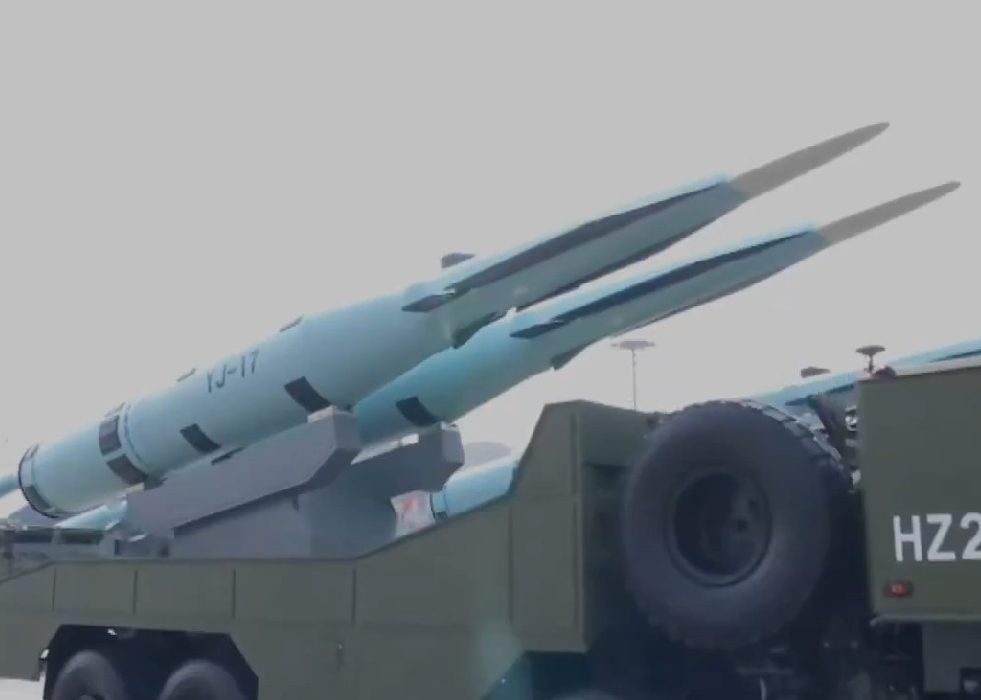
Hypersonic glide vehicles can be placed between hypersonic cruise missiles and ballistic missiles in terms of mechanics. While they can perform manoeuvres mid-flight like cruise missiles, they rely on the boost earlier, which constrains the sharpness or number of manoeuvres due to losses in speed. However, they are cheaper than hypersonic cruise missiles as they perform unpowered flight.
YJ-20
YJ-20 was previously seen launched from a Chinese Type 055 destroyer’s VLS. The missile is a two-stage anti-ship ballistic missile, which can be taken as a cheaper option compared to YJ-19 and YJ-17.
CJ-1000
Believed to be an upgrade or follow-up to the extremely large and still mysterious CJ-100 supersonic cruise missile, CJ-1000 might be a hypersonic cruise missile with a longer range compared to YJ-19 or simply an upgrade of CJ-100.
JL-1
JL-1 appears to be the mysterious air-launched ballistic missile that was spotted under a H-6 bomber’s fuselage years ago. The missile was officially unveiled alongside nuclear-armed missiles, which means it is meant to launch surprise attacks on distant targets by exploiting the mobility of an aircraft.
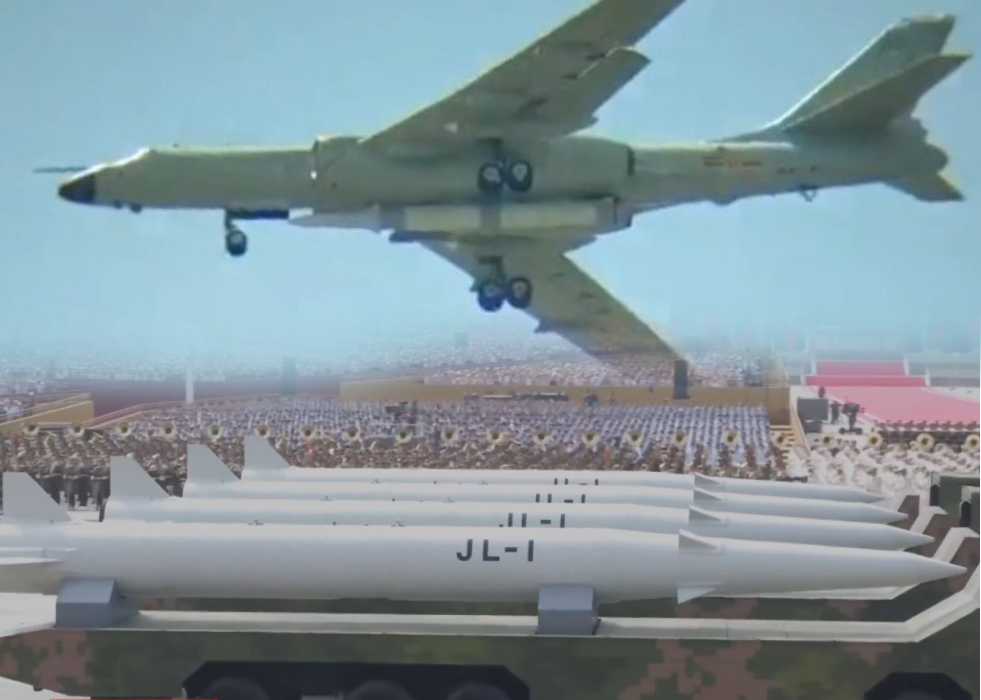
The layout suggests that the missile is using a manoeuvrable re-entry vehicle (MaRV) to aid with the penetration of air defence systems at the terminal stage, like DF-21D MRBM and DF-26D IRBM.
YJ-21
Stated to be a hypersonic missile, it is inferred that YJ-21 is an anti-ship ballistic missile with an unidentified radar seeker, which might be an active or passive one.
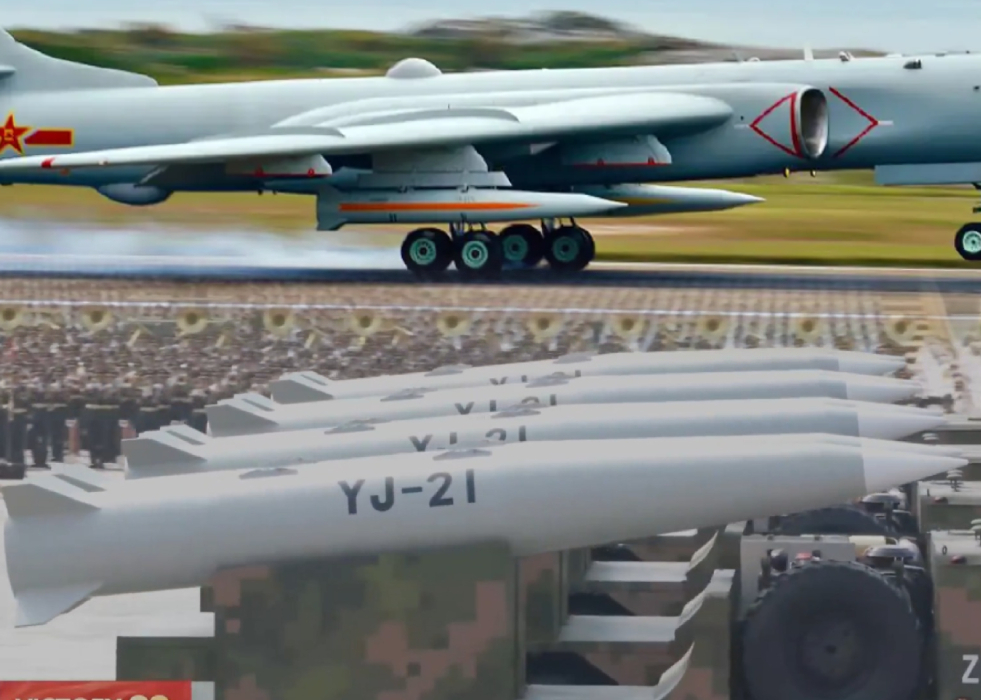
Judging by the single-stage layout, notion of hypersonic speed, and more importantly the resemblance to the unidentified ballistic missile under a H-6 bomber's wing spotted years prior; it is highly likely that YJ-21 is the second air-launched ballistic missile option alongside the nuclear-armed JL-1.
Author: Kaan Azman
Editor:Özgür Ekşi