The mysterious object shot down by a US Air Force F-16 over Lake Huron in February 2023 may have been an amateur research balloon, according to assessments that emerged after the Pentagon released new footage of the incident.
The episode occurred during one of the most intense airspace security alerts in recent US history, only days after an F-22 Raptor destroyed a Chinese high-altitude surveillance balloon that had crossed the continental United States.
On 12 February 2023, an F-16 engaged and destroyed an unidentified object over Lake Huron using what was reported to be an AIM-9X Sidewinder missile. At the time, US authorities could not immediately identify the object and classified it as an unidentified aerial object.
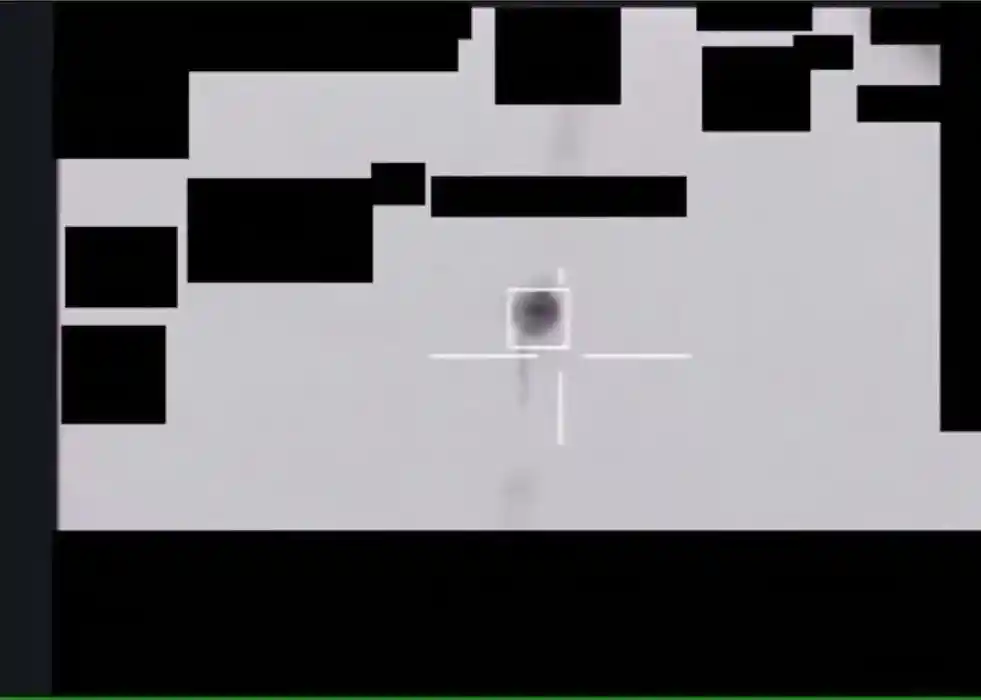
Recently released footage included in a new package of material from the Pentagon's All-domain Anomaly Resolution Office (AARO) shows a dark object with a string-like structure hanging beneath it moments before it was destroyed.
China balloon triggered a wider response
The Lake Huron interception was part of a chain of events set in motion by the Chinese surveillance balloon crisis earlier that month.
In February 2023, a large Chinese balloon crossed North America before being shot down by an F-22 Raptor off the US East Coast. US officials later stated that the platform carried surveillance equipment and had passed near sensitive military sites. The Chinese balloon became the first confirmed air-to-air kill credited to the F-22 Raptor since the aircraft entered service.
The incident generated political controversy and raised questions about US airspace awareness. In response, NORAD reportedly adjusted radar filters and began paying closer attention to smaller, slower and higher-altitude objects that had previously attracted less scrutiny.
Within days, additional unidentified objects were detected over Alaska, Canada's Yukon territory and Lake Huron. Several were subsequently engaged by US and Canadian forces.
The Chinese balloon therefore did more than trigger a single interception. It changed how North American air defence networks viewed and tracked airborne objects.
Was a research balloon caught in the net?
Former AARO Director Sean Kirkpatrick later suggested that the Lake Huron object may have been an amateur research balloon associated with a Scout-related project or hobby balloon programme.
Although no definitive public identification has been officially confirmed, independent balloon tracking enthusiasts noted that the disappearance of a small research balloon operated by the Northern Illinois Bottlecap Balloon Brigade coincided with the timing and location of the interception.
If correct, the incident would represent one of the most unusual air-to-air engagements in recent history: a frontline fighter armed with a modern air-to-air missile destroying a civilian research platform during a period of heightened national security concern.
It would also illustrate how quickly threat perceptions can shift when military organisations are confronted with an unexpected security challenge. A small civilian project may ultimately have attracted the attention of NORAD, triggered a fighter interception and been treated as a potential security threat.
Why balloons matter again
The broader significance of the episode extends beyond a single interception.
The Chinese surveillance balloon demonstrated that relatively inexpensive airborne platforms can support intelligence-gathering missions and reach strategically sensitive areas. More recently, North Korea's balloon campaigns against South Korea have shown how even simple airborne objects can trigger military responses, disrupt normal activities and generate political effects disproportionate to their cost.
For defence planners, the lesson is increasingly clear: low-cost airborne systems can no longer be dismissed as harmless curiosities.
Whether the Lake Huron object was ultimately a research balloon or something else, the incident highlights how the Chinese balloon crisis reshaped threat perceptions across North American air defence networks. In that environment, even a small unidentified object was enough to attract the attention of NORAD, trigger a fighter interception and ultimately be destroyed by a modern air-to-air missile.
Author: Özgür Ekşi