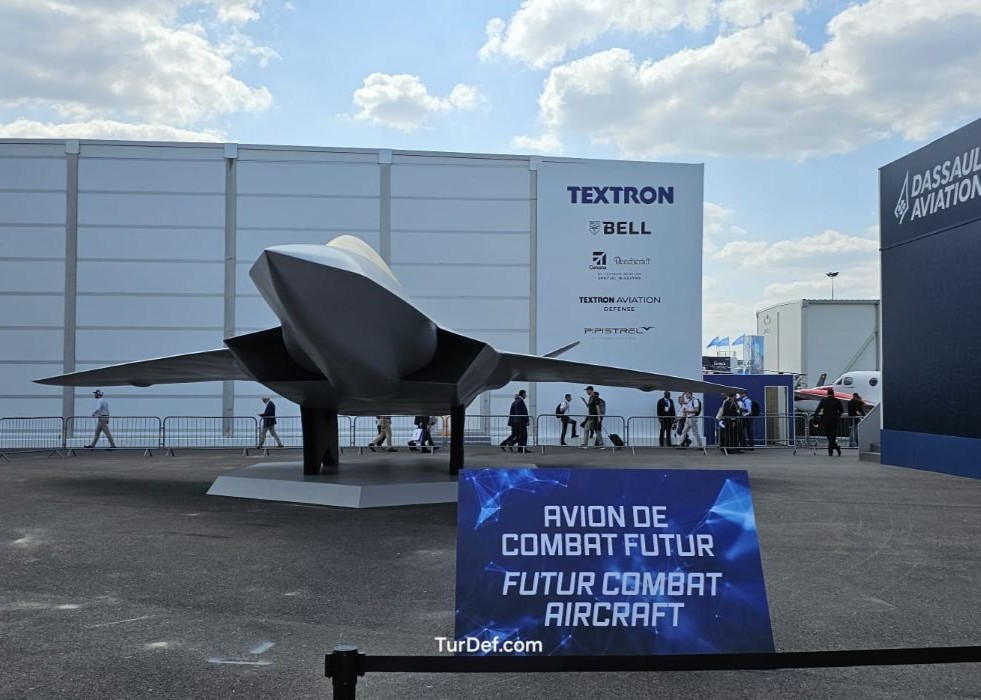
Mediation efforts to resolve the long-running dispute between France and Germany over the Future Combat Air System (FCAS) have failed, according to German media Handelsblatt reports. The breakdown, despite political-level intervention, signals that Europe’s flagship sixth-generation fighter programme remains locked in a fundamental governance conflict — one that now threatens the viability of the programme itself.
At stake is not merely industrial workshare, but control over the system itself. France, through Dassault Aviation, insists on maintaining design authority over the New Generation Fighter (NGF), while Germany seeks a more balanced industrial and technological role through Airbus Defence & Space. The inability to reconcile these positions reflects a deeper structural issue that extends well beyond FCAS, and one that has repeatedly stalled the programme since its early phases.
Europe’s largest defence programmes are under visible strain. The disruption surrounding Eurodrone — culminating in France’s decision to step away — reflects more than programme-specific friction. It points to a systemic challenge in how multinational systems are designed and governed under political constraints.
At first glance, the situation is paradoxical. Europe is increasing defence spending at a historic pace and retains a highly capable industrial base. Yet major programmes continue to face delays, cost growth, and internal disputes. The issue is not a lack of resources or engineering talent. It is the way authority is distributed within the system.
Modern defence platforms are no longer modular products assembled from independent parts. They are tightly integrated architectures where software, sensors, networks, and weapons must function as a unified whole. This requires clear design authority and rapid decision-making. When authority is fragmented across national lines, integration becomes slower, more complex, and ultimately more fragile.
FCAS is not an exception to this pattern. It is its most advanced expression. Rather than expanding into a broader European programme, it has struggled to attract additional partners beyond its core members. Countries such as Italy and Sweden evaluated the initiative in its early stages but ultimately chose not to join. Their decisions were not incidental — they were structural rejections of the FCAS model.
Italy instead aligned with the United Kingdom’s Tempest programme, now evolved into the Global Combat Air Programme (GCAP), where industrial roles are structured with greater flexibility and clearer national ownership. Sweden followed a similar path, prioritising a model that would preserve Saab’s design competence rather than subsume it under an external authority framework. These choices effectively created a parallel European trajectory for next-generation air combat systems, fragmenting what might otherwise have been a unified effort.
Europe’s multinational model tends to prioritise political balance in the allocation of workshare. Industrial roles are negotiated to preserve national participation, often before technical boundaries are fully defined. Over time, this creates a structure in which each major subsystem is tied to a different national stakeholder, making system-level decisions contingent on political alignment rather than engineering logic.
This approach reflects a deeper intellectual foundation within European integration. Jean Monnet’s vision of interdependence — that mutual dependency would bind nations together and prevent fragmentation — has shaped not only political institutions but also industrial cooperation. In principle, interdependence creates resilience. In practice, excessive interdependence can reduce flexibility. What was designed as political glue becomes operational friction. When every actor becomes critical to the system, no single actor can move decisively without affecting all others.
In complex defence programmes, this dynamic introduces a structural constraint. The system cannot easily adapt, because change in one component requires consensus across multiple stakeholders with differing priorities. What was designed as a stabilising mechanism becomes a limiting factor in execution.
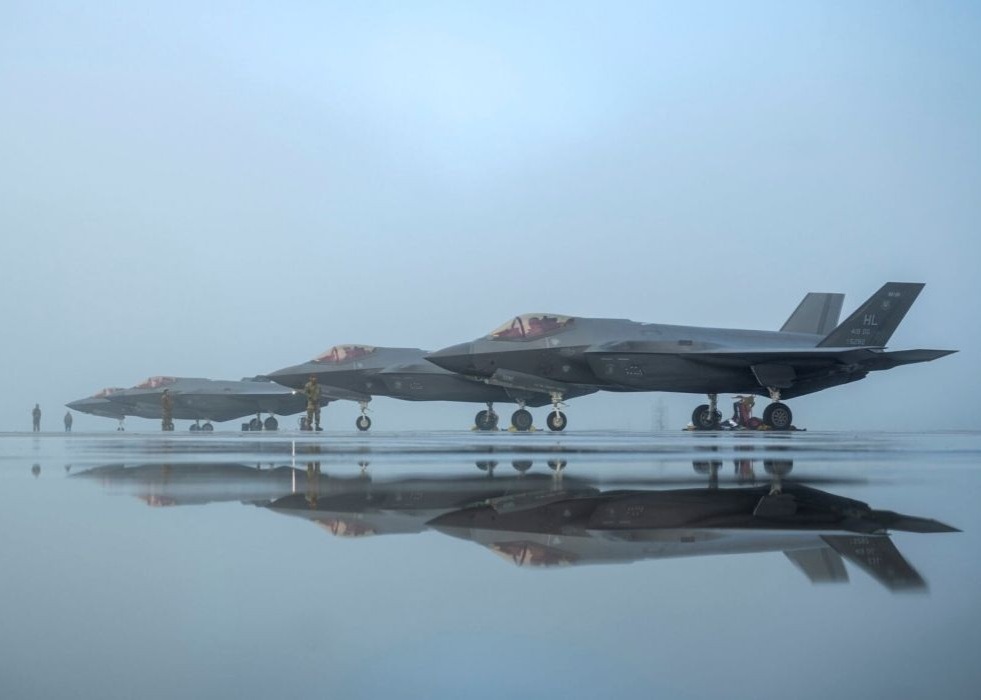
The contrast with the United States’ F-35 programme is instructive. The F-35 is often described as a multinational project, and in terms of participation it is. Multiple countries contribute to production and sustainment, and the programme has delivered three distinct variants — A, B, and C — tailored to different operational requirements. Yet the structure of authority is fundamentally different. The difference is not technological — it is structural.
In the F-35 model, the United States retained central control over system design, architecture, and critical technologies. Workshare was distributed internationally but not negotiated as a co-equal division of authority. Each partner engaged in bilateral negotiations with the United States, not in a multilateral bargaining process among peers. This preserved a single decision-making centre while still enabling broad industrial participation.
The distinction is subtle but decisive. The F-35 demonstrates that multinational participation does not inherently create fragmentation. What matters is whether participation shapes the system, or the system defines participation.
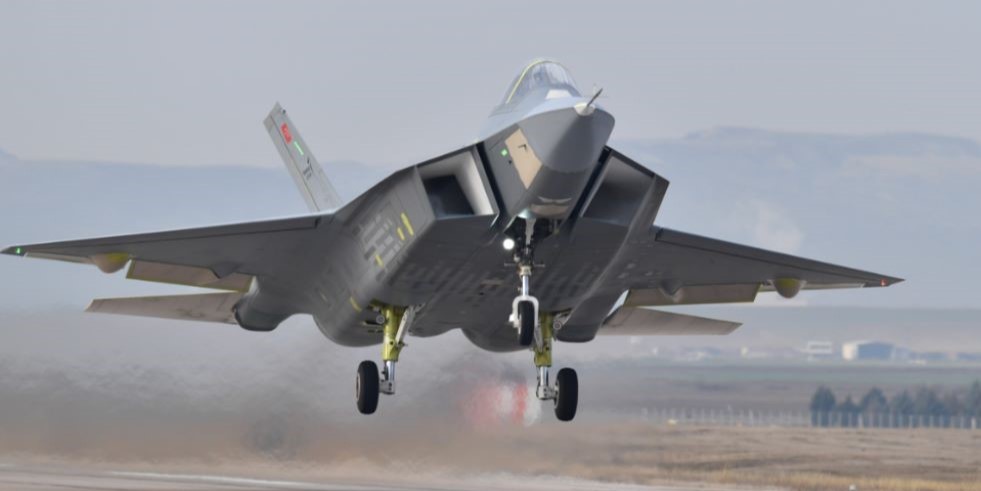
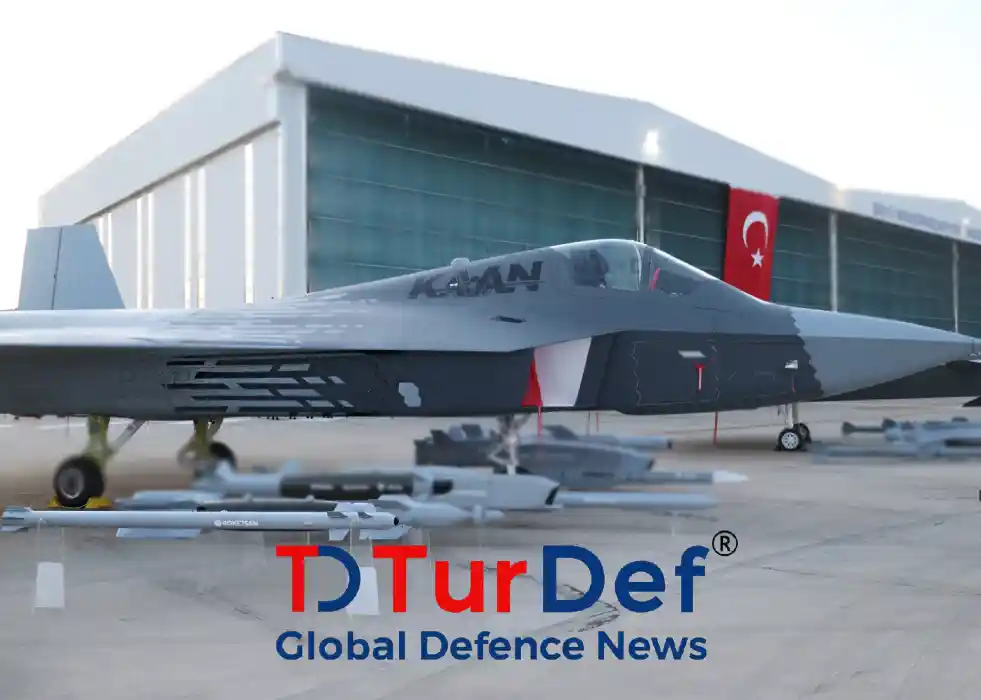
Türkiye’s recent defence programmes align more closely with this latter model. Programmes such as KAAN have been built around a centralised architecture in which ownership of critical technologies remains clearly defined. International partnerships are used to accelerate specific capabilities, but within a framework that preserves system integrity and decision-making coherence.
This structure allows for a different balance between cooperation and control. External contributions add value without diluting authority. Integration decisions can be made within a single framework, reducing the need for continuous political alignment. The result is not the absence of risk, but the concentration of responsibility — and with it, the ability to act.
Europe’s challenge is therefore not collaboration itself, but the form it takes. FCAS is not failing because Europe lacks capability. It is struggling because the system that governs participation is constraining the system that must be built.
As defence systems become more integrated and time-sensitive, the cost of such constraints increases. The question facing Europe is no longer whether it can sustain multinational programmes, but whether it can restructure them to preserve system control. Without that shift, increased spending and broader participation may continue to generate complexity faster than they generate capability.
In modern defence development, success is not determined by how many nations are involved, but by whether the system can be designed, integrated, and adapted as a single entity. Without that shift, FCAS risks becoming not a system, but a process that never delivers one.
Author: Özgür Ekşi