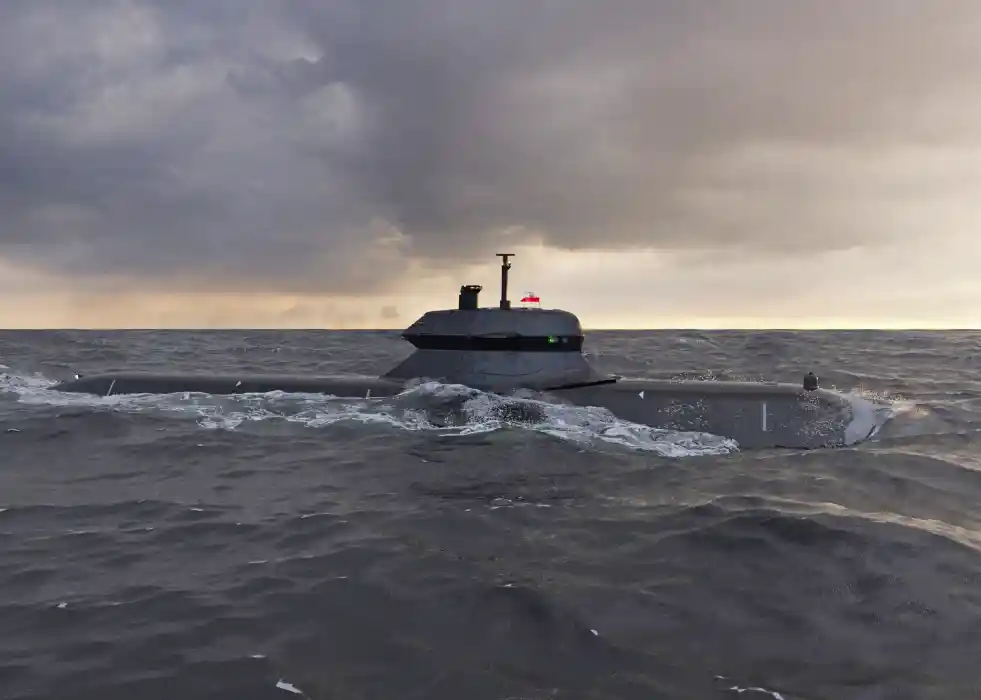
Naval Group announced France’s newest nuclear-powered attack submarine, De Grasse (S638), has entered its first sea trials. The milestone marks the transition from dockside integration to full maritime validation, confirming that the submarine has reached propulsion and platform readiness ahead of its planned delivery to the French Navy later in 2026.
The sea trials follow a sequence of major commissioning steps completed over the past year. De Grasse was rolled out from its construction hall in May 2025, allowing harbour-based integration and testing of onboard systems. This was followed by the initial reactor divergence and activation of its nuclear propulsion system in December 2025, enabling the submarine to proceed to open-water trials.
Sea trials represent one of the most critical phases in the submarine’s lifecycle. During this stage, Naval Group, the Defence Procurement Agency (DGA), and the French Navy jointly evaluate propulsion performance, manoeuvrability, acoustic signature, combat system integration, and overall platform safety under real operational conditions. The trials progressively expand the submarine’s performance envelope, including submerged endurance, navigation accuracy, and sensor calibration.
De Grasse is the fourth unit of the Barracuda-class, known also the Suffren class, which forms the backbone of France’s next-generation nuclear attack submarine force. The class is designed to replace the ageing Rubis-class submarines and incorporates major technological advances, including pump-jet propulsion, advanced acoustic isolation, and next-generation sonar systems to significantly reduce detectability in contested environments.
The Barracuda-class also introduces expanded strike capabilities through the integration of the MdCN naval cruise missile, enabling long-range precision land attack missions from submerged positions.
The first three submarines of the class—Suffren, Duguay-Trouin, and Tourville—entered service between 2022 and 2025, progressively restoring France’s full-spectrum nuclear attack submarine capability. De Grasse represents the next step in maintaining fleet continuity as older Rubis-class submarines approach retirement.
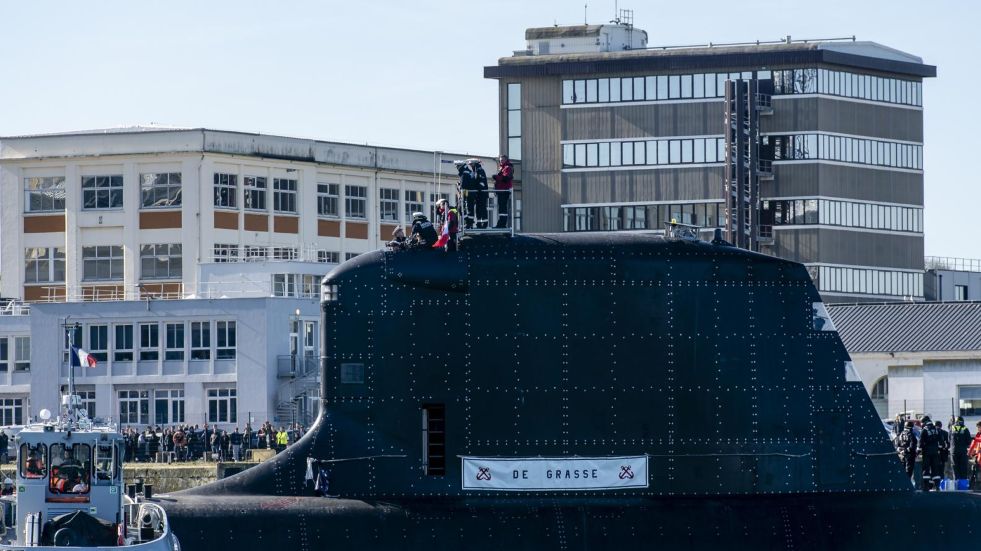
The Barracuda programme comprises a total of six submarines. The final two units, Rubis and Casabianca, are currently progressing through production and assembly phases. Naval Group serves as the prime contractor for the programme, while TechnicAtome is responsible for the nuclear propulsion system, with overall programme oversight provided by the DGA.
The start of sea trials marks the transition from industrial production to operational certification. During this phase, technical responsibility remains with the manufacturer and procurement authority, while operational validation is progressively conducted with the participation of French Navy crews.
Once sea trials and certification are completed, De Grasse will formally enter operational service, reinforcing France’s ability to sustain continuous nuclear-powered submarine deployments and maintain its position as one of the few nations capable of independently designing, building, and operating nuclear attack submarines.
Author: Özgür Ekşi