India has cleared the purchase of 97 Tejas Mk-1A jets while also pushing for 114 Rafales, combining local production with imports to strengthen its air power.
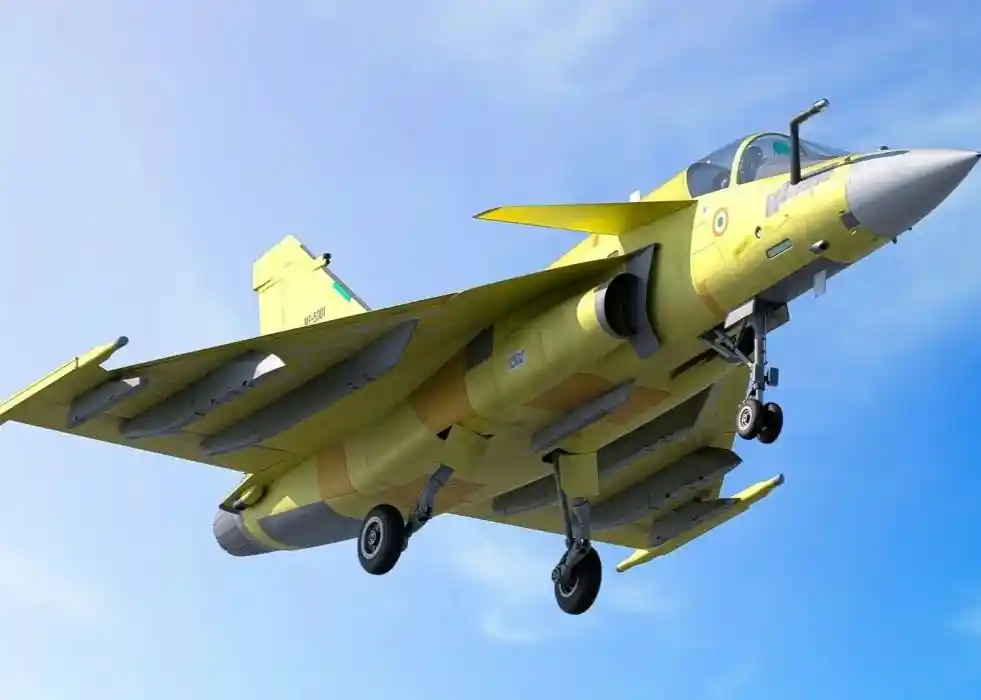
The Indian government has bought 97 Tejas Mk 1A fighter planes built in India for $7.4 billion. This brings the overall number of orders for the IAF to 180.
The Indian government gave the green light on August 19 for the Indian Air Force (IAF) to acquire 97 Tejas Mk 1A fighter jets built by Hindustan Aeronautics Limited (HAL) for 7.4 billion US dollars (USD).
This decision was taken by the Committee of Ministers on Security (CCS) chaired by Prime Minister Narendra Modi.
At the same time, the Indian Air Force is pursuing a government-to-government agreement with France for 114 Rafales under the long-delayed MRFA programme. This request, which emerged in August, comes in addition to the 36 Rafales already in service and the 26 Rafale-M ordered in April for the Navy.
The Tejas demonstrates that India wants to be self-sufficient and strong in numbers. The twin-engine Rafale enables India long-range attack, air superiority, and a strategic deterrent. The two fleets are not competing with one other, according to defence officials.
The Tejas and Rafale are not the same type of plane. They are both multirole fighters, but they are in different groups and perform different missions.
India uses Tejas to grow its fleet at low cost, and Rafale to add strategic depth and deterrent.
The Tejas Mk 1A is considered a technological leap over the earlier versions. It has an AESA radar, modern electronic warfare systems, the capacity to refuel in the air, BVR missiles (in addition to the Indian-made Astra missile), onboard oxygen generators (OBOGS), and advanced self-defence systems.
The Indian Ministry of Defence said that more than 65% of the parts in this current batch come from India. More than 500 Indian firms are involved in making replacement parts and other systems.
The deal also calls for the purchase of six AEW&C (Airborne Early Warning & Control) planes with radar for surveillance from the air.
Tejas Mk-1A
• Category: Light, single-engine, cost-effective fighter
• Primary roles: Air defence (CAP), limited ground attack, patrol
• Advantages: Indigenous production, low operating cost, numerical strength
• Limitations: Shorter range, smaller payload, less redundancy due to single engine
Rafale
• Category: Medium-to-heavy class, twin-engine, omnirole fighter
• Primary roles: Air superiority (dogfight and BVR), deep strike, anti-ship operations, nuclear deterrence, advanced reconnaissance and electronic warfare
• Advantages: Broad mission spectrum, long range, heavy payload, advanced radar and avionics
• Limitations: Higher cost, external procurement
Author: Özgür Ekşi