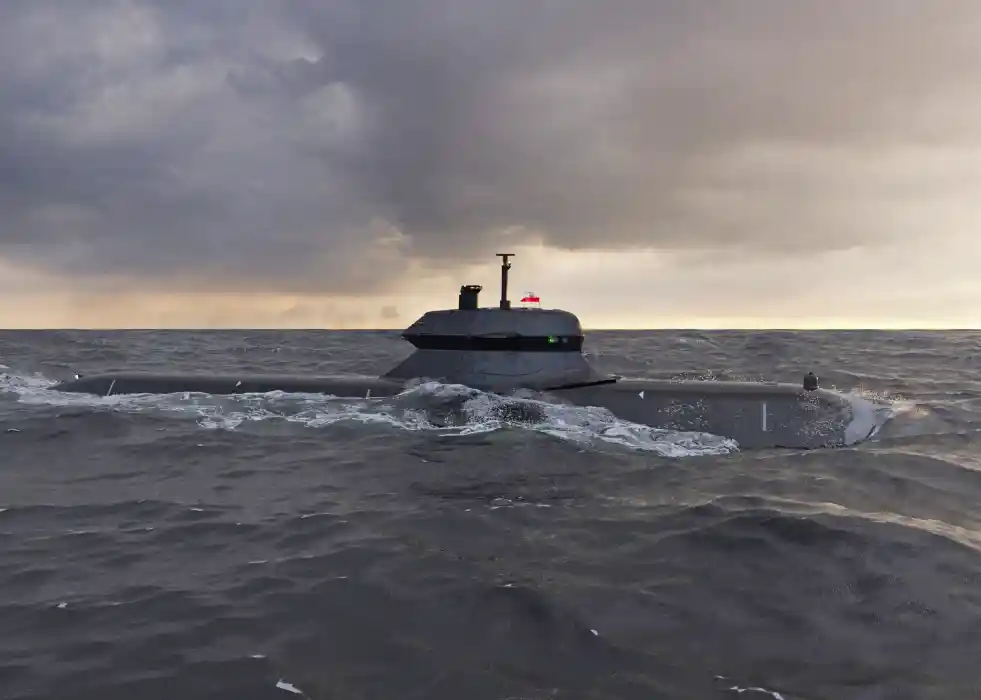
India has decided to add six Air Independent Propulsion Type 214 for its P-75I submarine program to balance its nuclear goals with China's growing navy.
India has decided to acquire German-designed Type 214 submarine as part of its $8.4 billion Project 75(I). This is a big step forward since six Air Independent Propulsion (AIP) powered ships will be built at Mazagon Dock Shipbuilders Limited (MDL) with help from ThyssenKrupp Marine Systems (TKMS). The Cabinet Committee on Security accepted the decision on August 24, which opened the door for contract talks.
The Type 214 is an 84-meter-long diesel-electric submarine with 1,700 displacement tonnes. It has a tested hydrogen fuel-cell AIP system that lets it stay underwater for more than 20 days. The platform is suitable for lengthy patrols over the Indian Ocean because it can go up to 8,000 nautical miles. It has eight bow tubes that can launch heavyweight torpedoes and Harpoon-class anti-ship missiles. Its improved sonar and battle management systems provide it better situational awareness.
India’s choice also reflects global experience with the design. Greece was the first NATO navy to introduce the Type 214, though Athens’ programme suffered delays due to acoustic signature issues that required remedial work on the initial submarine Papanikolis. Türkiye, meanwhile, ordered six Type 214TN boats—known as the “Reis class”—but customised the design with Turkish-developed combat systems, torpedoes, and sensors, integrating a more nationalised supply chain. Republic of Korea also operates the Type 214, locally known as the Son Won-il class.
By selecting the Type 214 over Spain’s S-80 design, New Delhi is prioritising maturity over novelty. The S-80 programme has faced buoyancy and weight distribution problems, making Germany’s established solution a safer bet for India’s urgent naval needs.
Strategically, the move comes amid intensifying rivalry with China. The People's Liberation Army Navy has spread out over the Indian Ocean, moving nuclear and conventional submarines through advanced bases. India is already building its own nuclear-powered ballistic missile submarines (SSBNs) and planning nuclear attack submarines (SSNs). It sees the Type 214 as a useful addition: stealthy, cheap boats for coastal defence and chokepoint operations, along with nuclear submarines for long-term deterrence patrols.
Defence sources say that the Indo-German contract not only covers a crucial capability gap—India's present Kilo-class and Type 209 boats are getting old—but it also deepens strategic relations with Europe. Deliveries are planned to start in the early 2030s, but only if the technology transfer and local integration at MDL's Mumbai yard go well.