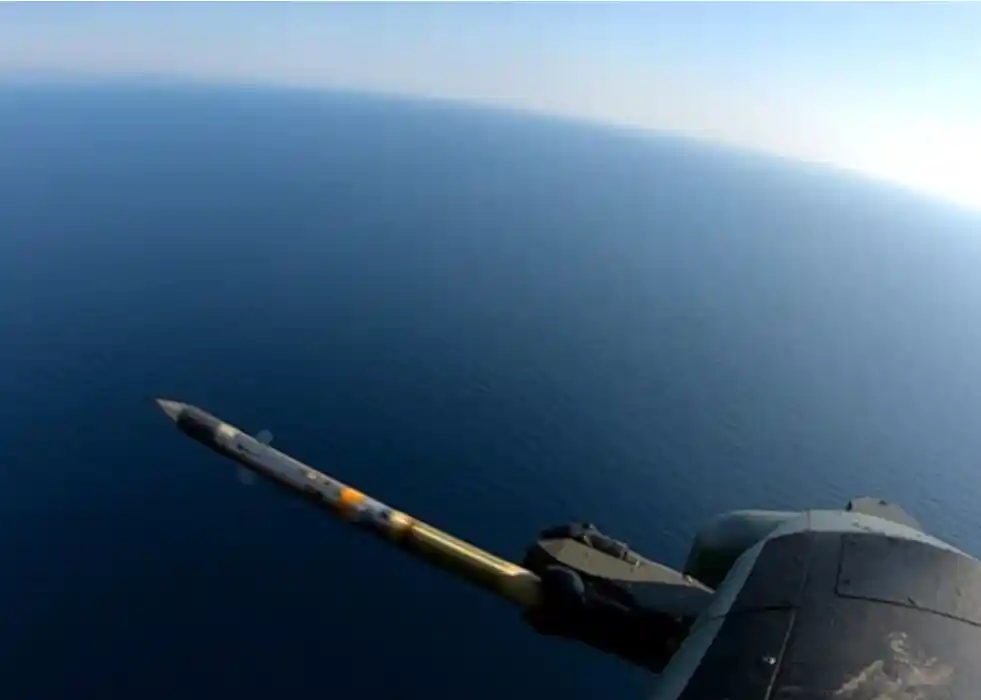
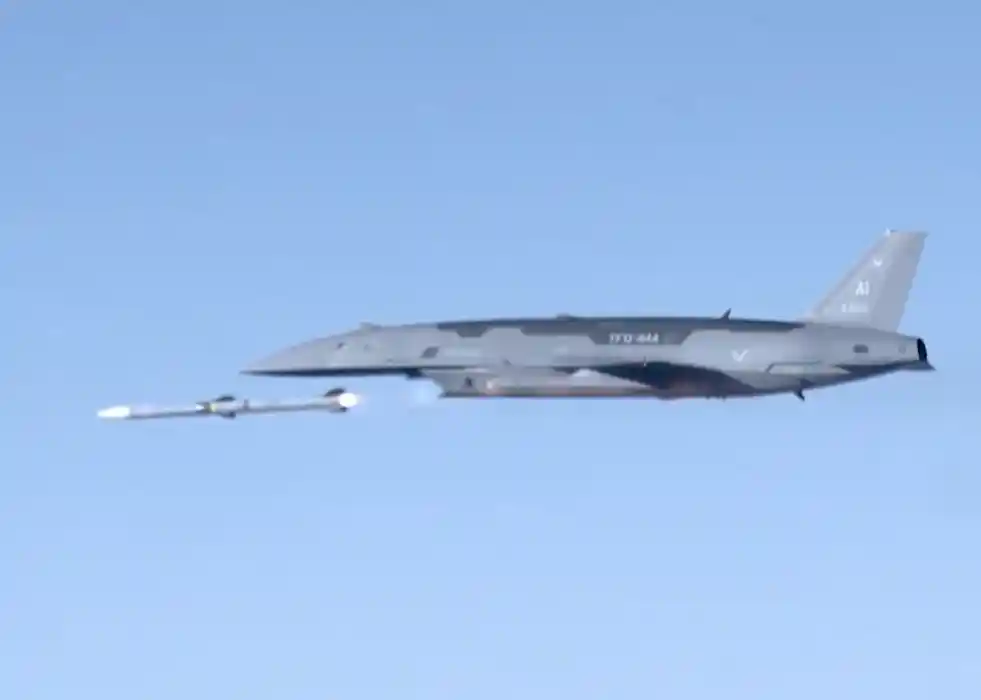
Japan's Ministry of Defence has equipped its naval test platform JS Asuka (ASE-6102) with a prototype electromagnetic railgun, reportedly in preparation for live-fire testing at sea. Photos taken on 9 April 2025, and shared by open-source analyst Morijun, show the angular turret of the system fitted forward of the superstructure, likely at Yokosuka Naval Base. Belgium based Army Recognition unveiled the trials.
Technological leap in projectile weapons
The Japan-developed railgun is the product of years of research led by the Acquisition, Technology & Logistics Agency (ATLA). Unlike conventional artillery systems that rely on chemical propellants, electromagnetic railguns use magnetic force to accelerate projectiles to hypersonic speeds. Japan's system reportedly achieved a muzzle velocity of 2,500 metres per second during trials, with sustained firing of 120 rounds without barrel degradation — a feat that addresses one of the major limitations faced by previous US attempts to field similar systems.
The weapon is reported to fire two types of projectiles: a single-body steel dart and a composite armour-piercing round, each weighing about 320 grams and 16 cm in length. The turret itself weighs 8 tonnes, with a barrel length of 6 metres. Its supporting power module, using compact ceramic film capacitors and gallium oxide components, fits into a standard shipping container and includes three 5-megajoule capacitors.
From lab to sea: evolution of Japan’s railgun
Japan initiated small-calibre railgun testing in the early 2000s with 16 mm projectiles, gradually scaling up to a 40 mm calibre by 2016. By 2022, successful durability tests had demonstrated sustained performance, propelling the programme into system integration. The railgun's integration onto JS Asuka brings it into the maritime domain for the first time, allowing for stability and power system trials in real-world conditions.
Miniaturisation remains a key objective for the project. Japanese sources suggest that the next step involves reducing the power system volume by 50% before 2027, paving the way for deployment aboard frontline destroyers and potentially land platforms.

JS Asuka’s legacy as a naval testbed
Commissioned in the mid-1990s, the 151-metre-long JS Asuka has served as a testbed for Japan’s most advanced naval technologies. Originally powered by a COGLAG (Combined Gas turbine-eLectric And Gas turbine) propulsion system using LM2500 turbines, the ship has supported the development of systems including the OQQ-XX sonar, FCS-3 combat system, OYQ-10 C2 suite, and multiple generations of torpedoes and missiles.
Asuka previously hosted a Mk.41 Vertical Launch System for the testing of the A-SAM missile (now Type 23), and supported sonar trials for Mogami-class frigates. It also participated in disaster relief following the 2011 Tōhoku earthquake.
Author: Özgür Ekşi