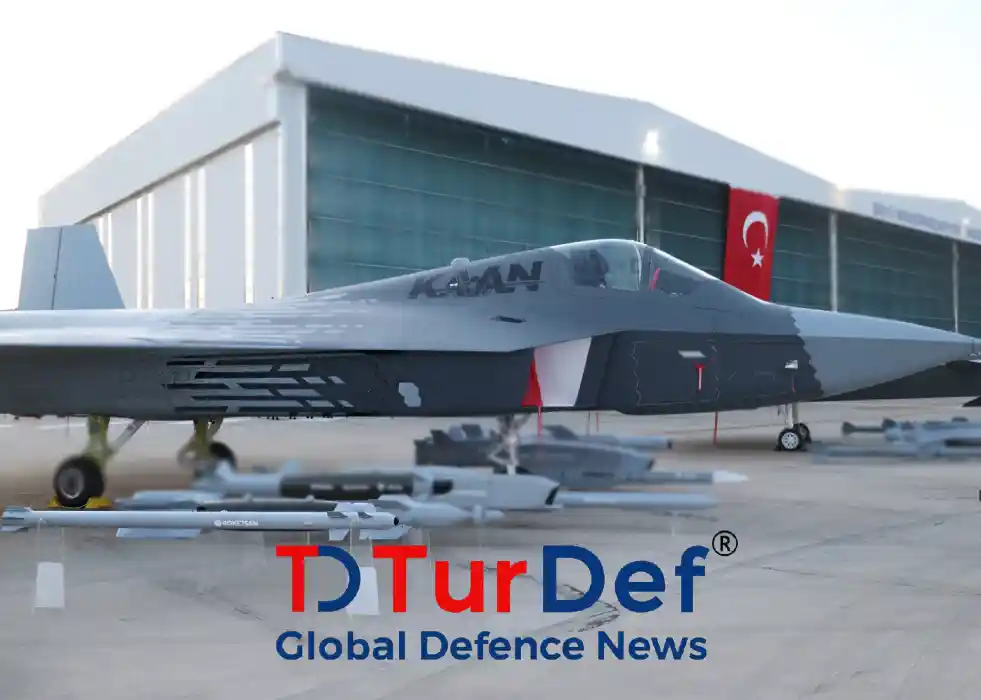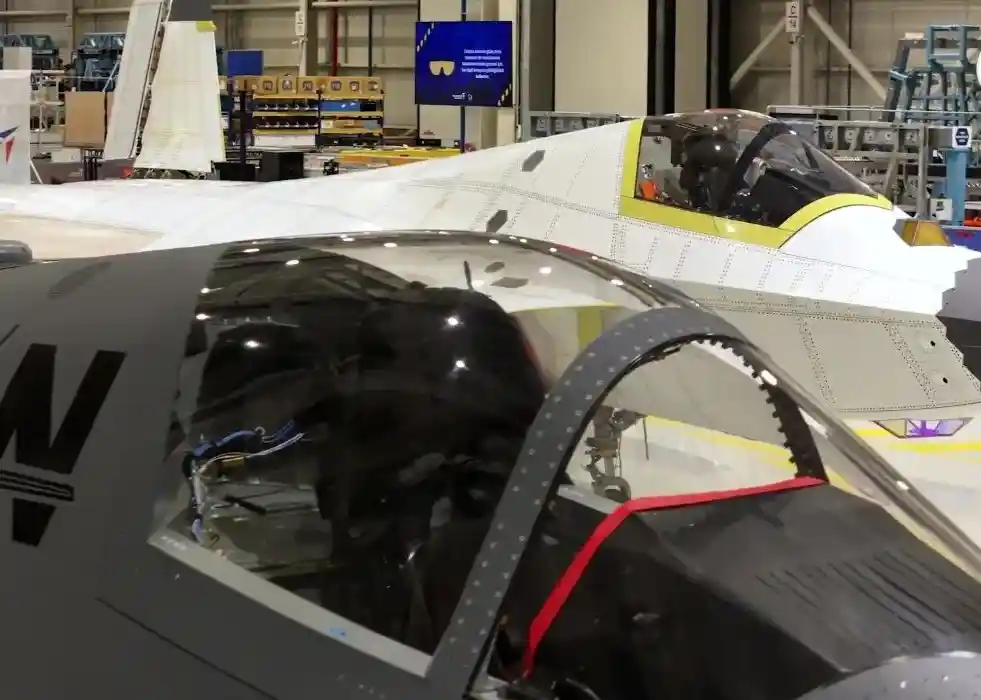
During a recent facility visit, a full-scale test aircraft was displayed alongside the prototype that completed its maiden flight in 2024 and a second prototype preparing for flight. The simultaneous presence of these platforms indicates that flight testing, structural validation and production preparation activities are progressing in parallel, signalling a maturing development framework.
Haluk Görgün, Secretary of Defence Industries, reviewed progress on the programme. The Secretariat confirmed that the contractual process for KAAN deliveries to TurAF is being initiated. While this does not mark the start of serial production, it represents a formal step toward transitioning from development to production planning.
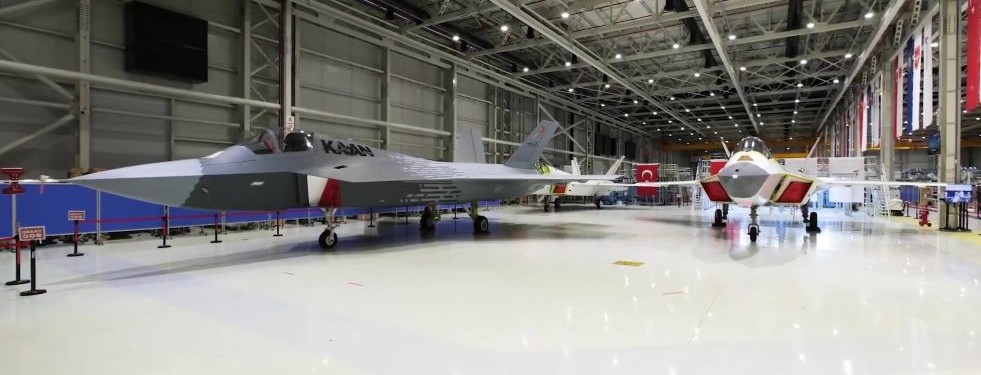
KAAN is intended to serve as Türkiye’s next-generation combat aircraft for long-term service within TurAF. The aircraft is designed with low-observable features and internal weapons bays, supported by advanced avionics architecture, sensor fusion, network-enabled operations and electronic warfare capabilities. It is planned to operate across both air-to-air and air-to-ground mission sets.
World Defense Show 2026, held in Riyadh on 8–12 February, raised expectations of a potential Saudi–Turkish cooperation framework around KAAN. No agreement was signed at the show, but negotiations are ongoing.
Speaking to Breaking Defense during the event, TUSAŞ General Manager Mehmet Demiroğlu stated that talks are in the “final stage of the decision-making process,” adding that the parties aim to reach a significant milestone within the year and potentially initiate the programme “at some level.”
Options reportedly under consideration range from direct aircraft sales to structured technology transfer models, including the possibility of establishing a Final Assembly Line (FAL) in Saudi Arabia.
For Riyadh, interest in KAAN should be viewed within the broader framework of Vision 2030. While Saudi Arabia already operates advanced platforms such as the Eurofighter Typhoon and the F-15SA, and has reportedly sought involvement in the GCAP programme, these pathways offer limited scope for meaningful industrial participation. KAAN, by contrast, remains at a development stage where participation could extend beyond procurement to include production involvement and integration roles.
No formal commitment has been announced, and the configuration of any potential cooperation remains undefined. The programme is now evolving at a point where domestic production planning and external strategic interest are developing in parallel.
Author: Özgür Ekşi