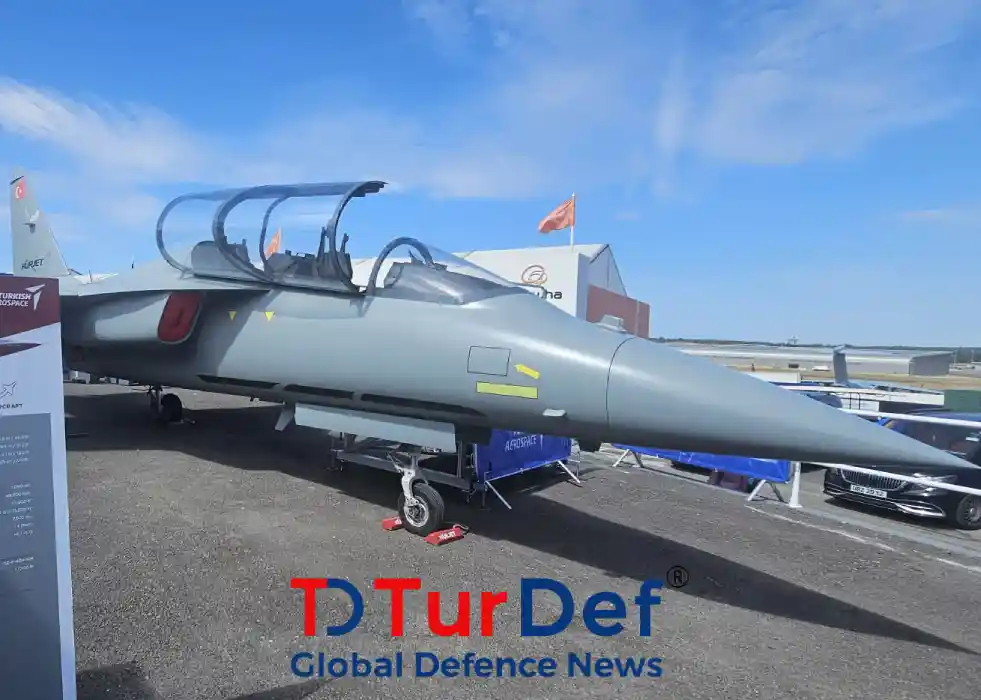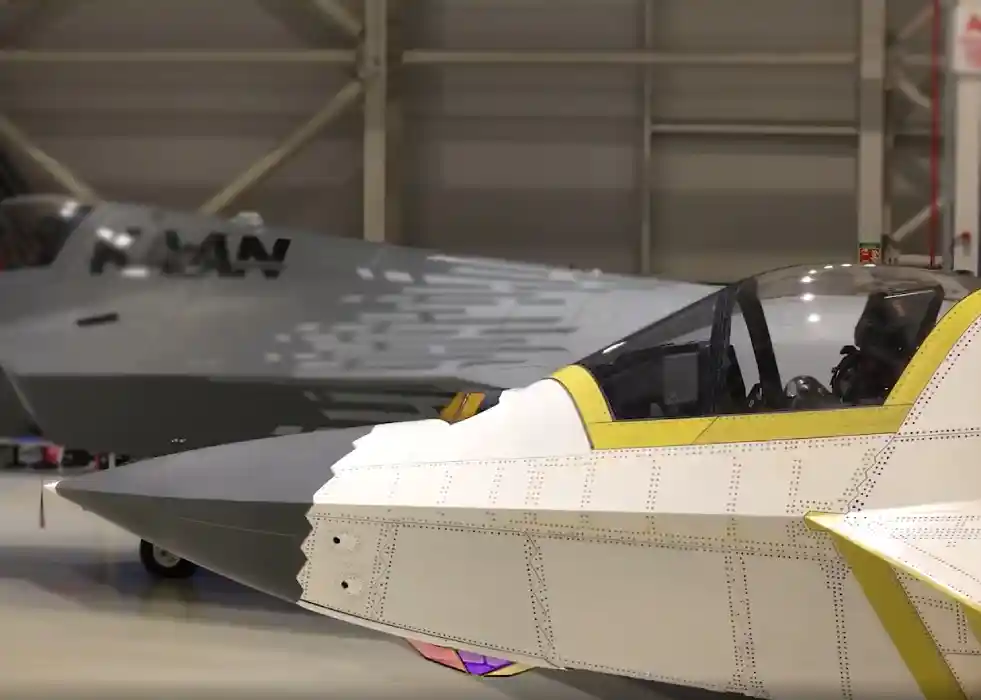
KAAN fighter is planned to fly with its optical targeting systems, TOYGUN EOTS against surface and KARAT IRST against air, in 2026 after system integration.
ASELSAN [BIST:ASELS] stated in its 2025 activity report that TUSAŞ’s KAAN fighter will fly with TOYGUN 100 and KARAT 100 EOTS in 2026, following the system integration laboratory work. It is understood that KAAN P1 or P2 prototype is likely to be fitted with the sensors, as P1 has been observed to have provisions unlike the preliminary prototype P0.
Work is ongoing for the other elements of KAAN’s Integrated Electro-Optical System (IEOS/BEOS): IRIS 300 missile warning system and LIAS 300 laser warning system. IEOS is planned to include the YILDIRIM 300 DIRCM with higher power output compared to the YILDIRIM 100 DIRCM for helicopters later on.
Both TOYGUN and KARAT have been tested onboard the KIZILELMA unmanned fighter in different scenarios as complementary sensors to the MURAD AESA radar.
KARAT IRST will provide passive detection capabilities for KAAN against aircraft, especially those with low RCS. The importance of passive detection lies in the fact that the sensing from an IRST can not be picked up by radar warning receivers. In addition to tracking capabilities at long range, KARAT can provide midcourse guidance for air-to-air missiles.
TOYGUN EOTS will be the main air-to-surface targeting system for KAAN with a high-resolution MWIR camera and laser designator. Alongside the main function of air-to-surface, TOYGUN can still be utilised against air targets as a backup sensor.
Author: Kaan Azman
Editor:Özgür Ekşi