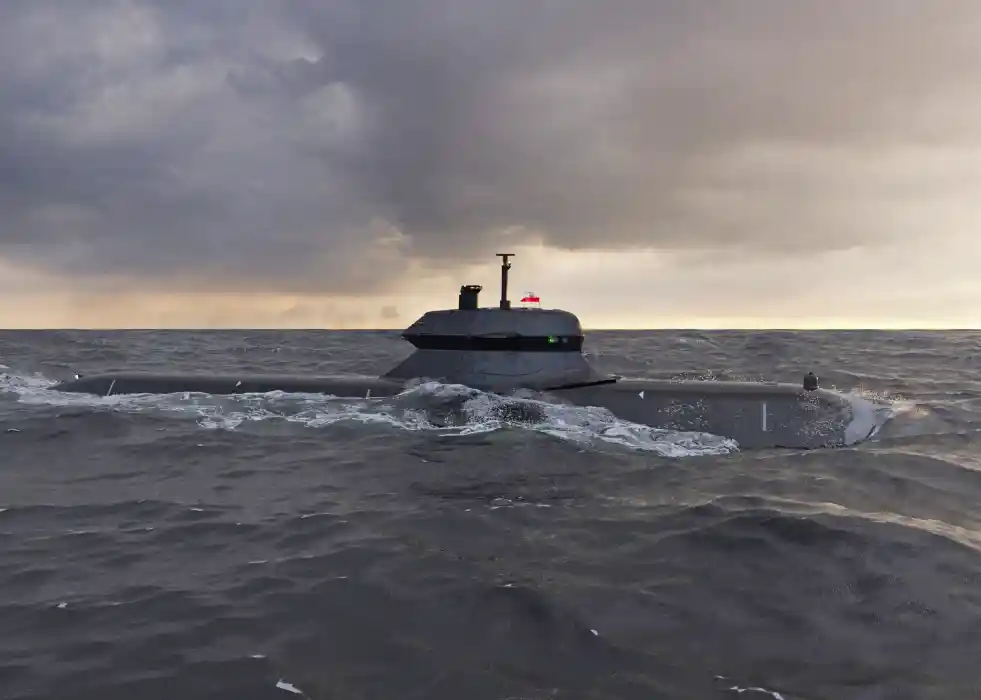
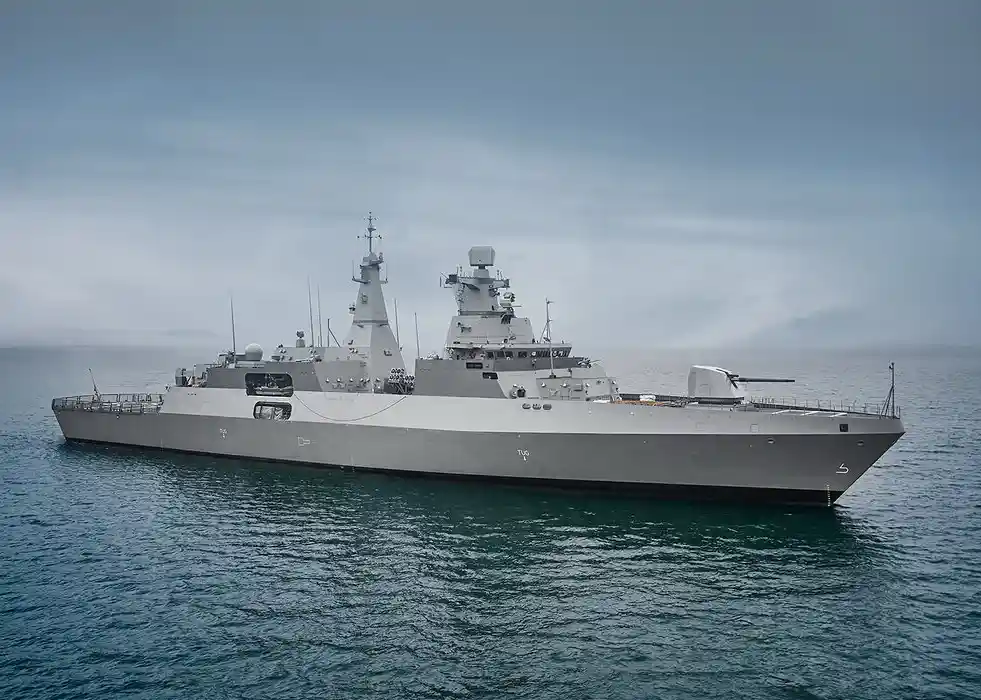
Admiral Ercüment Tatlıoğlu, the head of the naval forces, has said that Türkiye has fulfilled a long-awaited strategic goal by starting to build its first entirely indigenous submarine. Speaking on the naval platforms delivery ceremony programme, Tatlıoğlu confirmed that the national submarine project is no longer conceptual but has entered the physical build phase, stating: “We have started to build our national submarine, Atılay. We are now among the ten countries in the world capable of designing and constructing their own submarines.”
It has also emerged that the first submarine to be built under the MİLDEN programme will carry the name Atılay. The choice is historically charged. The first submarine built in Türkiye for the Turkish Navy was TCG Atılay (D-351), commissioned in the 1930s. The name Atılay was personally given by Mustafa Kemal Atatürk to the lead boat of that class, establishing a symbolic lineage that now reappears nearly a century later.
The original Atılay was more than a platform. It represented Türkiye’s first successful application of a domestic shipyard plus foreign licence model, laying the industrial and doctrinal foundations that would turn Gölcük into a permanent submarine construction centre. In hindsight, that programme marked the historical starting point of the vision now embodied by MİLDEN: sovereign undersea capability designed, built and sustained at home.
The 1930s constituted a strategic turning point for the young Republic. Türkiye was no longer content with a posture limited to territorial defence. The objective was to build a navy capable of deterrence, calculation and reach. Atatürk recognised early that a navy could not be reduced to flag-showing, and that submarines offered an asymmetric means for a comparatively weaker power to balance stronger adversaries. In this context, the naming of the first domestically built submarine was neither decorative nor defensive in tone.
The word “Atılay” derives from the verb “atılmak”, meaning to lunge forward, strike suddenly or burst into action without warning. The term evokes surprise, momentum and decisiveness. These qualities align precisely with the nature of submarine warfare: invisible, silent and patient, yet capable of sudden and devastating action when the moment arrives. For Atatürk, this was not merely a vessel name but an articulation of a combat philosophy.
This naming logic was not isolated. Examining the broader pattern of early Republican naval platform names reveals a consistent linguistic and psychological framework. Submarines such as Atılay, Saldıray, Yıldıray and Batıray all draw from dynamic verb roots embedded in Turkish language and mythology. These names are action-centred rather than passive, deliberately conveying intent. The implicit message to any potential adversary was clear: “I am not waiting. If required, I will act.”
This constituted an early form of psychological deterrence. Without numerical superiority or blue-water reach, Türkiye sought to project resolve and unpredictability through language, symbolism and platform choice. Submarines were central to that approach.
It is important, however, not to compress history into a single class or period. The Atılay-class submarines and the following Ay-class boats did not all come out at the same time. The Ay-class featured platforms including Ay, Yıldıray, Doğanay, and Saldıray, although Batıray was lost before it could be used in combat. Even though they came from different places and were built at different times, these submarines were the main part of Türkiye's early underwater capabilities and helped to create a strong ideological identity.
In light of this, it seems that the choice to name the first MİLDEN submarine Atılay was intentional rather than sentimental.
It signals continuity between past and future, anchoring a modern, digitally designed and indigenously built submarine programme to the historical moment when Türkiye first asserted itself beneath the surface. The MİLDEN program doesn't only use an ancient term; it brings back a way of thinking that is based on taking initiative, being surprised, and being self-sufficient.
Tatlıoğlu's speech puts MİLDEN in the context of both an industrial and a doctrinal milestone by saying that Türkiye is now one of the few countries that can design and build submarines on its own. The fact that the Atılay name is coming back shows that the people who planned the initiative are aware of how this success fits into a larger national story.
Author: Özgür Ekşi