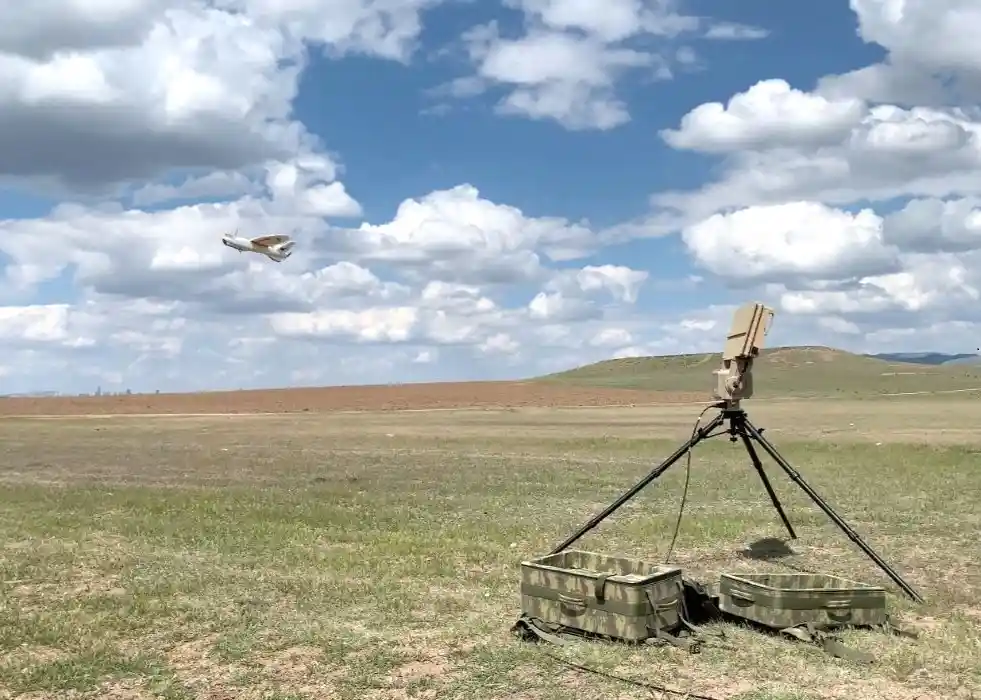
NATO has decided to improve its air defence capacity by starting two new international projects to detect UAVs flying below 150 meter altimeter.
NATO decided to enhance its air defence capabilities by launching two new multinational initiatives aimed at detecting threats flying below 150 metres, a substantial improvement over previous systems that typically identified targets flying above 300 metres. This new strategy directly tackles the increasing problem presented by low-flying unmanned aerial vehicles (UAV), which have shown great success in contemporary warfare.

Agreements were inked by 15 Allies, (Belgium, Denmark, Estonia, Finland, France, Greece, Latvia, Lithuania, the Netherlands, Norway, Portugal, Romania, Spain, Türkiye and the United Kingdom), at NATO Headquarters on 13 February 2025 to provide sophisticated solutions for lower-level air threats. This is a significant change because conventional air surveillance systems were made to identify bigger aircraft at higher altitudes and speeds. The new systems will concentrate on smaller, slower, low-flying hazards, therefore offering a more complete air defence network.
One of the main benefits of these new technologies is their capacity to identify and monitor drone swarms applied in saturation strikes. In recent wars, such strikes—where several drones are used concurrently to overwhelm defence systems—have become somewhat prevalent. Reducing the detection altitude helps NATO to spot and eliminate these hazards before they can do major harm. Besides the lower-level air threat effort, NATO started a worldwide passive air monitoring mission. Joined by the same 15 Allies plus Czechia, this initiative uses noise detection to find hazards that active systems like radars and satellites could overlook. Detecting stealthy or low-profile attacks depends especially on passive observation, which also adds even another layer to NATO’s defensive posture.
The war in Ukraine has underscored the importance of countering drone threats, with small, inexpensive drones playing a critical role in surveillance, reconnaissance, and attacks. NATO’s new initiatives reflect lessons learned from these conflicts, ensuring the Alliance remains prepared for future challenges.
These initiatives also seek to improve interoperability through shared development and procurement and, hence, lower costs through collaboration across member states. Romania’s inclusion in the Modular Solution for Ground-Based Air Defence Capabilities (Modular GBAD) project further strengthens NATO’s collective defence posture.