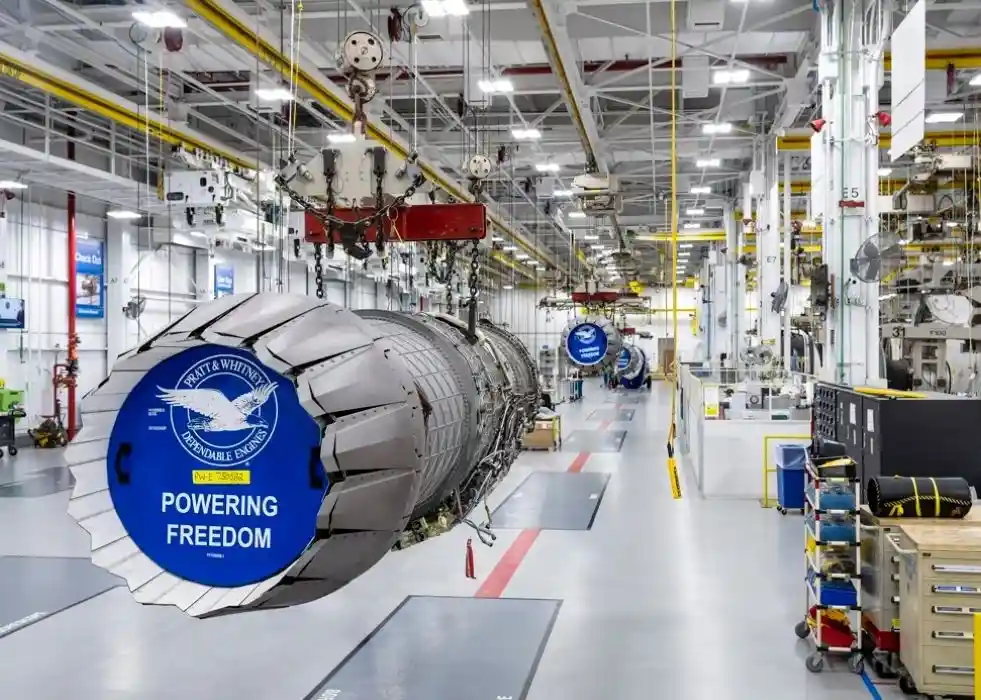
Patria and Pratt & Whitney, an RTX business, have agreed on the final assembly of the first F135 fighter jet engines for Finland, with production already under way at Patria’s newly established assembly and maintenance facility in Linnavuori, near Nokia. The work is scheduled to continue until 2030.
As a strategic partner of the Finnish Defence Forces, Patria will initially assemble the engines and subsequently take responsibility for sustainment-related activities as its role evolves. The timeline aligns with Finland’s F-35 programme, with the first F-35A aircraft expected to arrive at the Lapland Air Wing base in Rovaniemi towards the end of 2026.
The final assembly agreement builds on a framework contract signed in 2024, which lays the groundwork for a phased introduction of Maintenance, Repair, Overhaul and Upgrade (MRO&U) capabilities, subject to Pratt & Whitney certification. Patria estimates the direct employment impact of the programme between 2025 and 2030 at around 50 specialised personnel.
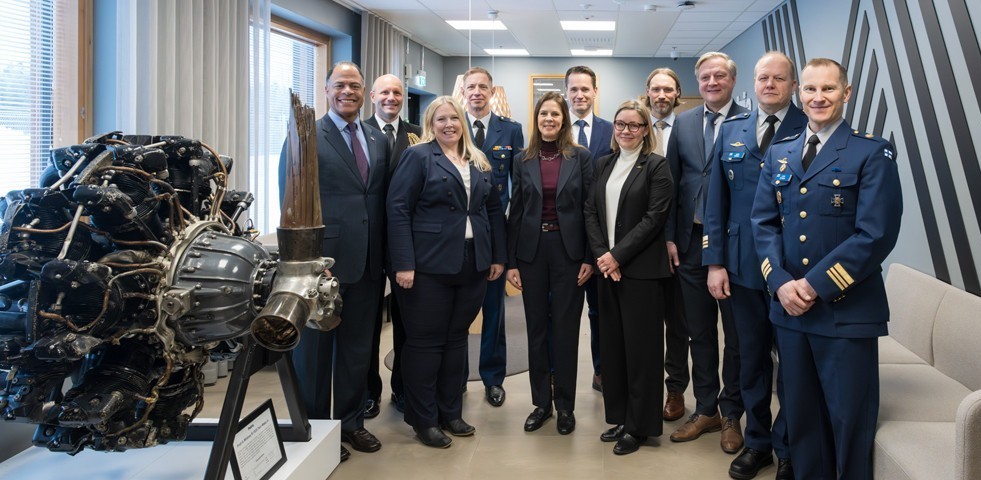
To mark the start of F135 production activities, Patria has also highlighted its aviation heritage. A Second World War–era Pratt & Whitney R-1535 Twin Wasp Jr engine, recovered in 2025 from Haukkajärvi Lake in Orivesi, has been restored and placed on display at the entrance of the Linnavuori facility. The engine once powered a Fokker fighter aircraft built by Patria’s predecessor, the State Aircraft Factory, and was retrieved from a depth of seven metres in a remarkably preserved condition after 85 years underwater.
From a Turkish perspective, the current distribution of F135 engine deep maintenance and sustainment capabilities in Europe also highlights a missed industrial opportunity. Prior to its removal from the F-35 programme, Türkiye was among the candidate countries considered for a role in depot-level maintenance and overhaul of the F135 engine. However, following the procurement of the S-400 air defence system and the subsequent application of CAATSA sanctions, Türkiye was excluded from the programme, effectively eliminating this option. As a result, Europe’s F135 heavy maintenance and sustainment activities were consolidated within existing programme partners, primarily through facilities in Italy and Norway.
In this context, Finland’s newly established final assembly capability should be viewed not as a fully authorised MRO hub, but as a nationally focused industrial role designed to support its own fleet. While the scope of activities may expand over time, subject to certification and programme decisions, the Linnavuori facility primarily reflects Finland’s emphasis on operational sovereignty and long-term integration into the F-35 industrial and support ecosystem rather than a bid to reshape Europe’s engine sustainment architecture.
Author: Özgür Ekşi