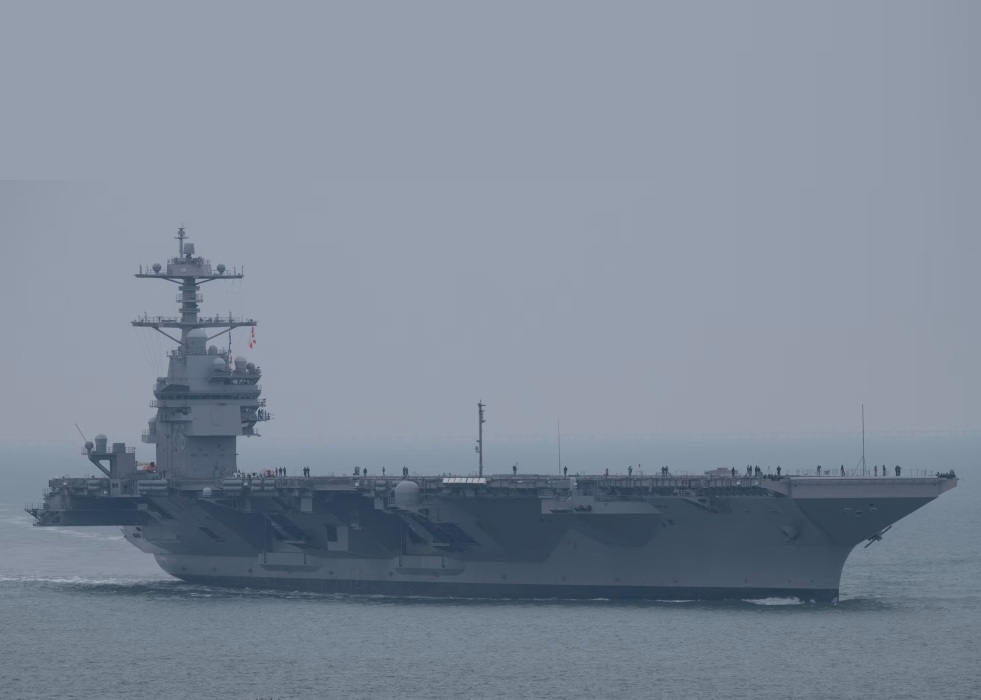
The US Navy has completed Builder’s Sea Trials (BST) for the future aircraft carrier USS John F. Kennedy (CVN-79), marking a significant milestone in the transition to the Gerald R. Ford class. The trials concluded on 4 February after the ship returned to Newport News Shipbuilding in Virginia, following its first sustained period of operations at sea.
According to the Program Executive Office Aircraft Carriers (PEO CVN), the trials verified the performance of a wide range of core ship systems under operational conditions. The Pre-Commissioning Unit (PCU), shipbuilders, and representatives from Naval Sea Systems Command (NAVSEA) evaluated propulsion, power generation, auxiliary systems, and other mission-critical shipboard equipment intended to support sustained carrier operations.
Before getting underway, John F. Kennedy completed a five-day “Fast Cruise”, a pier-side training evolution designed to simulate at-sea operations during new construction. This phase allowed the crew to operate the ship continuously as if underway, helping to surface integration issues, procedural gaps, and readiness challenges before the start of sea trials.
With Builder’s Sea Trials now complete, programme activity will shift towards final outfitting and the correction of deficiencies identified during testing. The next major milestone will be Acceptance Trials, during which the US Navy will formally assess the ship prior to delivery. While the schedule for this phase remains under review, the process typically reflects the complexity of integrating first-of-class technologies rather than purely administrative considerations.
During the acceptance phase, the Ford-class design must overcome a series of integration and reliability challenges that go beyond conventional ship trials. Central among these is the Electromagnetic Aircraft Launch System (EMALS), which offers long-term operational advantages by applying smoother, digitally controlled launch forces that reduce airframe stress, accommodate a wider range of aircraft weights, and improve aircraft availability over sustained deployments. However, EMALS remains highly sensitive to power quality and system integration, requiring precise coordination between power generation, distribution, and software. As a result, faults demand system-level engineering solutions rather than traditional mechanical intervention. These challenges are compounded by the parallel integration of the Advanced Arresting Gear (AAG), as launch and recovery systems must function as a single operational ecosystem; disruption in either can break the sortie generation chain and limit real-world output. At the same time, the Ford class’s ambition to operate with fewer crew through higher automation has proven demanding during early ships, as advanced systems require greater technical expertise and more complex fault diagnosis, delaying the full realisation of projected manpower efficiencies.
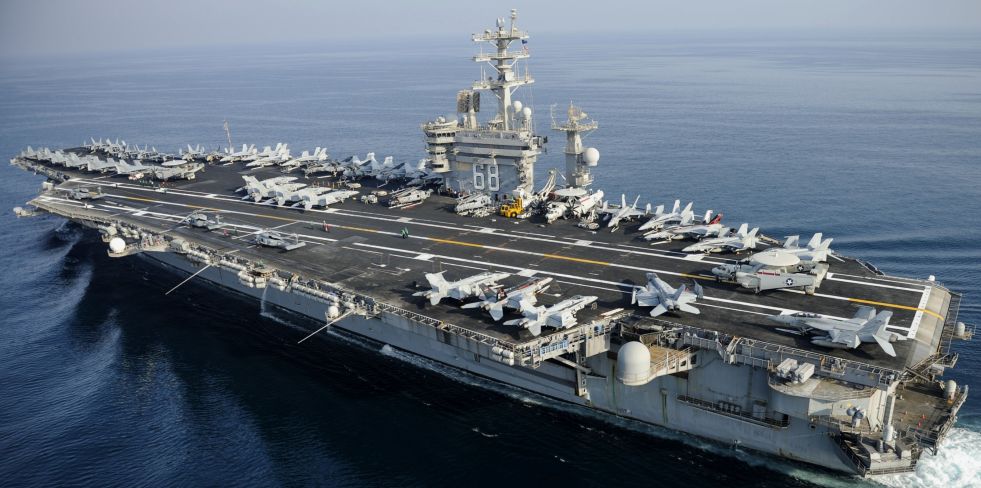
John F. Kennedy’s progression towards fleet entry overlaps with the planned retirement of USS Nimitz (CVN-68). The US Navy plans to decommission Nimitz in 2026 after more than 50 years of service, citing the exhaustion of its nuclear fuel cycle, the end of its design service life, and the declining cost-effectiveness of conducting another refuelling and complex overhaul. Rather than a one-for-one replacement, the move marks the first step in the gradual drawdown of the Nimitz class as Ford-class carriers enter service.
In the near term, this transition is expected to narrow operational flexibility and place additional pressure on deployment and maintenance schedules across the carrier force. Over the longer term, however, the Navy aims to accelerate the shift towards the Ford class, which is designed to improve survivability, sustain higher sortie generation rates, and reduce total ownership costs over an expected 50-year service life.
Legally, the requirement to maintain a minimum force of 11 aircraft carriers remains in effect, but it is applied with flexibility. Short, managed gaps between retirements and new ships achieving full operational readiness are permitted through congressional notification and formal risk acceptance mechanisms.
Author: Özgür Ekşi