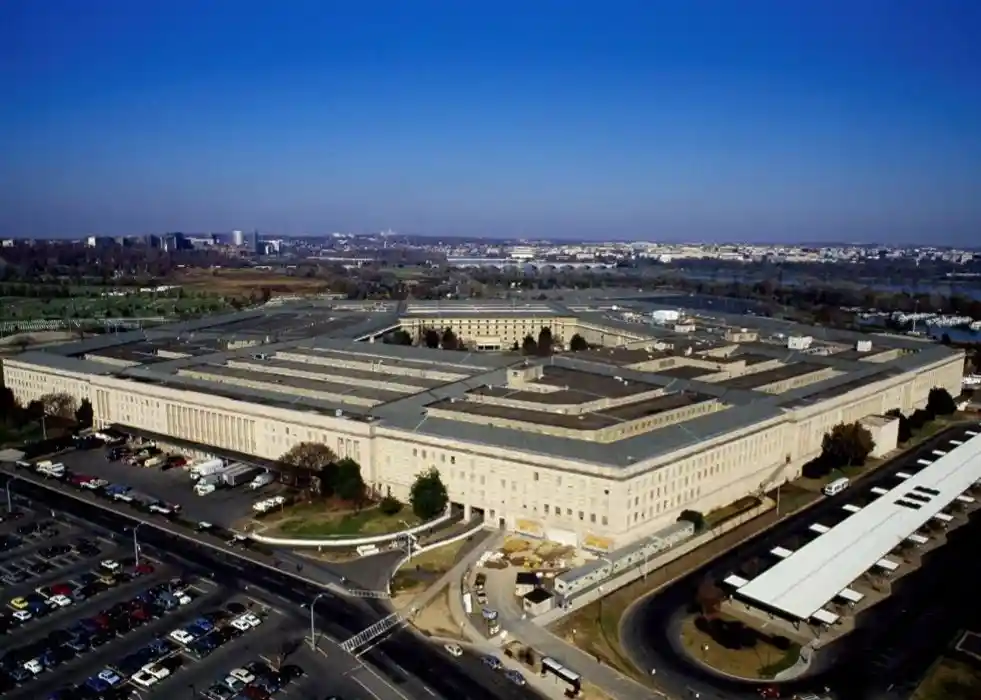
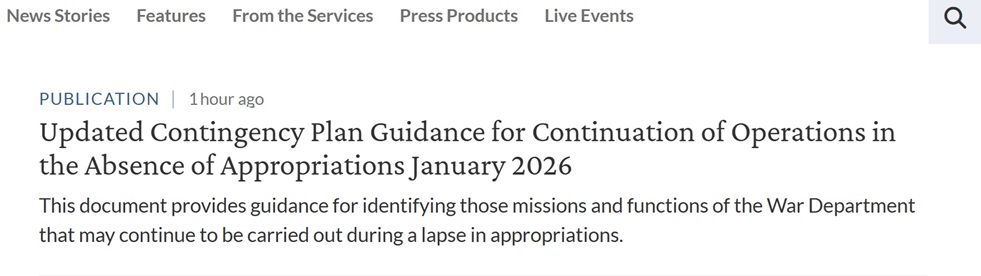
As Washington is still stuck in a budget dispute, the US Department of Defence has released revised contingency plans for how military and civilian activities would operate without approved government funding.
The Senate passed a federal funding deal, but the House of Representatives couldn't finish the vote in time, which led to a partial government shutdown on January 31. On February 3, 2026, talks to restore full government financing were continuing on. House leaders were looking for enough support to bring the bill to a final vote.
In light of this, the Pentagon's instructions explain how to handle people, operations, and contracts during a time when funding is not available. The text makes it clear which actions would still be allowed under legal exceptions, including those related to national security, protecting life and property, and ongoing military operations.
According to the advice, active-duty military troops would stay on duty, while civilian workers would be split between those who could keep working because of legal exemptions and those who were put on temporary unpaid leave. New contracts and operations that aren't necessary would usually be put on hold unless they come under certain exclusions linked to national security. The Department made it clear that the paper is not an automatic trigger for operational adjustments, but rather a planning framework. They also said that official implementation will depend on senior-level instructions if budget problems continue.
People in Washington are paying attention to when the guidelines came out since the budget fight is going on and there is more political tension before the November 2026 elections. Recent issues with outgoing president Donald Trump, such as fresh comments about Greenland and difficulties at home caused by Immigration and Customs Enforcement (ICE) activities, have led to protests and outrage in various US states. In this light, the Pentagon's focus on continuity planning may be seen as an effort by the institution to protect defence management from increasing political instability, rather than as a reaction to a specific financial issue.
In the United States, federal government shutdowns have been happening since 1976, when President Gerald Ford was in charge. What was to be an uncommon and short-lived procedural disturbance has now become a regular part of Washington's political scene, though. Since the protracted shutdown in 2013, budget gaps have happened more often and grown more politically heated. This has led to greater worries inside federal institutions that funding interruptions are no longer rare incidents but a structural danger that needs ongoing contingency preparation.
Author: Özgür Ekşi