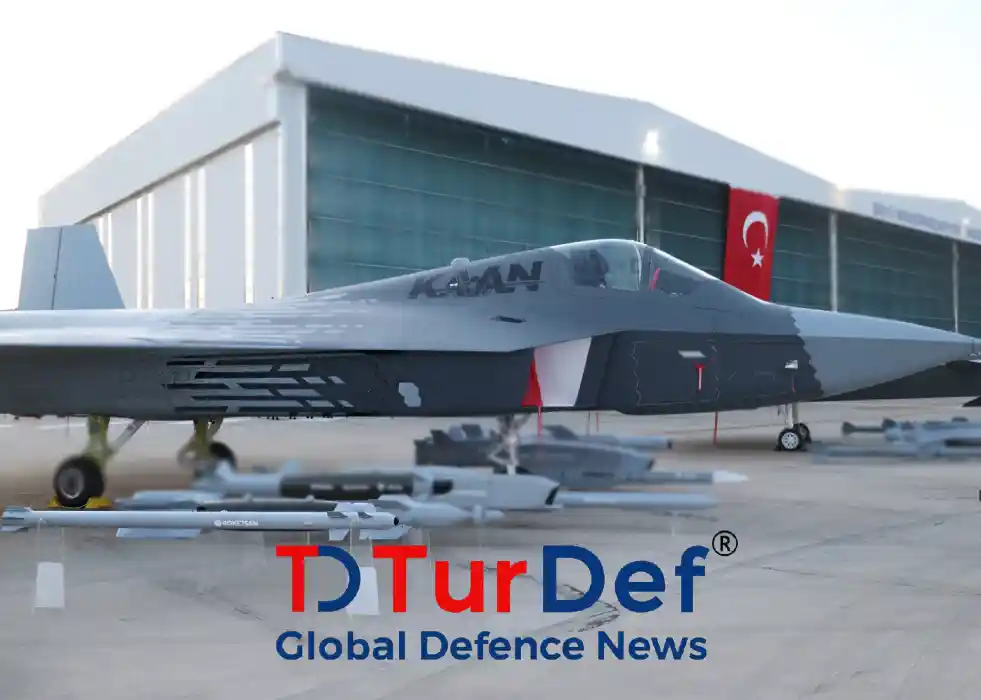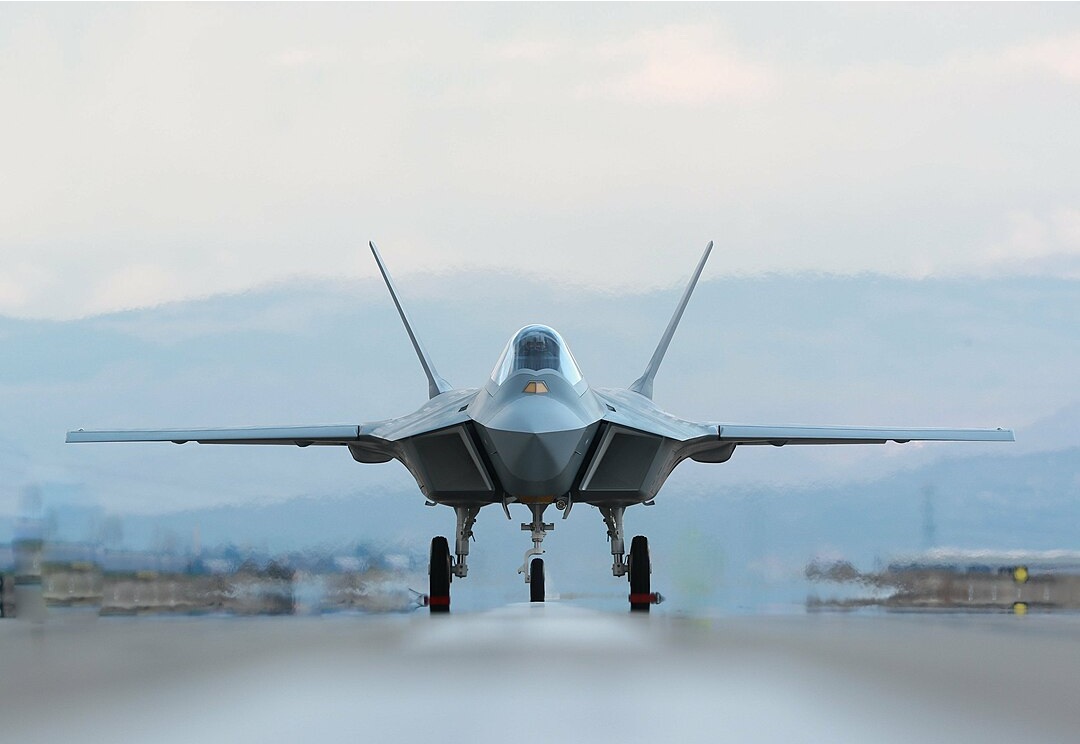
Altınay Defence Technologies [BIST: ALTNY] has entered the production phase for a pneumatic weapon release system developed for the TUSAŞ KAAN, marking a new milestone in the maturation of the programme’s subsystem architecture.
The company announced that it has completed the design phase of the pneumatic weapon release system intended for KAAN and has now transitioned to production.
The system will serve as a critical subsystem within the aircraft’s munitions integration infrastructure. However, the company’s statement did not disclose technical details of the architecture. It therefore remains unclear whether the system is designed for an internal weapon bay ejector configuration or for an external rack-based release unit.
Such systems play a key role in modern fighter aircraft, particularly in platforms designed to carry weapons internally. In these aircraft, munitions must be separated from the airframe cleanly and safely under complex aerodynamic conditions.
KAAN is designed as a fifth-generation aircraft with internal weapon carriage capability in order to preserve low-observable characteristics. The subsystem developed by Altınay is therefore expected to support the aircraft’s weapon integration architecture, which is built around the requirement to carry and release munitions without compromising stealth performance.
Altınay Defence Technologies CEO Z. Burak Mercan described the transition from design to production as a significant milestone within the KAAN programme.
“We are proud to move from the design phase to production for the pneumatic weapon release systems of the National Combat Aircraft KAAN,” Mercan said.
The company also stated that its Iron Bird test infrastructure has been completed and is currently in the acceptance phase. While the statement did not provide technical details of the facility, Iron Bird systems in advanced aircraft programmes are typically used to verify avionics, flight control and mechanical subsystems in an integrated ground-test environment before flight.
Such infrastructures allow engineers to test the interaction of major aircraft systems under simulated flight conditions and identify integration issues before flight testing begins. They are commonly used to validate integration between elements such as flight controls, landing gear, weapon bay mechanisms and release systems.

Alongside programme updates, Altınay released its consolidated financial results for 2025. The company is listed on the Turkish stock exchange and reported revenue of 3.139 billion Turkish lira, representing a 36 percent increase compared to the previous year. Gross profit reached 993.4 million lira, while net profit was reported at 163.4 million lira.
The firm’s total backlog stood at $182 million, reflecting ongoing demand for its engineering solutions and subsystem technologies across defence programmes.
Founded in 2014 within the Altınay Technology Group, Altınay Defence Technologies develops subsystems for land, air and naval platforms, including motion control systems, unmanned technologies and naval equipment. The company completed its initial public offering in 2024 and currently employs around 700 personnel across its defence subsidiaries.
Author: Özgür Ekşi