Republic of Korea offers Greece submarine acquisition projects, MUM-T drones, and military vehicle co-production to enter Europe’s €800bn rearmament drive.
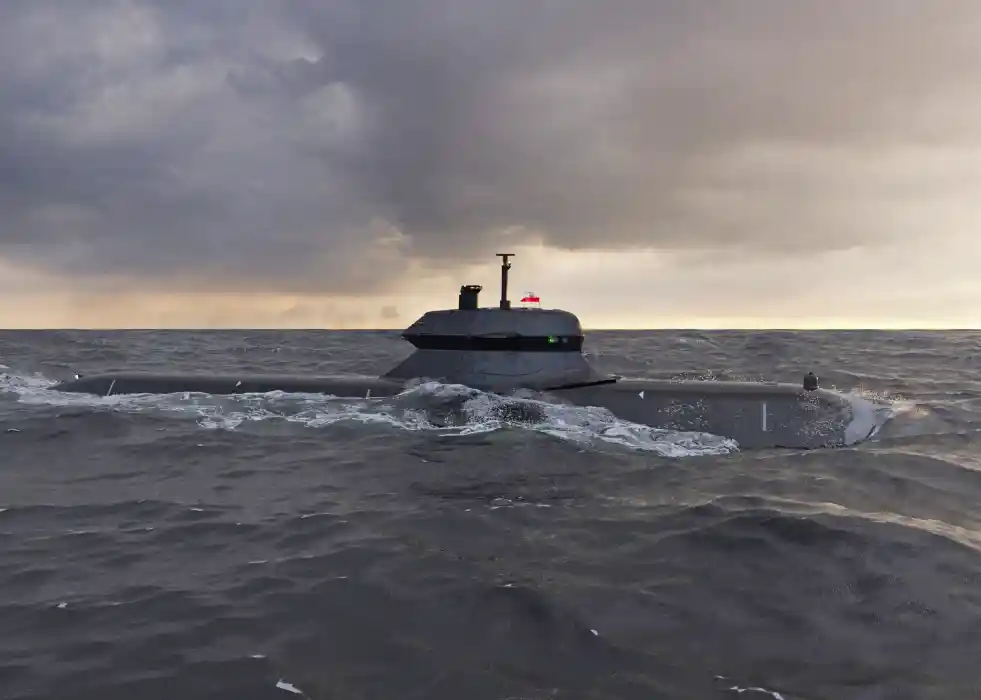
According to Ekathimerini, the latest offer comes from Hanwha Ocean and covers the construction of new submarines alongside the upgrade of Greece’s existing Type 214 fleet. Hanwha in this perspecting is also developing the KSS-III (Dosan Ahn Changho class) — the country’s first indigenously built submarine class capable of launching ballistic missiles.
The KSS-III Batch I variant features six vertical launch system (K-VLS) cells, while Batch II expands this to ten. These can deploy Hyunmoo 4-4 ballistic missiles or Chonryong cruise missiles. Equipped with air-independent propulsion (AIP), the KSS-III is the first AIP submarine class able to launch ballistic missiles. Batch I measures 83 metres in length, with Batch II extended to 89 metres and fitted with Samsung SDI lithium-ion batteries, enabling 20 days of submerged endurance without resupply.
Nine KSS-III units are planned in total, with three already in active service alongside modernised Type 209/1400 and Type 214 submarines. Greece has said that any work on submarines must involve at least 25% of the local military sector, and improvements must be done in Greek shipyards.
Athens is interested in these ideas as long as there is the money to pay for them. They fit with its Long-Term Armament Planning framework.
Officials are pushing for high-level talks to explore possible agreements.
The developments follow Greece’s recent legal victory in an almost two-decade arbitration case over its submarine programme. The International Court of Arbitration of the International Chamber of Commerce awarded Greece over €150 million, rejecting claims from companies linked to Lebanese businessman Iskandar Safa. The dispute originated in the early 2000s over four Type 214 submarines ordered from Germany, the first built there and the remainder at Skaramangas Shipyards. Despite Greek payments nearing €2 billion, contracts were terminated in 2010, leading to protracted legal proceedings.
Author: Özgür Ekşi