Romania receives a brand-new vessel that was originally built at ITK for the Turkish Navy but transferred to a new user without serving even a single day in Türkiye. This agreement brings more than a ship into the area of cooperation. Following Russia’s invasion of Crimea in 2014, Romania felt the need to strengthen its Black Sea fleet.
Turkish company STM, offering an Ada-class solution, came very close to signing an agreement, but political considerations overrode military requirements. EU projects and EU-funded procurement mechanisms altered the process. As a result, Romania lost almost a decade with France and eventually returned to Türkiye once again.
As a result, Romania’s programme for four new corvettes and the modernisation of two Type 22 frigates progressed only this far once the EU intervened. What the EU and France were unable to deliver, Türkiye ultimately did. Romania, in turn, has reached this point not with four corvettes and two upgraded ships, but with a single light corvette.
This new vessel carries Türkiye’s expertise, shaped across three seas—the Black Sea, the Aegean and the Mediterranean. It also offers significant growth potential thanks to its modular design. Romania describes the platform as a “light corvette,” emphasising its modularity and its own classification approach, while Türkiye defines it as an Offshore Patrol Vessel (OPV) due to its role within the Turkish Navy’s mission structure.
This article refers to the ship as an OPV, as this reflects the Turkish configuration at the moment. Since the Romanian Navy has not yet disclosed the armament it plans to integrate, the narrative assumes that the platform remains unmodified.
The roots of requirements
The definition of the exclusive economic zone, the Blue Homeland Doctrine and the hydrocarbon deposits discovered in the Eastern Mediterranean have led to significant changes in the requirements of the Turkish Naval Forces. For the navy, which is responsible for the majority of coastal security and maritime control operations using Burak-Class Corvettes, the end of the economical lifespan of these platforms, challenges in procuring spare parts, and a natural increase in the incidence of breakdowns have highlighted the need for the procurement of a modern offshore patrol vessel. In this context, ASFAT has developed a platform that bears a strong resemblance to the Ada Class Corvettes.
Offshore Patrol Vessel
Prior to the examination of the project and the vessel, it is beneficial to establish a clear conceptualisation of the offshore patrol vessel. The platforms in question, which can be utilised in the inventory of naval forces or coastguard units, are vessels capable of performing patrol tasks for a minimum of 15 to 20 days. Such duties include the prevention of smuggling, the securing of economic zones, the protection of critical infrastructure such as oil and gas platforms, the control of maritime trade routes, the combatting of terrorism, piracy and narcotics, the conducting of search and rescue operations, illegal fishing, nature conservation and humanitarian aid activities. Depending on their mission profile, patrol vessels equipped with various weapons are expected to have high-level sensor equipment, and many have helicopter and/or unmanned aerial vehicle operating capabilities.
The establishment of border demarcation by means of the erection of barbed wire or walls on the sea, analogous to those constructed on land, and the planting of flags in various locations, is not subject to debate. Consequently, a vessel arriving in the region may be required to fly its flag for a period of weeks without returning to port. Although patrol vessels have long-range cruising capability due to necessity, this is mostly achieved at the expense of maximum speed. Platforms can also carry out combat-related tasks such as laying mines, providing an armed escort, engaging in surface warfare and supporting special operations as required.
Hisar Class
Given the long cruises undertaken by patrol vessels, prioritising crew comfort is an expected characteristic. The main tasks defined for the indigenous offshore patrol vessel in the official document published by ASFAT (General Directorate of Military Factories and the General Directorate of Naval Shipyards / Askeri Fabrika ve Tersane İşletme Anonim Şirketi) are stated as follows: intelligence, surveillance and reconnaissance; search and rescue; counter-terrorism; maritime control operations; and special operations. The dossier lists the following as secondary tasks: naval air operations; electronic and acoustic warfare; shore bombardment; protection of maritime transport; support for amphibious operations; special operations and reconnaissance; search and rescue; and maritime control operations.
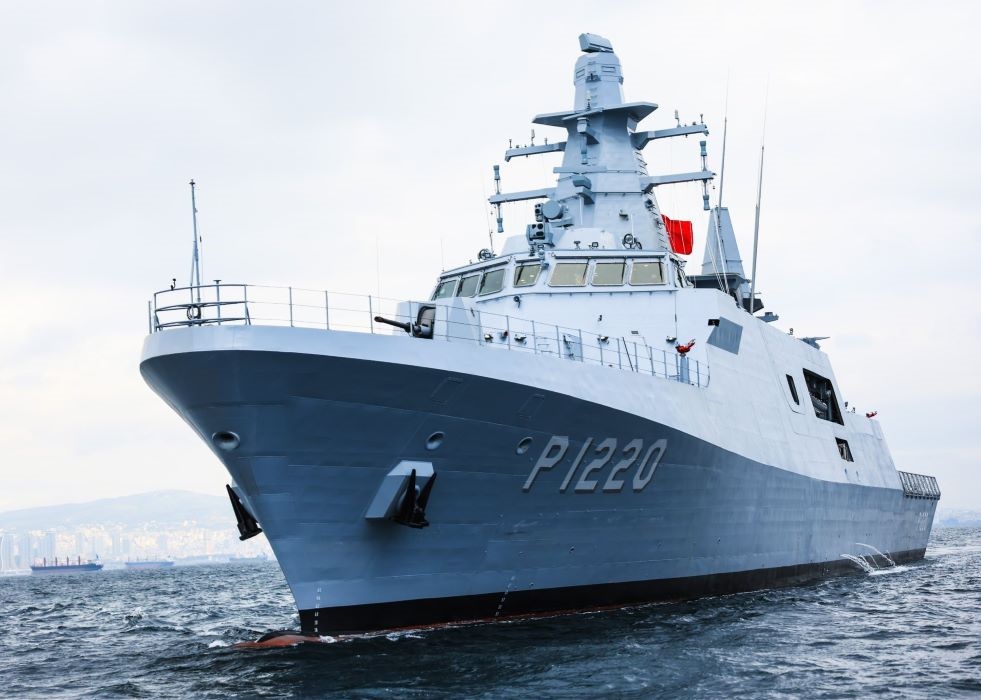
The Offshore Patrol Vessel has a structure similar to that of the Ada-Class Corvettes. It measures 99.56 metres in length and 14.42 metres in width, and has a displacement of 2,300 tonnes. Like the Hamilton-Class Coast Guard Cutters used by the US Coast Guard, these platforms have fitted-but-not-with infrastructure and upgraded to combat equipment quickly when necessary. This reduces maintenance costs while offering operational flexibility without compromising combat capability.
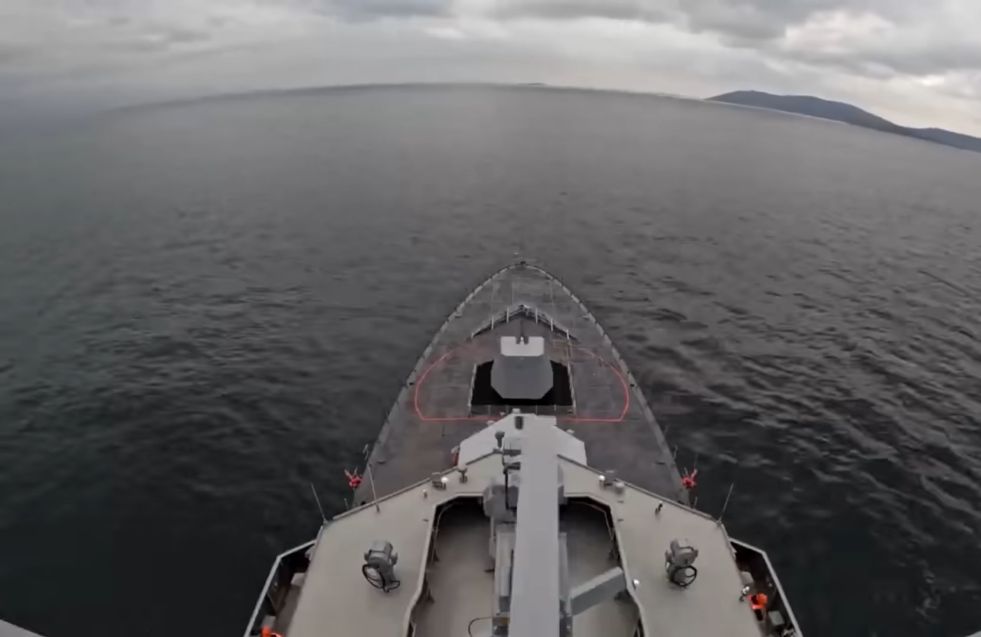
In the Combined Diesel Electric or Diesel (CODELOD) configuration, the Offshore Patrol Vessel is equipped with four main diesel propulsion engines and two electric motors. As with the Ada Class Corvettes, there are two shaft-driven, pitch-controlled propellers. Four diesel auxiliary engines also meet the vehicle's electricity needs. The vessel, which has a stated maximum speed of 24 knots, reportedly reached 26.9 knots during testing. The operational range is stated in the official document as 4,500 nautical miles at an cruising speed of 12 knots. There are two replenishment-at--sea stations that can extend the operational duration of surface vessels, enabling them to carry out long tasks for up to 21 days without the need to return to port. The Offshore Patrol Vessel can accommodate 104 personnel in her living quarters and can be equipped with a helipad and hangar suitable for operating a 10-ton class utility helicopter, an unmanned aerial vehicle, and two boats (one 7.5 metres and one 5.5 metres) for extended operations or deployment missions. The OPV may also operate in CBRN environments.
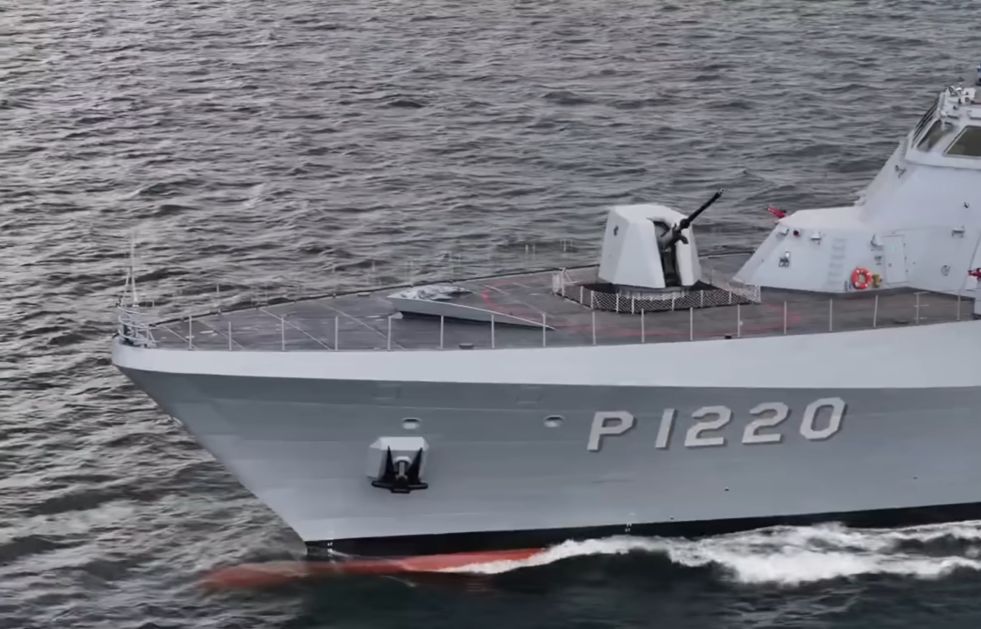
Although the Hisar Class offshore patrol vessels have similar weapon and sensor equipment to the Ada Class platforms, it is fair to say that new vessels is more up to date and adapted to asymmetric warfare. The platform's firepower consists of a 76-millimetre Denizhan gun at the bow, a Roketsan Yalman gun turret on the deck adjacent to the bow hull, up to eight Atmaca anti-ship missiles in the mid section, and, slightly further aft, a 12.7 mm remote-controlled weapon station (RCWS) manufactured by Unirobotics on the upper sides of the port and starboard hulls, and an ASELSAN Gökdeniz 35 mm close-in-weapon system (CIWS) on the hangar.
The sensor infrastructure comprises sonar, a top-mounted gun and Scorpion fire control radar for Gökdeniz, a MAR-D 3D search radar on the radar mast, a Piri infrared search and track system, IFF and electronic warfare equipment. Given that her radar, sensor and electronic warfare capabilities are equivalent to, and sometimes surpass, those of the Ada-Class Corvettes, it is worth examining meaning of class' propulsion, armament, aircraft and sensors.
The drive infrastructure configuration was previously described as CODELOD. A similar system is used in the Italian Navy's Vulcano-Class Replenishment Ships. In this system, shafts are driven by electricity generated by diesel engines, which are engaged when speed is required to increase cruise economy. Thanks to this combination, which is known to significantly reduce costs by providing propulsion and electrical energy simultaneously, the time between maintenance of the propulsion equipment is enhanced. Conversely, the operational range of 3,500 nautical miles of Ada-Class platforms, which are powered by diesel and gas turbine engines has increased to 4,500 nautical miles, albeit at the expense of speed in a CODELOD configuration. The hull is made of steel, as it is in previous models, but some parts of the superstructure are made of aluminium. The specialised design of this structure not only reduces weight, but also minimises radar, acoustic and infrared signatures. This further decreases the platform's probability of detection.
It is known that Ada Class Corvettes can occasionally exceed their maximum design speeds. This feature, which indicates advanced hydrodynamic capabilities, is highly likely to be present in offshore patrol vessels. Stabilization fins are installed on ships to meet operational demands in rough seas and facilitate helicopter operations when necessary. This means that the platforms have full operational capability in Sea State 5 and limited operational capability in Sea State 6. The presence of a degaussing system on Ada-Class ships and Hisar platforms will be one of the key factors in increasing resistance to magnetic mines. As with previous platforms, it should also be noted that the Combat Information Centre features armour protection, an outer coating that reduces magnetic signatures, and a shock-absorbing floors. The ability of the damage control centre to control and monitor 80% of the ship from a single point, coupled with its redundant design, are important features that enhance survivability.
The Hisars boast capabilities and potential that are almost on par with those of a frigate, especially given their size. On the other hand, the vessels' similarity to the Ada-Class Corvettes is significant, as it will reduce maintenance and sustainment costs and greatly simplify crew training and orientation processes. The Ada-Class corvettes have a crew of 80, while the OPVs have living quarters for 104 personnel. Upon comparing the data, it is possible to conclude that the discrepancy suggests the existence of additional spaces on the ship intended for special operations units or personnel undergoing training. This is also one of the requirements that are sought for patrol ships. In terms of armament, the presence of 76mm guns and anti-ship missiles on Hisar-Class vessels can be interpreted as an emphasis on surface warfare on these platforms. Weapons are fitted-but-not-with situation specified as capable of launching Atmaca systems.
Although opting for Gökdeniz instead of RIM-116 RAM in the Hisars means sacrificing CIWS capability, choosing a domestic system will reduce both initial acquisition and maintenance costs. At this juncture, it is reasonable to conclude that, in the case of offshore patrol vessels, air defence equipment is, in general, conceptually weak. However, with the fitted-but-not-with approach, suitable locations will be available on ships for the integration of vertical launch systems after the first two platforms. Consequently, these vulnerabilities can be solved swiftly during wartime. It should also be noted that the free space located beneath the helipad provides the capability for unmanned surface vehicle (USV) or armed unmanned surface vehicle (AUSV) storage and operations. ASELSAN's Atom 35-millimetre programmable round is renowned for its ability to destroy targets with short bursts of fire, thanks to its longer engagement range and greater ammunition capacity when compared to other 20- and 30-millimetre CIWS. Many authorities have drawn attention to 35-millimetre class as a key feature in new-generation barrelled very short-range weapons solutions. The presence of Unirobotics 12.7-millimetre weapon systems with the Yalman Turret, capable of launching UMTAS and CİRİT missiles, indicates that engagement to surface asymmetric targets is a priority. Following the integration of the first two platforms, it is planned that the ships will also be equipped with DÜFAS and 324 mm torpedo tube capabilities. In terms of armaments, the Hisar-Class OPVs are comparable to the predecessor corvettes. In terms of mission profiles, patrol vessels require slightly more advanced asymmetric warfare capabilities.
The Scorpion (Akrep) fire control radar offers up to 30 kilometres effective range in the Block A1 model. The system has four separate variants as A2, B1 and B2. It is known that the solution, which is expected to use B models, operates in the X and K-bands, has X-band illumination capability, and offers an effective range of 120 kilometres. It is likely to be integrated with TAKS, developed for 76-millimetre guns. It is known that the indigenous fire control system offers pinpoint attack capability up to 7,500 metres, automatically directing the barrel towards the exit point by calculating the speed and trajectory data of targets concealed behind cover or geographical elements. Each Piri sensor unit is capable of independent movement and has an elevation capability of between minus 10 and plus 45 degrees, as well as a 360-degree rotation capacity. The system has the capacity to track in excess of 50 targets simultaneously, while maintaining a false alert rate of less than one per hour. The system, which possesses dual-band infrared imaging and MWIR and LWIR detection capabilities, is a significant multiplier that increases countermeasure and reaction times, including in low-light conditions, thanks to features that enhance situational awareness. These include passive search and tracking, detection and tracking of airborne and surface-launched guided missiles, high image refresh rates, and rapid response.
Ships will be able to gather necessary information about friendly and enemy elements on the battlefield through their passive electronic support systems. This will enable the preparation of intelligence data without detection and the more accurate determination of the course of action.
TACAN equipment will be installed on the platforms to ensure the safe navigation of helicopters and other aircraft. IFF equipment ensures the accurate identification of both friend and foe. Conversely, the presence of anti-submarine warfare helicopters on ships represents the most significant armament, offering the capability to hunt enemy submarines underwater when necessary. The transition to the HAVELSAN ADVENT system is also an integrated solution that facilitates coordination with other elements of the Turkish Navy. It is evident that ADVENT, the most advanced combat management infrastructure in the Navy's inventory, offering high data transfer speeds with Link 16 capability, will provide optimal solutions by managing the aforementioned capabilities in the most appropriate manner.
As stated earlier, Romania’s plans have not yet been announced. Türkiye designed the ship in line with the Turkish Navy’s requirements. Any potential future development projects of the Romanian Navy are not included in this analysis.
Author: Özgür Ekşi
Further details on Romania’s rationale for selecting ASFAT’s Akhisar can be found here.