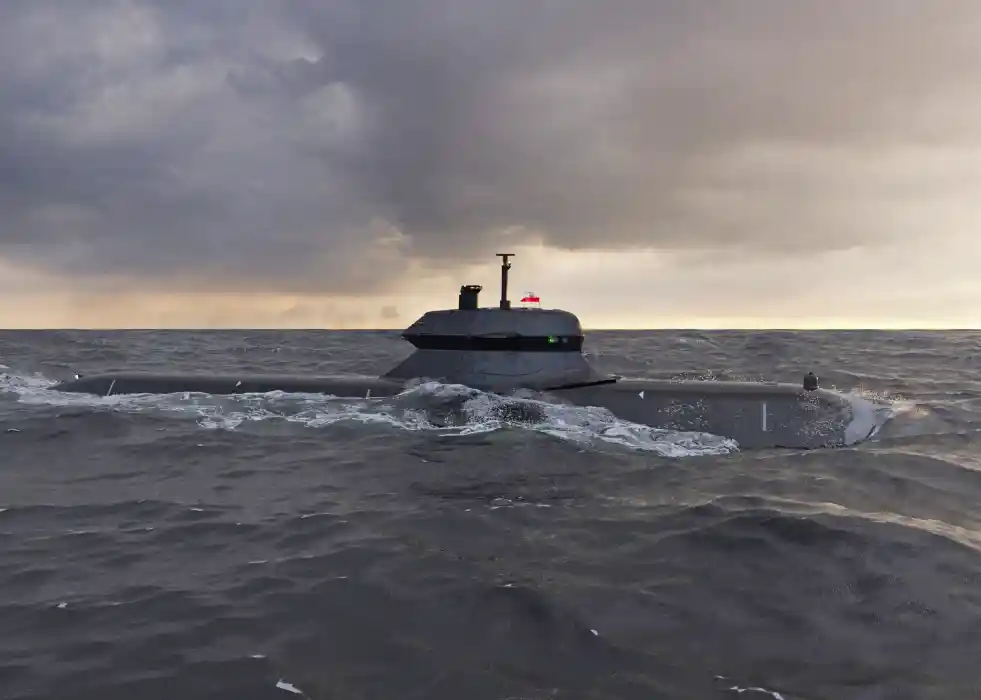
Russia has shown a new non-nuclear Amur 950 attack submarine with ten vertical launch systems for BrahMos missiles. Russia has unveiled the export version of Project 677, popularly known as the Lada-class submarine, a new Amur 950 assault submarine with ten BrahMos missile vertical launch systems. The submarine is marketed as a modernised variant of the Kilo-class submarine, with enhanced acoustic stealth, upgraded combat systems, and autonomous air propulsion (AIP) capabilities.
The Rubin Central Design Bureau refers to the submarine as a "naval floating battery" because it can launch pre-emptive strikes on enemy ships and coastal infrastructure. The submarine can operate for up to 30 days at a maximum underwater speed of 20 knots, allowing it to stay within 1,000 miles of shore. The Amur 950 displacement is 950 tonnes. It is unclear whether it represents submerged or on-the-surface displacement.
The submarine is 58.8 m long, 5.65 m wide, and 6.4 m high. The staff consists of only 19 persons, emphasising the system's automated nature. The submarine's weaponry consists of four 533 mm torpedo tubes with a total ammo capacity of 16 units, including torpedoes, missiles, and mines.

The Amur 950 also has ten vertical launch systems (VLS), which can fire salvos at multiple predefined targets. It can launch BrahMos supersonic missiles.
Russia earlier offered India the larger variant of the Amur submarine, the Amur-1650, as part of the 75I submarine acquisition deal. India wants to employ its BrahMos capacity, which the Amur 950 supplies via a VLS system.
The Indian Navy currently operates seven Kilo-class submarines acquired from Russia. They are known as the Sindhughosh class and have received many life extensions and capabilities enhancements.

The BRAHMOS ship-based version is mounted vertically in a modular launcher within the submarine's pressure hull. It may be fired from a submarine at 40-50 metres depth.
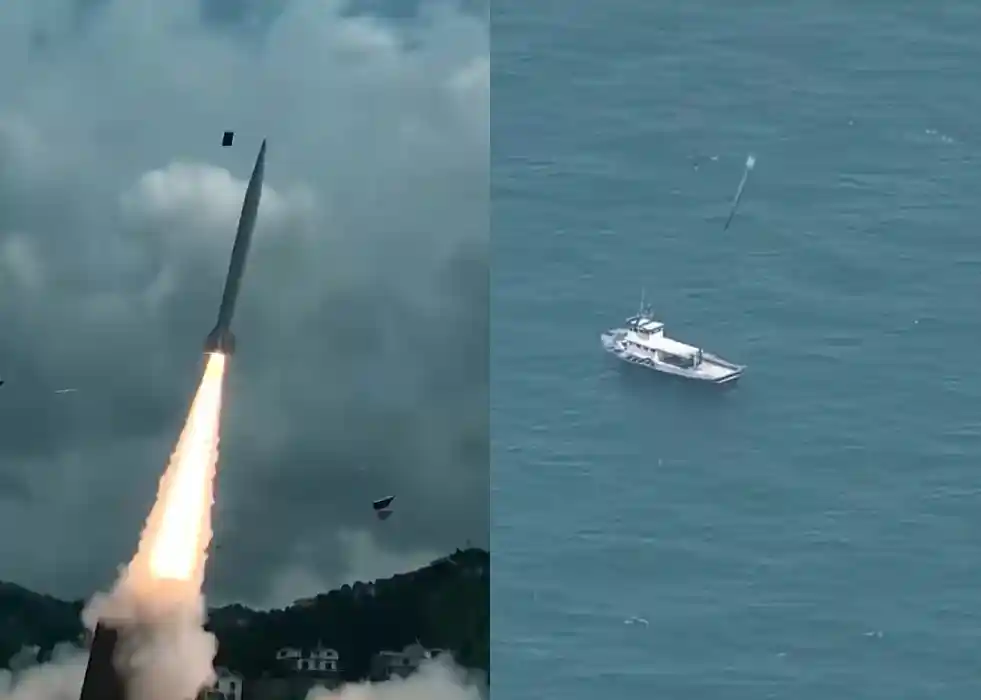
The missile saved in a canister is launched vertically, with the nose cover preventing water from entering the 'air intake' during underwater flight. When the missile emerges from the water, the sensors issue the "out of water command," the nose cap fires to steer the missile in the proper direction to reach the target.
Only official open-source information about that missile dates back to its first missile test in 2013. At that test, the missile had a range of 290 kilometres.