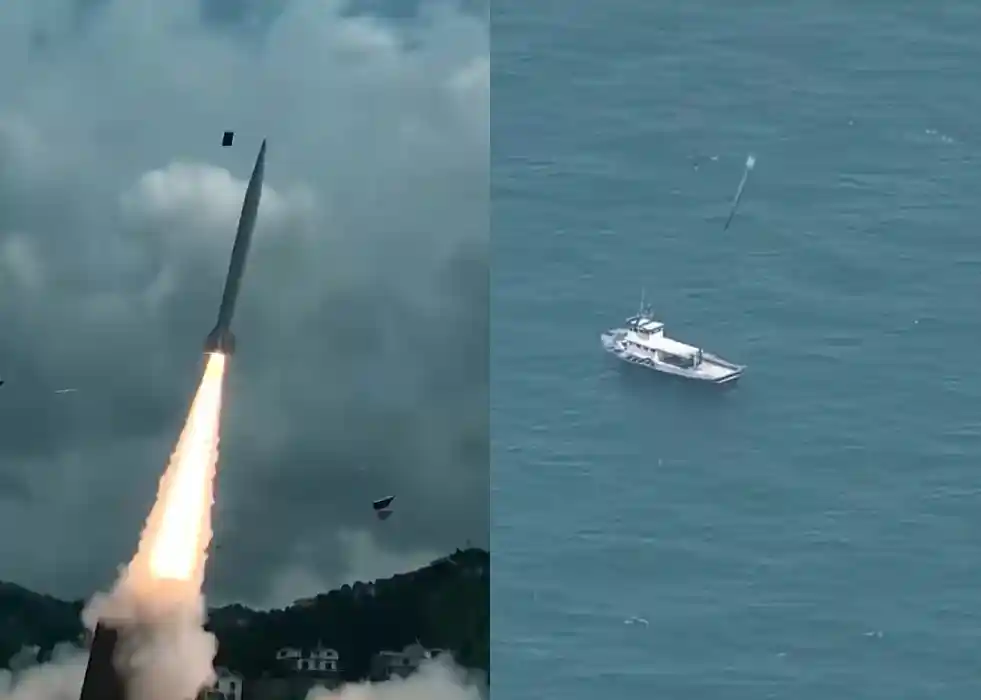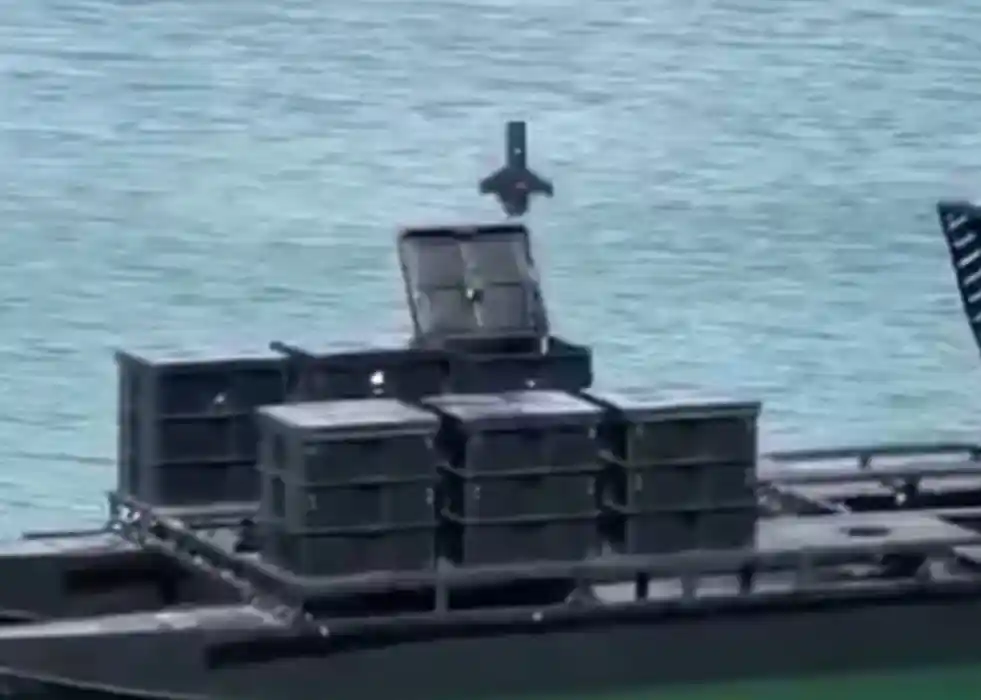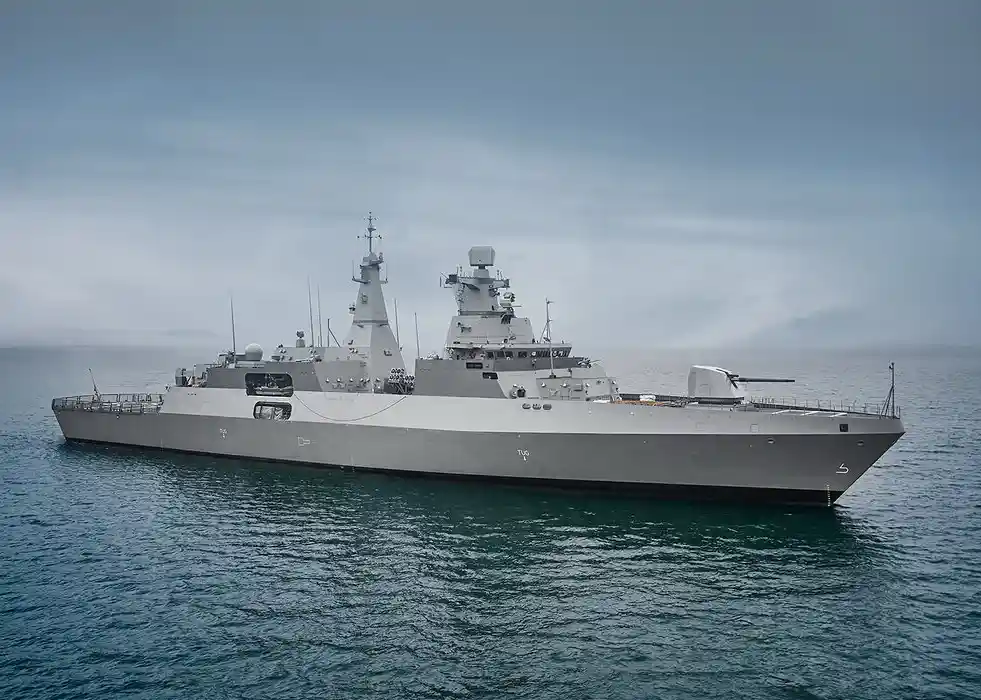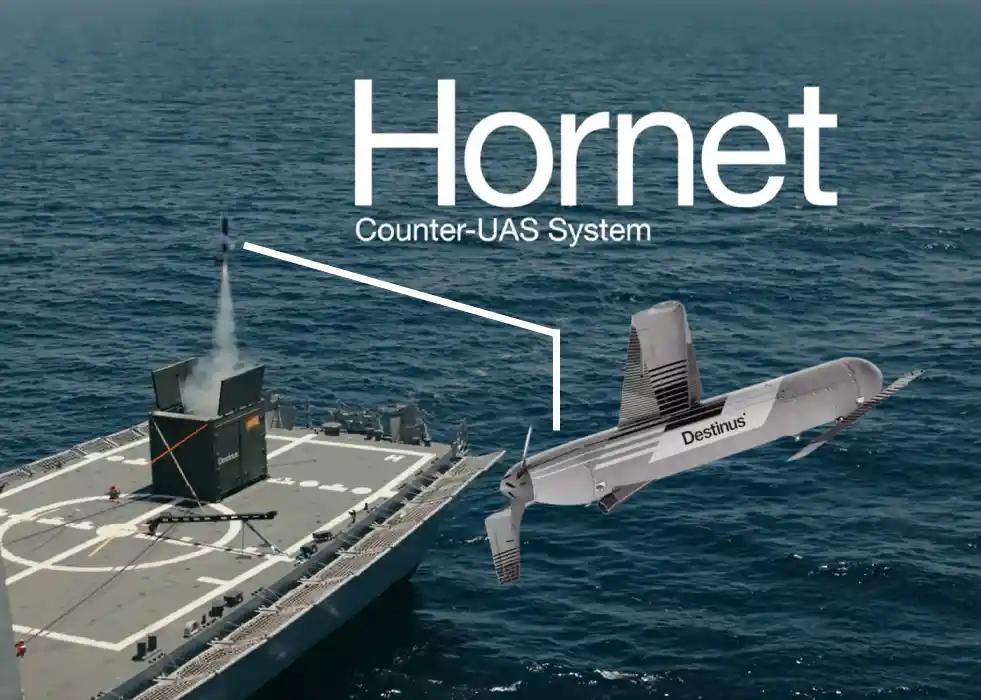
Santa Maria-class frigate SPS Santa Maria (F81) of the Spanish Navy completed a firing test of Destinus’ Hornet Block 1 interceptor UAV from a container.
Destinus announced a test displaying plug-and-play use onboard ships for its Hornet Block 1 fixed-wing interceptor UAV in collaboration with the Spanish Navy.
Hornet Block 1 was launched from a container placed on the helipad of the ex-Oliver Hazar Perry-class frigate operated by the Spanish Navy. It is understood that the test might have included midcourse guidance from the onboard radar as it is only natural for interceptor UAVs to be directed by long-range sensors until the optical seeker with relatively low performance can take over at terminal stage.
Containerised interceptor UAV launchers can allow ships to conserve their highly capable but costly and hard to reload air defence missiles against kamikaze UAVs or even other low flyers like helicopters.
The expenditure of air defence missiles against cheap kamikaze UAVs like Shaheed-136 has been pointed as a major problem during the maritime security operations in the Red Sea in which multiple attacks by Houthis using UAVs took place. In fact, the US Navy has invested in a similar concept to Destinus-Spanish Navy collaboration, through the integration of Coyote Block 2 and Roadrunner-M turbojet-powered interceptors on AEGIS destroyers in the aftermath of the operations.
Hornet Block 1 is a fixed-wing interceptor with RATO launch, featuring a range of 75 km, which can also be translated to longer endurance than the quadrotor types. The interceptor UAV carrying a 1.5 kg warhead is guided towards the target’s vicinity through onboard radar or optics, and the optical seeker takes over at the terminal stage.
Destinus was founded as a firm focused on R&D of small-sized hypersonic cargo delivery UAVs in the Netherlands. The firm’s attention has shifted towards UAVs and the low-cost Ruta cruise missile family in the wake of the Russo-Ukrainian War.
Author: Kaan Azman
Editor:Özgür Ekşi