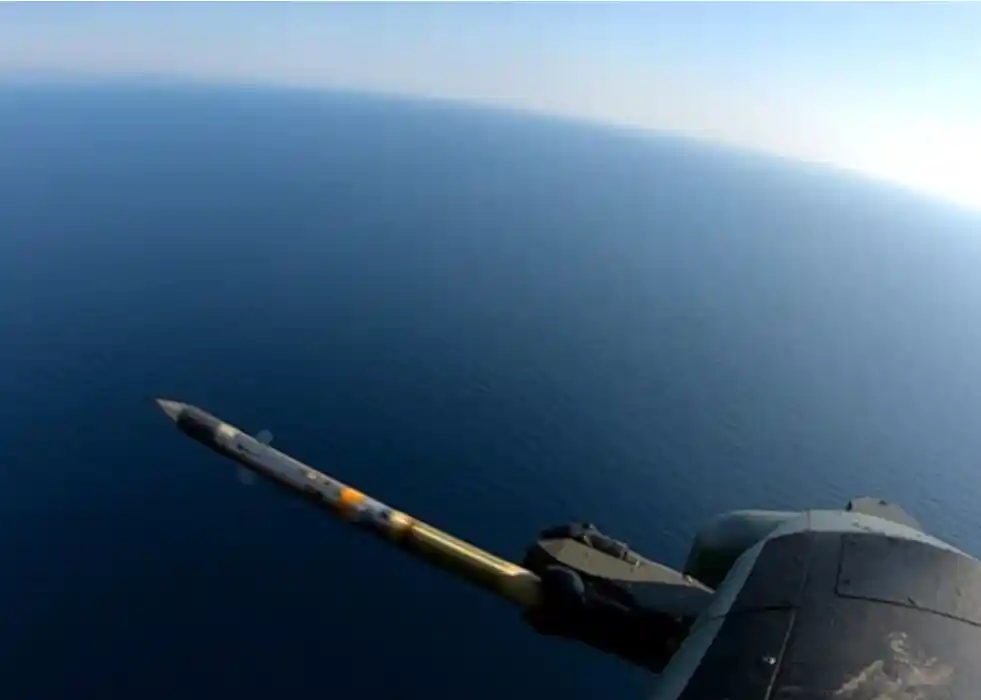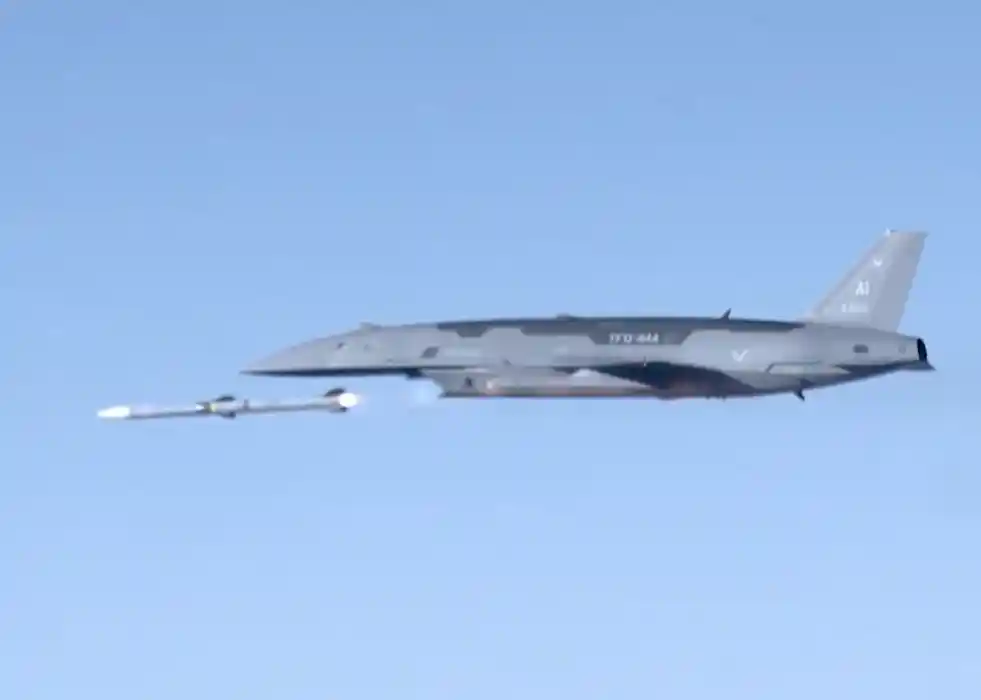
US-based defence startup Aeon has announced that it is testing a new anti-tank guided missile named Zeus, designed to offer a lower-cost alternative to advanced guided systems such as the FGM-148 Javelin. The development reflects a growing trend in Western defence industries toward simpler, scalable munitions that can be produced in larger quantities amid rising procurement costs.
Developed to provide a low-cost alternative to expensive guided systems such as the FGM-148 Javelin, the munition utilises commercial components that can be readily sourced from the civilian market.
The system, which prioritises engaging armoured vehicles with small units, has a ready-to-launch weight of approximately 20 kilograms. According to the manufacturer, sub-components such as guidance modules, propulsion units and warheads can be configured according to operational requirements.
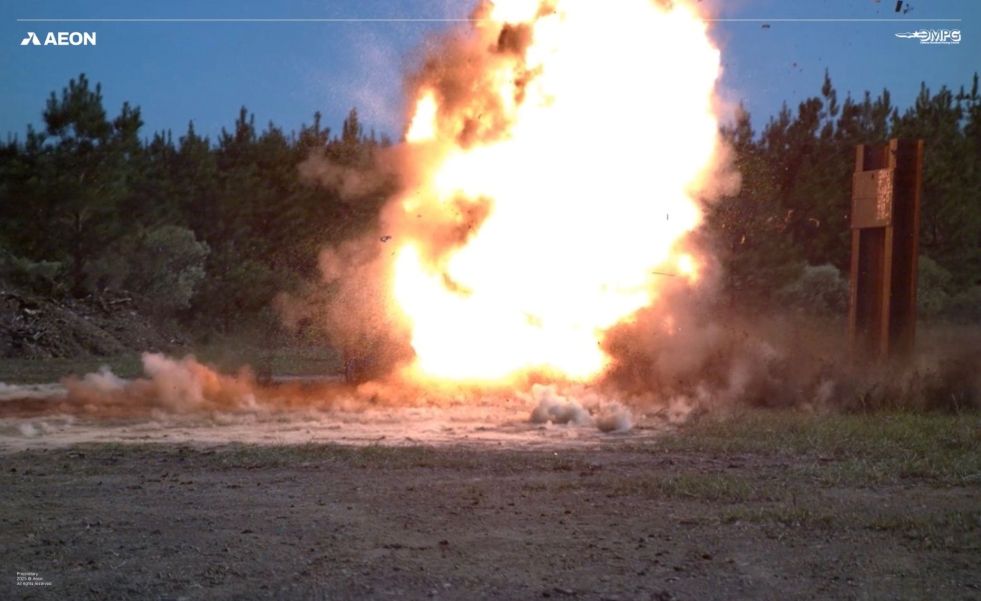
The system uses AI-assisted target recognition and can automatically detect and identify targets through the ODIN infrastructure, providing a ‘fire-and-forget’ capability. The solution offers both single-use and multi-use launcher options and can also be operated from vehicles. Zeus is compatible with the Android Tactical Assault Kit (ATAK) combat management software. This enables remote command, control and targeting functions across connected battlefield systems.
The Zeus system incorporates carbon fibre structures and components produced using additive manufacturing techniques, allowing parts to be sourced from a broader industrial supply chain rather than specialised military production lines. The approach is intended to simplify manufacturing and reduce overall production costs.
From the late 1980s and early 1990s onwards, the ‘quantity over quality’ approach favoured during the Second World War and the Cold War gradually gave way to the concept of the ‘perfect weapon’, particularly in Western defence thinking. This shift has contributed to rising procurement costs and increasingly complex acquisition processes, making it difficult for militaries to procure weapons and systems in the required quantities. One of the most pressing challenges for Western nations, led by the United States, remains the depleted arsenals caused by large volumes of weapons supplied to Ukraine. Rising costs, reduced production capacity and the loss of certain industrial capabilities are among the key factors behind the current supply constraints. However, the difficulty faced by large, established defence contractors in reducing costs is also creating opportunities for smaller companies and start-ups to offer innovative, lower-cost solutions.
Author: Özgür Ekşi