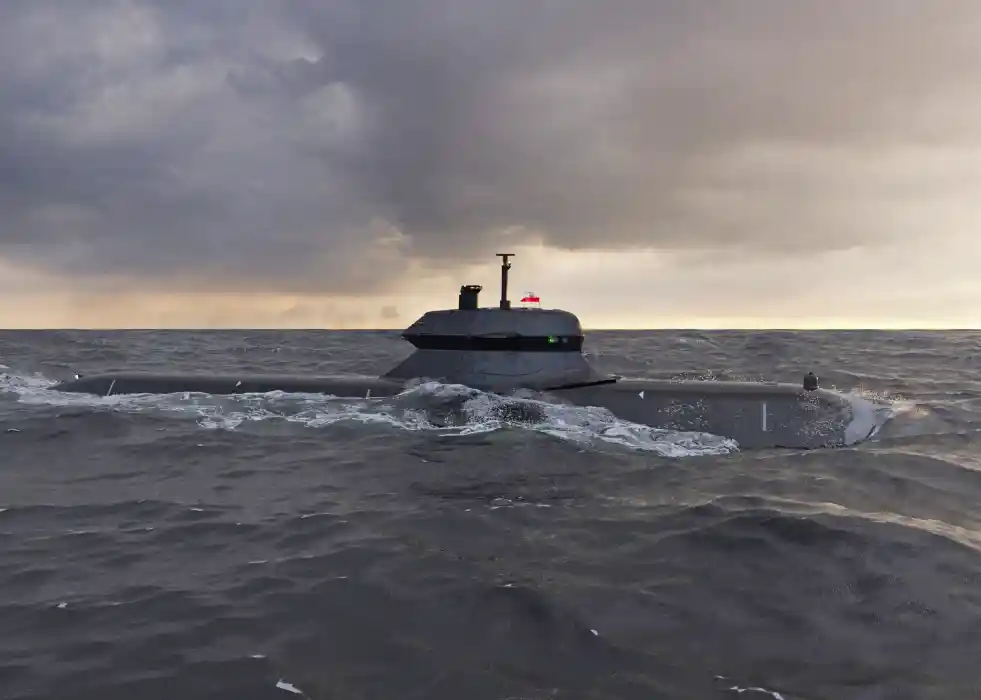
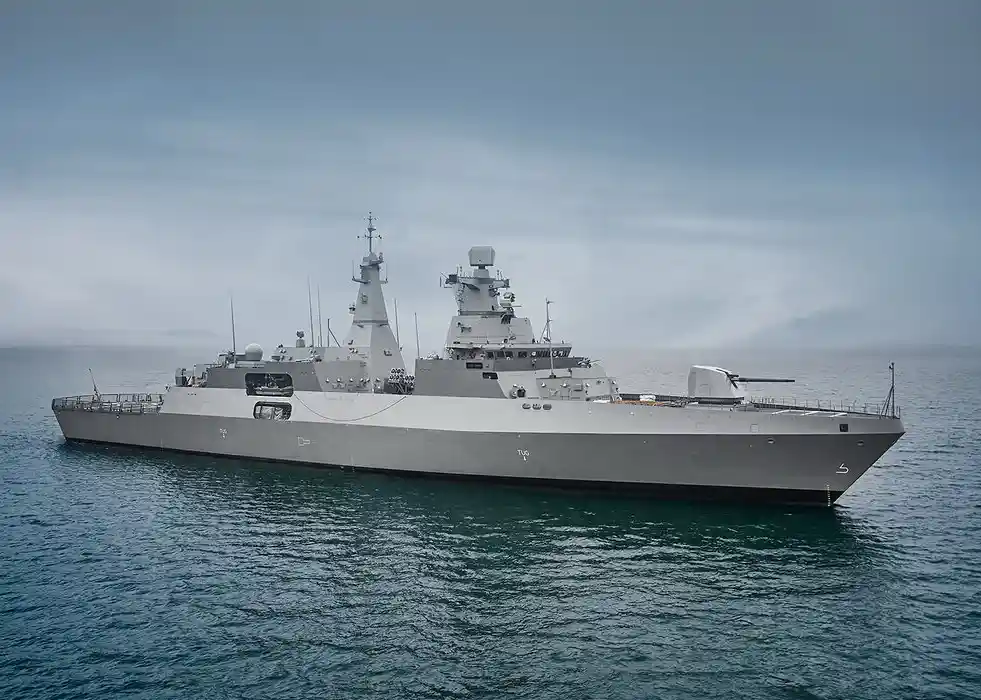
The Swedish government has initiated a four-frigate procurement program because of increasing Baltic Sea threats and rising Arctic Silk Road shipping activity and Russian-Chinese expansion in the High North region.
The Swedish Ministry of Defence plans to execute a contract for four new frigates which will be called Luleå‑class frigate because the country needs to update its defense strategy following NATO and NATO membership and the changing security situation between the Baltic Sea and Arctic regions.
The ministry plans to select a supplier during the first quarter of next year before starting the production of four ships. The decision to acquire new frigates emerges from the rising strategic value of northern waters because of new trade routes and rising great-power activities and harsh conditions of operating in high-latitude regions.
The Baltic Sea stands as one of Europe's most intricate maritime space. The Baltic Sea's restricted waterways and shallow waters and low salt levels produce difficult acoustic conditions which reduce sonar performance and produce false submarine detection signals during anti-submarine warfare. The seabed contains extensive networks of vital undersea infrastructure which includes fiber-optic cables and energy transmission lines that make the area highly susceptible to disruptions.
The Baltic Sea has become an unpredictable and contested area because Russia conducts hybrid underwater operations and there have been suspected sabotage incidents and the deployment of unmanned systems and continuous electronic interference. Sweden requires its future frigate class to protect critical infrastructure and enhance operational awareness while demonstrating ability to withstand complex multi-domain threats.
The Baltic Sea now faces strategic changes because of events which occur outside the northern European region. The fast melting of Arctic sea ice has established the Arctic Silk Road which makes the Northern Sea Route more appealing for Asian-European cargo transportation. A growing share of China-origin goods is shifting towards the Arctic corridor, which links naturally to Baltic ports. As a result, the Baltic is no longer simply an internal European waterway but the southern gateway to a new intercontinental maritime artery. Increased traffic requires stronger search-and-rescue coverage, environmental monitoring, maritime safety enforcement and emergency response capacity — roles in which Sweden’s next generation of frigates will be expected to contribute.
The High North experiences strategic balance changes because Russia and China operate simultaneously in this region. Russia operates the world's biggest and fastest-expanding icebreaker fleet which includes nuclear-powered ships that maintain continuous access to the Northern Sea Route. The capability enables Moscow to maintain complete control over Arctic logistics while strengthening its military presence in the region. China operates merchant ships through the Arctic route without icebreaker support during specific periods which demonstrates its growing self-reliance in Arctic logistics operations. The emerging developments in the Baltic region intensify the Arctic-wide geopolitical competition that affects the entire region.
Naval operations in the Baltic face challenges because satellite communication systems do not function properly in this area. The Earth's geoid shape and high latitude position of the region make geostationary satellites appear at extremely low angles in the sky. The signals encounter thicker atmospheric layers which cause signal strength reduction and sea-surface reflections that distort the signals. The connection will break when the ship experiences significant roll and pitch movements during rough seas.As a result, Baltic-based naval units require higher-gain antennas, more precise tracking systems, advanced stabilisation platforms and often LEO or MEO satellite constellations for redundancy. The challenge is not raw transmitter power but compensating for inherent geometric disadvantages.
The Baltic–Arctic axis presents additional challenges because of its diverse climate patterns. The region experiences long periods of freezing temperatures along with heavy moisture and dense sea fog and ice formation and snowfall and salt-containing atmospheric particles. The upcoming Swedish frigates need specialized design elements because of their operating environment which includes de-icing systems for sensors and communication masts and anti-icing solutions for the superstructure and cold-weather engine improvements and modified fuel and hydraulic systems. The crew needs specific training for cold weather operations because they will spend long periods in Arctic waters where visibility worsens and equipment fails and ships become unstable.
The combination of these elements demonstrates that the four-frigate program in Sweden exceeds standard procurement procedures. The program represents a strategic military response to the new maritime environment which extends from the Baltic Sea to the Arctic region.The new class will be required to operate in challenging anti-submarine conditions, secure critical undersea infrastructure, support increasing Arctic Silk Road traffic, counter Russian and Chinese activity in the High North, maintain robust connectivity despite satellite limitations and remain fully effective in harsh northern climates. Sweden’s decision marks a significant step in reshaping the emerging security architecture of Europe’s northern frontier.
Author: Özgür Ekşi