US strikes against Iran have consumed large quantities of high-end munitions in a short period of time, prompting debate in Washington about the sustainability of critical weapons stockpiles and the growing cost of the war.
President Donald Trump launched the attacks under a politically and legally sensitive framework. If the operation ends before evolving into a full-scale war, the administration will likely present the campaign as a limited military success. But that outcome depends on maintaining a strategy of long-range stand-off strikes designed to pressure Iran while avoiding US casualties.
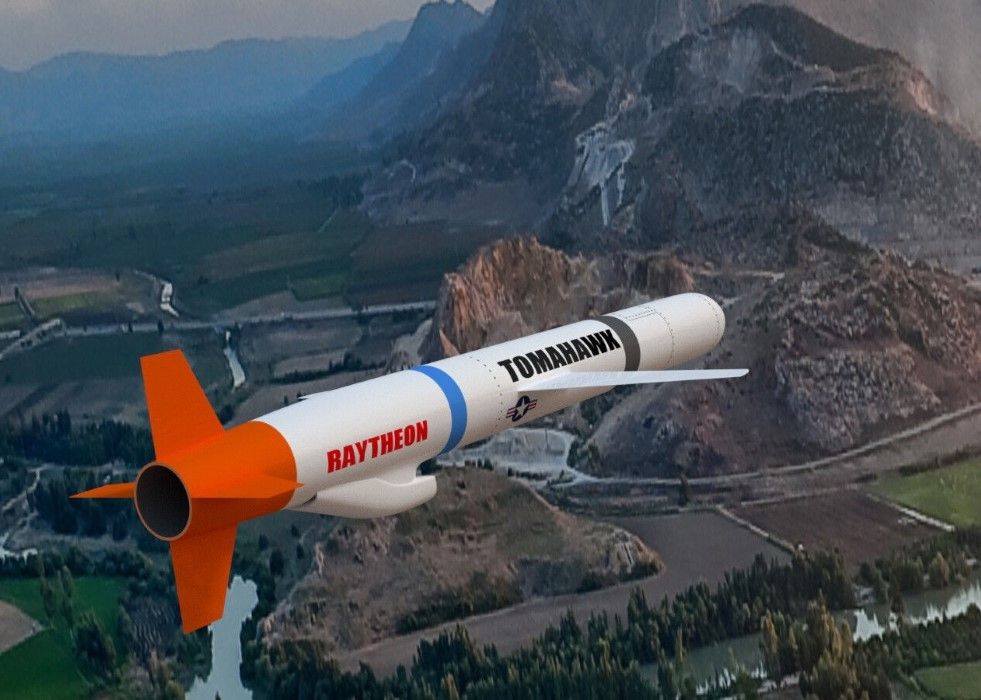
According to a report by the Financial Times citing three sources familiar with the matter, the US military has already burned through significant portions of critical munitions accumulated over several years. Among the weapons seeing the fastest depletion are long-range Tomahawk cruise missile systems.
A source familiar with US military munitions usage described the scale of Tomahawk employment as “a massive expenditure,” adding that “the Navy will feel the impact of this for years.”
The rising cost of the conflict and oil prices climbing above $100 per barrel are also increasing political pressure on the administration. With the United States entering a midterm election cycle, rising fuel prices and the possibility of a prolonged conflict in the Middle East are fuelling criticism of the war among voters.
Pentagon officials are expected to request up to $50 billion in additional military funding from the White House and Congress in the coming days. The request is likely to intensify debate in Congress about the administration’s Iran policy.
US officials told lawmakers that the first six days of operations alone cost more than $11 billion, with most of the spending tied to munitions consumption.
American defence planners have warned for several years that in a major conflict with powers such as China or Russia, the rate of precision-weapon consumption could outpace the US defence industry’s production capacity.
However, US Defence Secretary Pete Hegseth said last week that the United States is not facing a munitions shortage and that existing stockpiles remain sufficient to sustain the current campaign.
The White House also insisted that US forces have enough weapons to achieve the goals of “Operation Epic Fury,” the ongoing military campaign against Iran that began on 28 February.
Tomahawk cruise missiles, produced by RTX Corporation, (NYSE: RTX) carry roughly a 1,000-pound warhead and cost about $3.6 million per unit.
The US military has purchased only 322 Tomahawks over the past five years, while the US Navy plans to receive 57 additional missiles in fiscal year 2026 at a cost of $206.6 million.
The United States also fired at least 124 Tomahawks in earlier strikes against Houthi targets in Yemen and Iranian nuclear facilities during 2024 and 2025.
According to estimates by the Centre for Strategic and International Studies (CSIS), US forces launched approximately 168 Tomahawk missiles during the first 100 hours of the war that began on February 28.
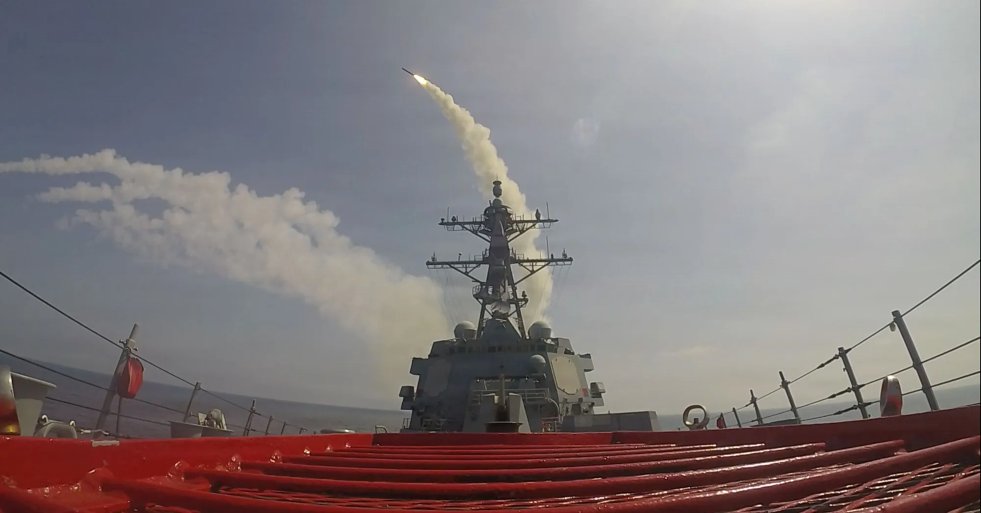
Tomahawk missiles have long been central to Washington’s concept of controlled escalation. With a range of about 1,600 kilometres, they can be launched from destroyers, cruisers and submarines, allowing the United States to conduct precision strikes without deploying ground forces or flying aircraft directly over hostile territory.
This stand-off strike model has shaped US military operations for more than two decades. However, the rapid consumption of Tomahawks in the Iran campaign is now prompting debate about what happens if those inventories begin to tighten.
The United States does possess other long-range strike weapons, including AGM‑158 JASSM, AGM‑158C LRASM and AGM‑86 ALCM.
All of these systems, however, are air-launched. If Tomahawk stocks were to decline significantly, US forces could increasingly rely on bombers or fighter aircraft to deliver these weapons. That would require aircraft to approach Iranian airspace more closely, increasing exposure to air-defence systems while also requiring tanker support and more complex operational planning.
The United States’ stand-off strike doctrine over the past two decades has relied heavily on sea-launched cruise missiles. The rapid consumption of Tomahawks in the Iran war therefore raises questions about the long-term sustainability of that model.
On the other hand, the Tomahawk missiles may already play a limited role in a potential future conflict with China.
Flying at roughly Mach 0.7–0.8, Tomahawks can take one to two hours to reach distant targets, giving advanced air-defence networks time to detect and intercept them. China has spent the past two decades building a layered air-defence network that includes systems such as HQ‑9 and HQ‑22.
Distances in the Pacific theatre also pose a challenge. For example, the US territory of Guam lies roughly 3,000 kilometres from China’s coastline.
For this reason, some US defence planners believe future conflicts in the Indo-Pacific will rely more heavily on hypersonic weapons. The US Navy is currently developing the Conventional Prompt Strike system as part of that effort.
Another concept under discussion inside the US Navy is the so-called “arsenal ship,” a vessel designed to carry very large numbers of long-range missiles capable of launching massive strike salvos.
The Iran war, however, is already illustrating how heavily US operations depend on sea-launched cruise missiles. If Tomahawk inventories begin to tighten, Washington could eventually face a more difficult operational choice — shifting from distant missile strikes to riskier missions that require aircraft to fly closer to enemy territory.
Author: Özgür Ekşi