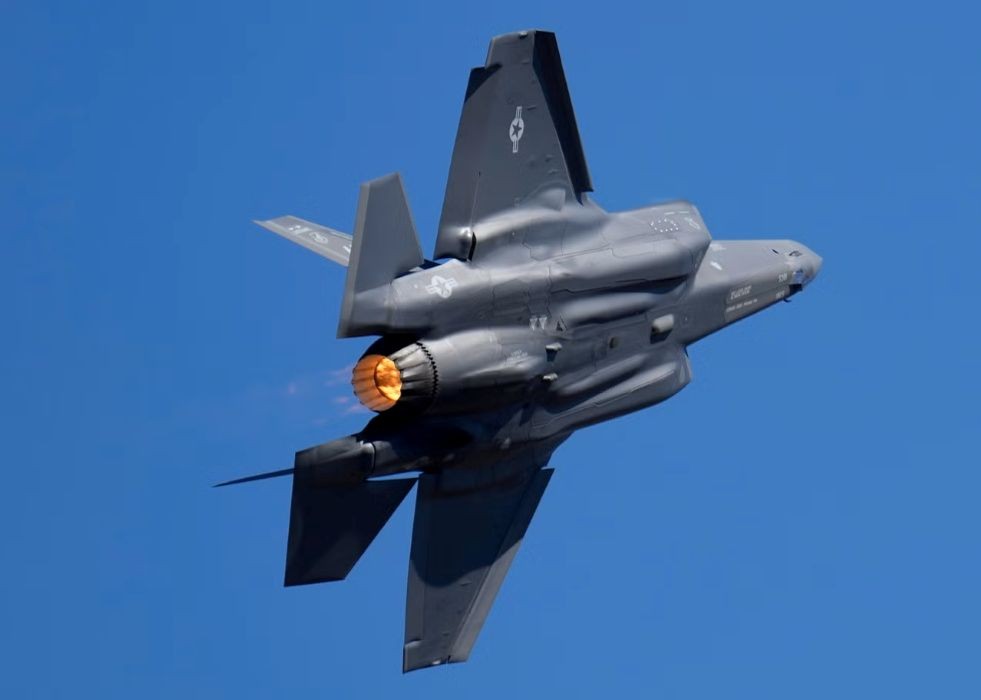
Trump’s declaration that Washington “will be selling F-35s” to Saudi Arabia echoes earlier Gulf debates, including the UAE’s stalled request, Israel’s opposition, and Trump’s past offer of F-22s to reassure Tel Aviv during the 2020 talks.
The White House’s political landscape shifted sharply after President Donald Trump publicly declared that the United States “will be selling F-35s” to Saudi Arabia during remarks delivered just before Crown Prince Mohammed bin Salman’s Washington visit. The statement, made on 17 November 2025, immediately elevated Riyadh’s long-standing interest in acquiring the fifth-generation fighter to the top tier of regional defence issues. Although the comment signalled explicit presidential intent, the sale remains subject to stringent Congressional scrutiny, configuration negotiations, and Israel’s legally protected qualitative military edge.
This isn't the first time that Gulf F-35 plans have gotten in the way of Israeli concerns. The United Arab Emirates worked hard to get its own F-35s between 2020 and 2021, negotiating with the Trump administration at the same time as the Abraham Accords. Israel made it obvious that they were against it at the time, saying that giving everyone access to the planes may weaken their technical edge. To ease these worries, Trump made an extraordinary offer: to give Israel the F-22 Raptor, a plane that the US had never sold to another country. Even though the plan never went anywhere because Congress wouldn't let F-22s be sold to other countries, it showed how important Israel's security concerns are to any transfer of fifth-generation aircraft in the area.
The UAE’s F-35 process eventually stalled under the Biden administration, which raised additional questions about Chinese technology presence in the Emirates and the security of sensitive data. These debates now directly inform the Saudi case. Washington views Riyadh’s broadening cooperation with China—in ballistic missile development, artificial intelligence and critical infrastructure—as a central factor in the risk assessment for any advanced American platform.
Recent reports say that Saudi Arabia's request for F-35s passed an initial technical and security evaluation at the Pentagon level in early November 2025. This removed a key internal roadblock, but it did not get formal clearance. Trump's announcement came at a crucial time, moving the subject from bureaucratic review to political bargaining. Under the Arms Export Control Act, the State Department must tell Congress about the sale before it can go through. This starts a review process during which legislators might try to stop or slow down the sale.
Israel's answer is still important. Any arrangement for Saudi Arabia will need to be balanced, either by giving Israel better systems or by restricting the Saudi variant's capabilities.
Author: Özgür Ekşi