President Donald Trump ordered the review and potential cancellation of overbudgeted or delayed defence projects. The new approach may not match the nature of such projects.
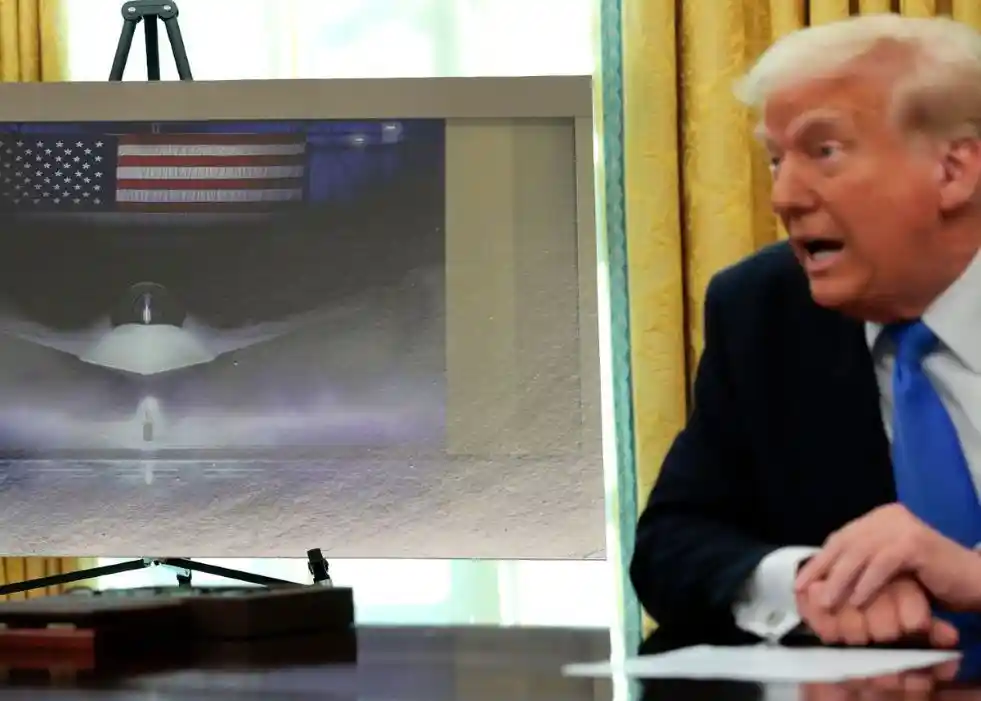
A sweeping new executive order issued by US President Donald Trump calls for the review — and possible cancellation — of Department of Defense (DoD) programmes that are either significantly over budget or behind schedule. Signed on 9 April, the directive empowers the Office of Management and Budget (OMB) and the Secretary of Defense to identify underperforming projects and recommend their termination if corrective action is not taken immediately.
The order is framed as a “restoration of accountability in military procurement” and applies retroactively to all major acquisition programmes. It has sent shockwaves through both the Pentagon and the US defence industry, as it represents the first formal policy move under Trump’s second term to target inefficient defence spending directly.

High-profile initiatives under question
Although the order does not mention particular initiatives, its standards obviously relate to some of the most high-profile and problematic weapon programs now under development.
Among the most remarkable instances of this are the Constellation-class frigate and the LGM-35A Sentinel intercontinental ballistic missile, both of which are experiencing major delays and price increases.
Projected to replace the old Minuteman III stockpile, the Sentinel intercontinental ballistic missile’s estimated cost has risen from $95 billion to over $125 billion; more rises are expected. So, pushing back the expected deployment date to 2030, the United States Department of Defence announced in March 2024 that the first flight test of the system will be pushed from the end of 2023 to February 2026. The Nunn-McCurdy Act, which mandates the Department of Defence to explain to Congress why the program should continue, has been legally violated by this delay.
Designed to increase the Navy’s surface force, the Constellation-class frigate is running at least three years behind schedule.
The first vessel was originally expected in 2026, but delivery has now slipped to 2029. Budget estimates have also grown, with cost projections increasing from an initial $1.3 billion per ship to $1.9 billion. Industrial challenges, workforce shortages and design modifications have all contributed to the programme’s slowdown.
A programme is more than a product
The directive may ignore a fundamental truth: major defence systems are not one-off products but long-term investments in capability, industrial base and innovation.
Even when cancelled, these programmes often yield valuable technologies. The now-defunct RAH-66 Comanche helicopter is a prime example. Although the aircraft never entered service, the engine, flight controls and sensor technology developed for it have been widely adopted across both manned and unmanned systems. In many ways, the investment continues to pay off — just not in its originally intended form.

Strategic risk of abrupt termination
The Trump administration’s approach risks undermining long-term defence planning by injecting short-term political priorities into multi-decade development cycles. Programmes like Sentinel are tied directly to nuclear deterrence, while Constellation addresses fleet capability gaps in an increasingly competitive naval environment.
While accountability in defence spending is a valid concern, critics argue that the administration’s hardline stance may jeopardise more than just budgets. It may compromise readiness and innovation when near-peer threats are on the rise.
Author: Özgür Ekşi