Türkiye, already an established actor in the global armed unmanned aerial vehicle (UAV/UCAV) market, is extending this experience into the maritime domain. As part of its approach to safeguarding maritime interests, Ankara has supported the development of armed USVs as part of its evolving naval force structure.
The first platform to emerge from this effort is the ULAQ armed USV. The delivery of ULAQ units to the Turkish Naval Forces last December marked the system’s entry into operational service. In parallel, it is learned that a ULAQ 11 Patrol/Surveillance variant was delivered to the Qatar Coast Guard, marking Türkiye’s first export of an armed USV.
These developments have increased external interest in the ULAQ family of armed USVs. Operational deployment with end-users has allowed the platform to be evaluated under real operating conditions, providing feedback that has informed subsequent development activities. Exposure to operational environments has also raised interest from potential users in other regions.
With the approval of Türkiye’s Ministry of National Defence, Ares Shipyard and ULAQ Global are conducting business development activities with a number of friendly and allied countries. While priority remains meeting the requirements of the Turkish Naval Forces and Coast Guard, discussions are ongoing with several countries in the Gulf region and the Far East regarding different ULAQ variants. Additional export announcements are expected during 2026.
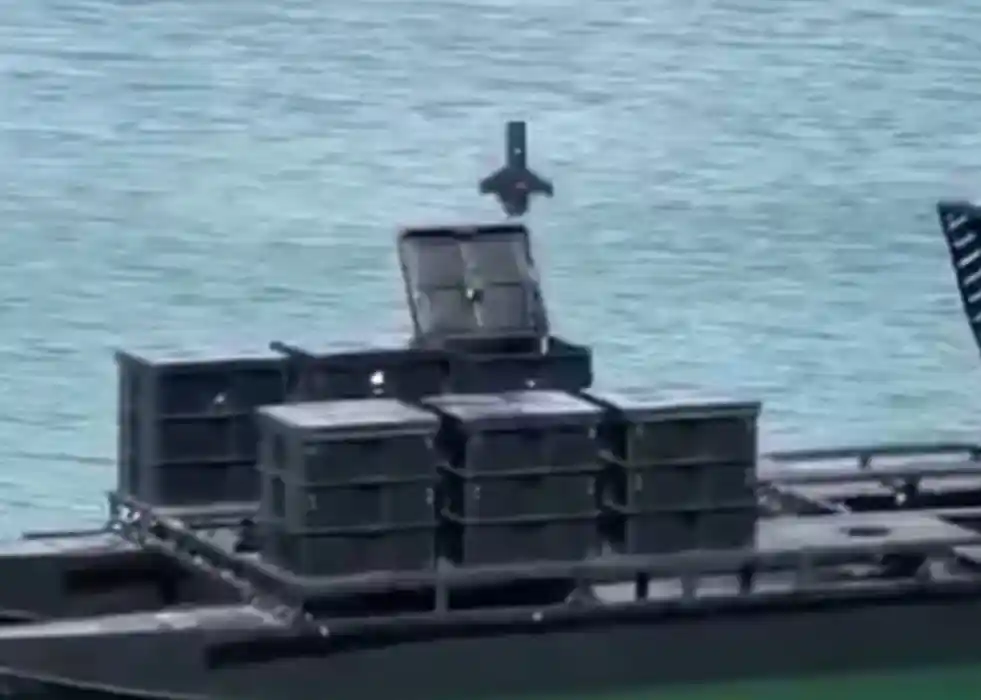
The ULAQ platform is based on a modular design approach, allowing a single base craft to be configured with various payloads for a range of missions. Payloads can be integrated for remote or autonomous operation, enabling the platform to support patrol, surveillance, and armed roles depending on configuration.
Work is also ongoing to increase autonomy levels and improve system redundancy, drawing on operational feedback—particularly from units delivered to Qatar more than a year ago. This feedback-driven process has focused on refining command-and-control functions, autonomy subsystems, and platform resilience.
Another area of focus is the continued use of locally produced engines developed by TÜMOSAN for the ULAQ series. Beyond propulsion and weapon systems, efforts are underway to increase the share of domestically produced components across propulsion elements, power and energy management, autonomy subsystems, mission computers, and payloads.