By Özgür Ekşi
With the indigenous shipbuilding programme, Türkiye has made a significant leap forward in naval studies. The Turkish defence industry, which rides a wind with MilGem, completed a Mid-Life Upgrade for the first time. This is also seen as an important threshold in military shipbuilding. TCG Oruçreis (F 245) frigate, which is the first result of the works, will fly the flag of the Turkish Navy in the deep blue waters for many more years with its new infrastructure and silhouette.

(TCG Oruçreis F 245 and TCG Salihreis F246)
MEKO 200 and Barbaros Class Frigate
The MEKO 200 class frigates, whose history in the Turkish Navy dates to the late 1980s, were built in TN1 and TN2 sub-variants, also known as Track 1 and Track 2.
Yavuz Class TN1s are equipped with a STACOS combat management system and diesel engines in a CODAD (Combined Diesel and Diesel) propulsion configuration, while Barbaros Class Track 2s are equipped with a TACTICOS combat management system and CODOG (Combined Diesel or Gas Turbine) propulsion infrastructure.
TN2s, which can reach higher speeds, are equipped with CODOG propulsion, use either diesel or gas turbine machines for economic navigation and speed requirements. With a length of 118 metres, the Barbaros class frigates, approximately 3 metres longer than the Track 1s, are divided into TN2A and TN2B.
The standard armament of the Barbaros Class, which were the most modern frigates of the Turkish Navy until the first ship of I Class TCG Istanbul (F 515), was one 127 mm Mark 45 gun, three four-barreled 25 millimetre Sea Zenith close-in weapon systems, two four-tube RGM-84 Harpoon anti-ship missiles, one RIM-7 Sea Sparrow surface to air missile in an eight-missile configuration Mark 29 launcher and two triple Mark 324 millimetre torpedo tubes. However, it is known that the Mark 29s were replaced by the Mark 41 vertical launch system and RIM-162 ESSMs with a stop-gap upgrade.
As a result of this step, it is known that the vessels have reached an enhanced air defence capability. Turkish MEKO 200s are also equipped with countermeasures such as SLQ-25 Nixie against torpedo threats, as well as significant electronic warfare equipment. The frigates, in which the acoustic signature is reduced by placing the machines on pistons independent from the keel, can also operate in CBRN environments.
Barbaros Mid-Life Upgrade (MLU)
During the modernisation process of the ships, particular attention was paid to the design's suitability for the ship and everyday requirements. Excellent, but unhelpful steps were avoided that were far from the necessary ergonomics and practicality. In fact, there are significant gains in terms of crew familiarisation with the interfaces, training of new personnel, functionality, and flexibility.
Although the TCG Barbaros (F 244) frigate was the first ship to be planned to be taken to the dock within the scope of the project, the programme could not keep up with the ship's routine heavy maintenance schedule and the cost of two dry-dockings considered as financially not cost-effective. For this reason, TCG Oruçreis (F 245), which was determined to be more suitable in terms of process management and naval planning, was subjected to MLU efforts within the scope of the programme Mid-Life Upgrade is actually a tissue, an organ transplant for the ship.
However, the vessel's brain, the combat management system, was also replaced in the process. Thus, in the most general terms, it was able to punch further than standard Track 2s. The most fundamental feature of the programme, which has been emphasised and insisted upon, is to move forward without taking a step back from the old capability. In fact, this was the most solid requirement of the programme.
As a result of optimisation studies, there is no significant movement in the displacement of the modernised ship that changes the draft by less than half a centimetre, which is far away from this value. This value will directly affect the frigate's sea capabilities, such as pitching, bank, and heel moments, and is actually far from being significant in ambient conditions.

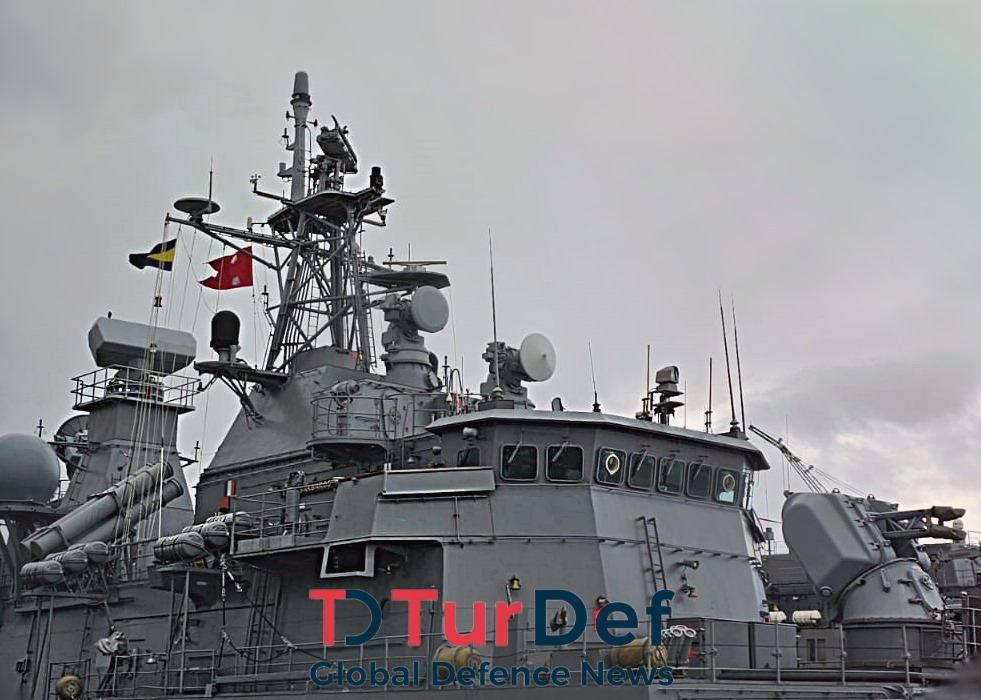
(TCG Oruçreis Bridge and Mast)
Electronic Infrastructure
Havelsan ADVENT has replaced the TACTICOS consoles used on the Meko 200 TN II frigates with new ergonomic infrastructure and cabinets. A digital human-machine interface replaced the former analogue structure. The number of consoles was also increased. The ship has gained two important features with the indigenous management system, which enables possible future weapon and electronic integration from today.
The first is that the combat operations centre (COC) will have a new generation of digital colour multi-function display panels that can take over each other's tasks when necessary. Thus, the crew improved in symbolising the elements in the tactical picture and in terms of sharing information and tasks.
There has been an increase in the number of various operators compared to the ship's previous infrastructure. This provides enhanced capability and flexibility in both situational awareness and command prioritisation. Furthermore, the system provides fast, uninterrupted communication with all ships and elements. ADVENT consoles also allow data to be received from unmanned aerial vehicles (UAVs) and allow them to perform each other's tasks. Thus, it provides full adaptation to the current battlefield. Consoles are fed by the same infrastructure and firing channels rather than being targeted at specific tasks as before, offering priority management in line with the requirements of the situation.
This situation is a vital achievement when evaluated in terms of today's multi-threat and multi-directional combat conditions where asymmetric elements are intensified. In addition, in case of possible damage, the tasks of the knocked-out panels can be taken over by other working consoles in a matter of seconds. Eventually, no matter how much automation increased, the number of crew members remained stable. Such situations are of critical importance in terms of ensuring sustainability during combat and, therefore, survivability.
The indigenous software of ADVENT, which has experienced an era of development in the Gabya Class frigates with GENESİS (Gemi Entegre Savaş İdare Sistemi / Ship Integrated Combat Management System), enables implementing major or minor change requests in a short time. TCG Oruçreis (F 245), which gained network-centric combat capability with Turkish ships with similar infrastructure, also significantly increased data transfer speed.
During the modernisation process, which reduced the probability of failure and significantly increased the time between two repairs, 100 kilometres of cabling was installed for the parts that were deemed necessary, replaced or improved. In this way, the loss of information and the possibility of leakage were eliminated. Besides, while TACTICOS had only six firing channels, this restriction was eliminated after the YÖM. In other words, the frigate has reached the capacity to participate in combat, conduct self-defence and engage the enemy in coordination with all its weapons.
The most important change in the silhouette of TCG Oruçreis is undoubtedly the main mast. In contrast to the construction structure of the old design, the SMART-S Mk2 3D radar is placed on the top of the structure, which has evolved into a monolithic design that reduces the radar cross-sectional area, which is now a signature of MILGEMs. As a result, it can be said that the coverage area has increased compared to the previous position, while blind spots have been eliminated. There are also noticeable changes in the ship's bridge, midship and aft masts.
ASELSAN ARES-2N electronic support system antennas, which were integrated as part of the modernisation, are positioned just below the radar. Replacing the legacy Cutlass B1 Electronic Support System, the AREAS-2N electronic countermeasure (ECM) and electronic attack system's transmitter and receiver antennas are located on both sides of the mast. The new equipment also enables the detection of LPI radars.
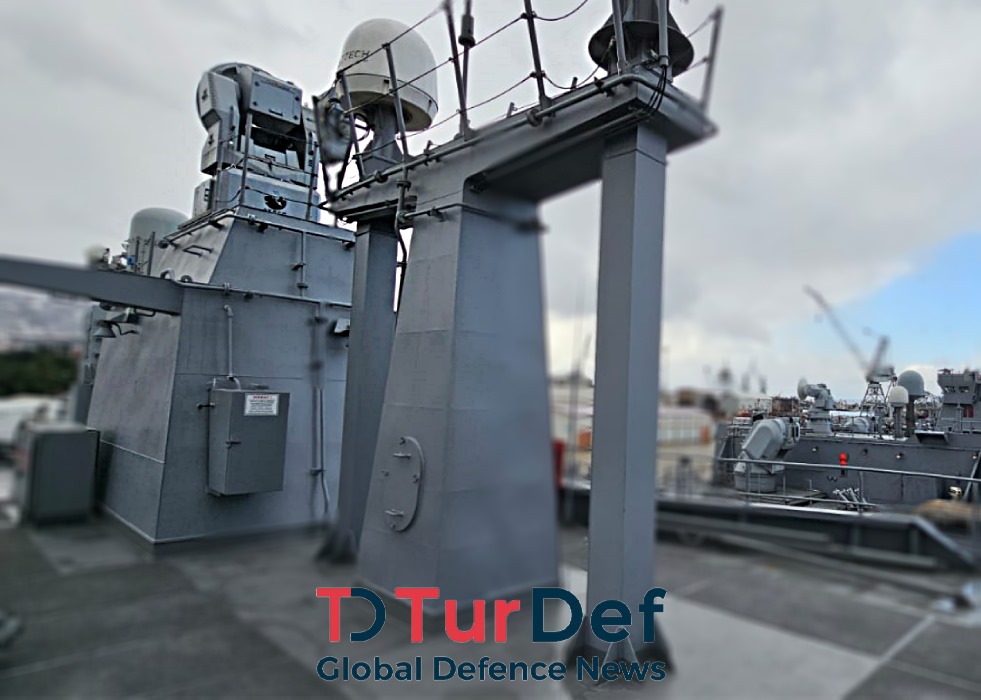
The ship's old STIR tracking and Seaguard fire control radars were replaced with ASELSAN Akrep 300, which can be effective up to a range of 120 km. Due to the newly added close-in weapon system, the aft antenna structure was positioned on a higher pedestal structure, thus preventing possible blind spots. Additionally, the frigate is equipped with Cenk 200-N 3D radar. There is also a control radar and electro-optics suite on the aft mast in the upper part of the hangar, which is compatible with 10-tonne class helicopters.
TCG Oruçreis (F 245) has also achieved significant situational awareness in terms of electrooptics after modernisation. Since asymmetric threats have increased in recent years, additional sensors were integrated into the frigate. Separate electro-optics are mounted on the mast in addition to those on the 25-millimetre remote-controlled weapon stations with Akrep-300 radars and ASELSAN Gökdeniz CIWS. In addition, Piri infrared search and tracking (IRST) enables passive scanning, tracking and detection of air and surface vehicles and missiles. There are also two Kırlangıç electro-optical reconnaissance and surveillance systems on the main mast. Thanks to the E/O capability that comes with the YÖM, reconnaissance and tracking of the environment and targets is possible without radio emission.
Therefore, the ship has reached the capacity to engage against asymmetric threats as well as threats from regular elements, even if not as far as the distances reached by radar with optical tracking, without giving R/F signature, and therefore without being targeted by antiradiation warheads. Overall, this capacity is an important sign that the latest developments are closely followed and today's requirements are well understood while reducing the overall signature of the ship, which reaches E/O observation capability in all conditions day and night.
As part of the programme, in which Havelsan is responsible for the Combat Management System, and ASELSAN is responsible for sensor integration, the Hızır TKAS torpedo countermeasure system was installed against torpedoes and underwater threats. The solution not only works as a countermeasure but also collects passive data from underwater and transmits the data it collects to the sonar. This enables the direction of the torpedo threat to be determined and the position of the hostile underwater element to be estimated, providing additional confirmation for counter-engagement. The towed torpedo detection array, which was stored in a drum under the flight deck and could be used at a longer range than its predecessor, replaced the former SLQ-25 Nixies.
Additionally, decoy launchers were positioned on both sides of the hangar to reinforce the self-defence capability.
Modernisation activities have improved the surface and underwater situational awareness of TCG Oruçreis (F 245). The old SQS-56 sonar was replaced with the ASELSAN Fersah 100-N/MF suite. The hull-mounted system, developed for anti-submarine warfare (ASW) purposes, operates in the medium frequency band.
The interfaces, which also have active and passive modes, also have a mode for avoiding mines and similar objects. The signal processing capability and structure offer detection, monitoring, analysis, and diagnostics with direction determination. In addition, two Armelsan Aras-2023 diver detection sonars are also used to ensure the anchorage safety of the ship and prevent possible sabotage attempts. Depending on the ambient conditions, the system can detect divers using open-circuit breathing systems up to 800 metres.
The ship's electronic load significantly increased. However, the new panels' higher energy efficiency compared to the old analogue consoles did not lead to a significant increase in electricity demand. Some air-conditioning improvements were made as necessary. The energy status is also verified with load tests.
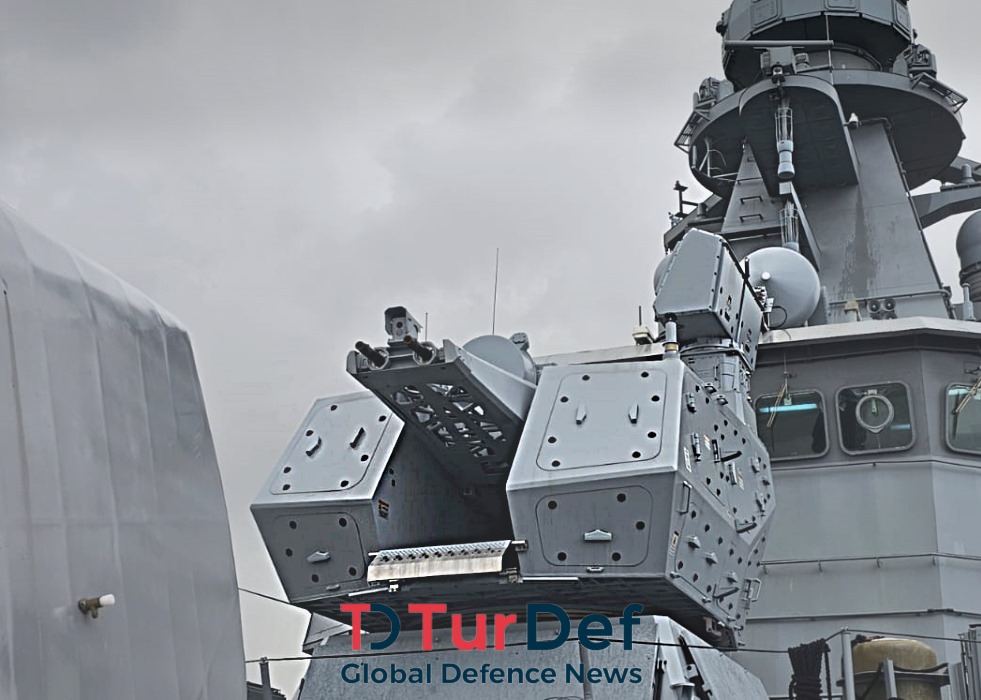
Gökdeniz 100/35/StA
Armament / Barrelled Weapons
Barbaros Mid-Life Uprade (MLU / YÖM) involves changes, especially in the barrelled weapon infrastructure of the ship. The Mark 45 Mod 2 127 mm main gun has been retained but has undergone changes. The existing barrel was replaced with a new, domestically produced one, and the TAKS fire control system, also developed in Türkiye, was integrated into the weapon.
The solution, which blends traditional artillery with modern digital architecture in a very simple and practical way, provided an increase in accuracy and reduced reaction time. In the tests after the installation, it is stated that the pin-point accuracy has been repeatedly observed in land bombardment from the maximum range of 23.5 kilometres. Furthermore, the weapon, which is also integrated into the ship's close-in weapon system, has been observed to be able to consistently shoot down the training target with a single shot in air defence training.
TCG Oruçreis (F 245) is the only ship of its class with more than two CIWS, thanks to its three Sea Zenith 25-millimetre four-barrelled guns. This characteristic of the Turkish MEKO 200s was also preserved after the YÖM. Although a foreign system was considered instead of the initial quadruple structure, the Gökdeniz 35-millimetre programmable ammunition-capable weapon was preferred and positioned with a wide arc so as not to obstruct the bridge view.
As a result, the ship's reaction and firing capabilities against high-speed threats and guided missiles have been significantly improved, while the ship has been allowed to start engagement from a greater distance. Gökdeniz's ability to illuminate and track with its own radar is another important gain that reduces radar emission and, therefore, the risk of being detected and targeted.
(Two Meko 200 class ships side by side, with and without mid-life upgrades. Aft view and weapon systems comparison)
The Sea Zenith guns in the aft section were replaced by a Mark 15 Mod 2B Phalanx 20-millimetre CIWS positioned on the hangar. Various additional works were carried out in the relevant areas for the new equipment and the antenna structure behind it. Thus, unlike the previous configuration, the single weapon can operate alone over a much wider area without a blind spot.
One ASELSAN STOP 25-millimetre remote-controlled weapon system and associated additional consoles were integrated into the port and starboard sections of the areas vacated by the Mark 15 Phalanx. Thanks to its stabilisation and target tracking system, the system offers high accuracy even in harsh maritime environments, providing the ship with additional firepower.
Moreover, while CIWS work on higher-priority speed targets, STOP also enables engagement against possible asymmetric adversaries. Certainly, the aforementioned capacity is an important acquisition that directly affects the ship's survivability in terms of prioritisation and correct weapon selection in multi-dimensional and multi-threat environments.
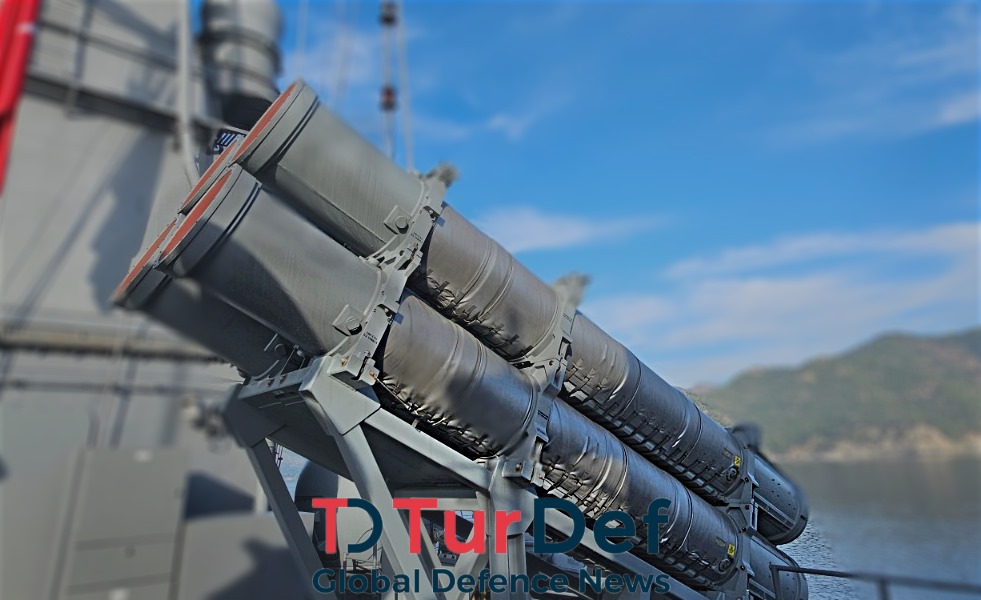
(Atmaca guided missile)
Armament / Guided Missiles
The ship was armed with eight RGM-84 Harpoon surface-to-surface guided missiles in two midship launchers. The total armament was increased to 12, including eight Atmacas on two ramps and four RGM-84 Harpoons with one quadruple launcher.
Thus, the frigate's existing guided missile capability was preserved, while Atmaca provided an increase in both quantity, quality, and range. Foreign dependency is also reduced, while the unpredictability factor of the indigenous guided missile is preserved until the last moment when necessary. The test launch of Atmaca from TCG Oruçreis (F 245) has not yet taken place.
The Surface-to-air guided missile capability of the frigate has not changed. The RIM-29 Sea Sparrow configuration, launched from the Mark 7 eight-tube launcher, was replaced by the 16-cell Mark 48 Mod 8 vertical launch system and the RIM-162 ESSM. The structure, which used a combination of RIM-7 and RIM-162 and offered a capacity of up to 64 SAMs when necessary, remained unchanged. The flexible indigenous combat infrastructure enables the integration of Turkish weapons and systems. Although the existing Mark 41s are preserved, it can be said that the infrastructure suitable for the possible future integration of MİDLAS with similar dimensions and volumes is available in every respect.
Conclusion
MEKO 200 class ships also serve worldwide in the Argentine, Australian, Egyptian and Greek Navies. The Turkish Navy's modernisation of TCG Oruçreis (F 245) allows other navies to implement similar upgrades rapidly. But the reality involves more. If the design of a ship from scratch and its union with the sea can be described as the birth of a baby, Mid-Life Upgrade means the transplantation of multiple organs, especially the brain and vital neural networks. The fact that the platform is stronger than before after the operations shows how professional the Turkish Navy has done its job.
The comprehensive modernisation of a ship or submarine is more difficult than building from a new construction. Dismantling the ship without damaging the existing and unmodified systems and making the necessary revisions without compromising the existing capability is undoubtedly a milestone for the Turkish military shipyard and defence industry.
On the other hand, the fact that this was applied to a vessel such as the MEKO 200, which was developed by a foreign design office for the foreign market, without compromising its CBRN capability, is both an important potential for exports and an undeniable success in terms of demonstrating modernisation capability to ships of different classes.
As the modernisation package is designed as a modular architecture rather than a ship-specific one, it is promising for Türkiye as it can be directly implemented on any platform requested by any foreign customer and is, therefore, a solution that addresses the entire world market.
TCG Oruçreis (F 245), which has rejoined the inventory following the Mid-Life Upgrade activities in recent months, can be described as a MilGem in terms of combat capability and electronic infrastructure, although its hull structure remains MEKO 200 Track II. It can be clearly seen that the weapon and electronic system configuration, which was configured in the last years of the Cold War and carried the mentality of that period, has been changed according to the modern requirements of today's battlefield conditions.
The lessons learnt from the wars and conflicts that continued during the works can also be said to have been woven into the ship. The fact that a ship that has been in service for nearly 30 years has reached a capability close to that of the TCG Istanbul (F 515), the most modern platform in the Turkish Navy's inventory, certainly brings a significant force multiplier and standardisation.
This article is a special analysis by TurDef. It may be republished with proper attribution to TurDef. All legal rights are reserved for shares made without citation.