President Recep Tayyip Erdoğan’s recent meeting with U.S. President Donald Trump in the Oval Office signals a new warming period in relations between Türkiye and the United States.
According to Trump’s remarks, Washington appears ready to provide the F-35A aircraft that Türkiye has long sought and to lift CAATSA sanctions. The S-400 air defence systems—cited as the reason for Türkiye’s removal from the JSF programme, which TurDef has always argued was merely a pretext—will apparently remain in the country. Although no official statement has been released, Trump’s cryptic comment, “We have another request from Türkiye,” remains unclear. While this might refer to the disposal of the S-400s, TurDef considers that a low probability. Previous speculation has included requests such as Türkiye buying 300 civilian aircraft to rescue Boeing from bankruptcy or stopping Russian oil imports. The true nature of this request will emerge in time.

Resolving the S-400 issue without Türkiye backing down carries a cost. President Erdoğan previously hinted at this when he responded to an S-400 question by saying, “that is no longer an issue.” Trump’s statements suggest that Türkiye will mend U.S. pride by procuring the Patriot system. After all, as relations deteriorated, Türkiye became NATO’s only member state to acquire a Russian air defence system. Now, the mid-altitude, long-range layer of Türkiye’s home-grown “Steel Dome” could be American.
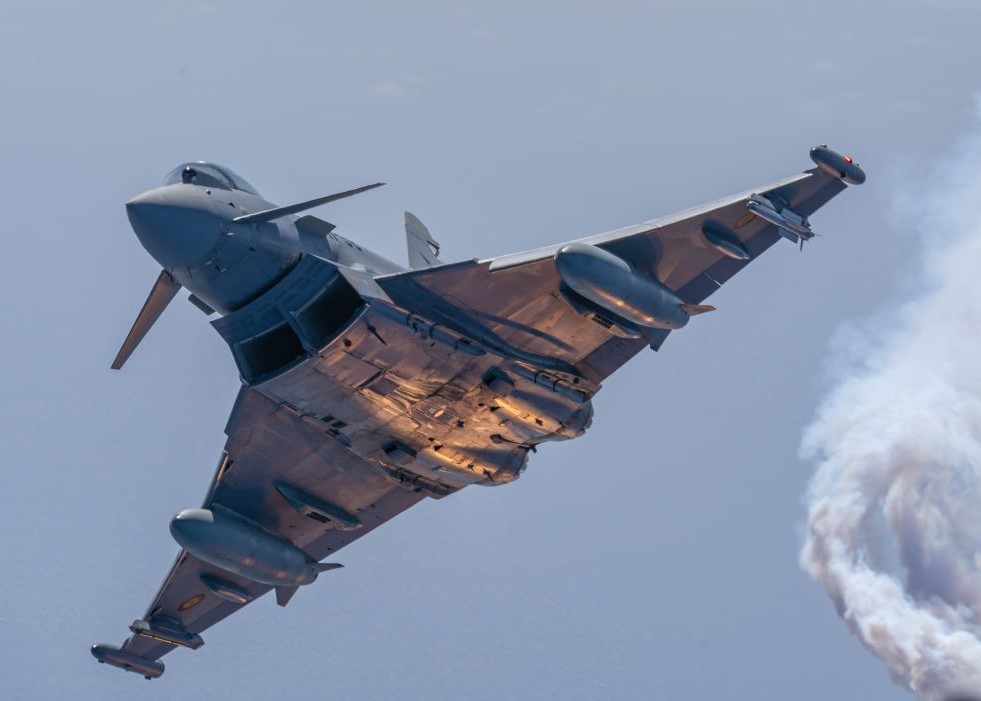
What about the Eurofighter project?
Based on TurDef’s independent analysis of events and the positions of both sides—though not on official sources—Israel and Greece’s lobbying led to Türkiye’s removal from the JSF programme. As a counter-move, Türkiye approached the United States with an F-16 modernisation and procurement request, arguing that as an existing NATO member with F-16s already in service, this did not contradict CAATSA. While Washington had not agreed, Türkiye then turned to the United Kingdom with an interest in Eurofighter jets. At that time, this could well have been a tactic to heat up the market. Indeed, voices rose in the U.S. asking, “Türkiye is an ally, the F-16 is already in its inventory, why are we saying no while money flows elsewhere? If it goes to the UK, we can’t object.”
Although the UK was pleased with Türkiye’s approach, officials were concerned that Ankara’s “If not F-16, then Eurofighter” policy might harm U.S. ties and sent the message: “Türkiye must decide what it really wants.” During this period, Foreign Minister Mevlüt Çavuşoğlu and Defence Minister Hulusi Akar worked in a coordinated strategy. On the same day, Çavuşoğlu visited the U.S. and Akar the UK to deliver the message, “We want your aircraft.” After several repetitions, this evolved into the formula: “Regardless of whether we buy F-16s from the U.S., we also want Eurofighters from the UK.”
This message reassured the UK but pushed Türkiye toward financial strain. Acquiring and operating 40 Eurofighters and 40 F-16Vs is not inexpensive. The Turkish Air Force, however, had two major advantages: it had not introduced a new fighter in nearly two decades, and Greece had already started receiving Rafales under its own acquisition programme.
Türkiye progressed to price negotiations in the Eurofighter programme while making an initial payment for the F-16 deal but delaying further instalments. The Foreign Ministry and Defence Ministry may have pursued different policies here. The Foreign Ministry, through the minister, consistently pressed the U.S. for F-16s, while the Defence Ministry, viewing the F-16 as a “ticket” back into the F-35 programme, deliberately slowed the process. In the end, President Trump hinted that progress on F-35 sales was possible, and U.S. Ambassador to Ankara Thomas Barrack said he expected an agreement to be signed by the end of 2025.
New questions now arise: With Türkiye regaining ground in the F-35 negotiations after once being “removed from the game,” will it abandon the F-16 procurement? From Trump’s careful wording, this seems unlikely. He will only approve F-35 sales and lift CAATSA once Türkiye has advanced far enough in the F-16 process.

Now that Türkiye is back at the F-35 table, will it step away from the Eurofighter table? That may have been the initial strategy. After France sold 18 Rafales to Greece, it is difficult to imagine Türkiye retreating from this path. Greece initially planned for 18 Rafales plus six optional aircraft for a total of 24. Though it later announced it would not exercise the option, reports indicate that Greece is reconsidering a 24-aircraft fleet in response to Türkiye’s plan to acquire 40 Eurofighters.
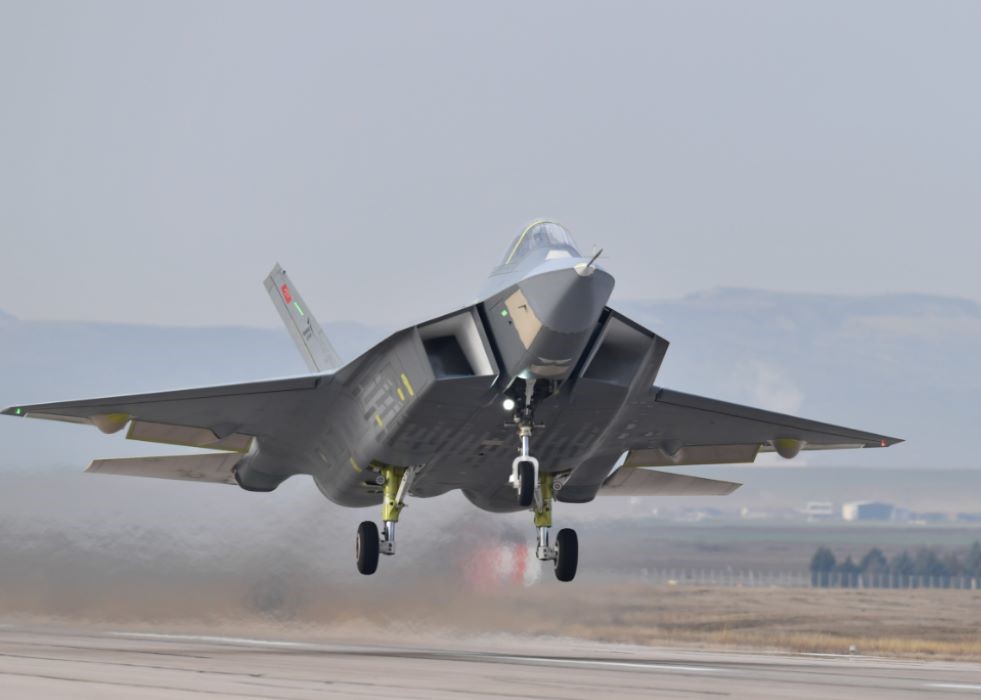
One key detail must be noted: Türkiye’s indigenous KAAN fighter is absent from this projection. Although public opinion sometimes links KAAN to the F-35, this is not realistic. Their only similarity is that both are fifth-generation jets. The F-35 is a fifth-generation strike aircraft designed for stealth attacks on ground-based radar stations, blinding the enemy before stealth becomes less critical. KAAN, by contrast, resembles the U.S. F-22 as an air-superiority fighter designed to dominate the skies and keep enemy aircraft at bay.
Given these factors, the most unconventional yet plausible idea would be to reduce the Eurofighter order and reinforce the Turkish Air Force in the late 2030s with the KAAN, which is expected to reach its Standard Operational Capability (SOC) in the second half of that decade.
Author: Özgür Ekşi