Defence Ministry company ASFAT Inc. is expected to perform two strategic moves as it gave signals about one of them on social media a few days ago.
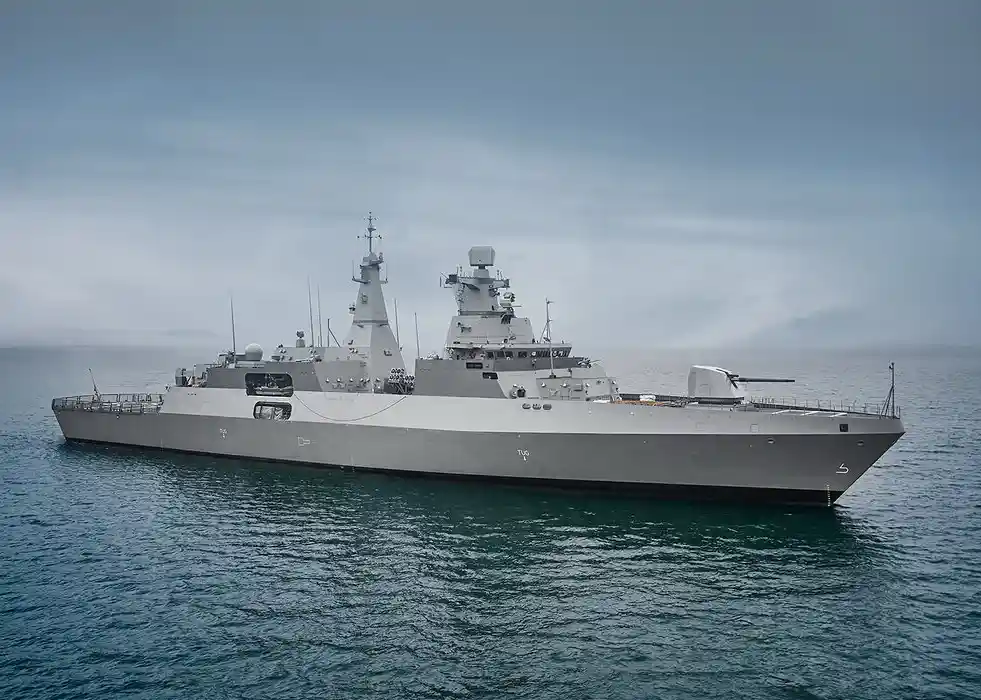
ASFAT, which will build the TF-2000 air defence destroyer at the Istanbul Shipyard Command with the Defence Industry Executive Committee (SSIK) decision, made the most concrete move on this issue last week. ASFAT shared detailed information about the TF-2000 with an infographic on social media. This post means that the first steel-cutting ceremony of the TF-2000 will be held soon. On the other hand, the Battle of Preveza, one of the most important victories in Turkish Naval history, falls this weekend on September 27-28. It is known that the Turkish Navy has previously held many historical ceremonies. For this reason, having the ceremony this week, on the anniversary of the Preveza Naval Victory, would not be a surprise.
TF-2000 initially began as a class of 12 frigates designed to come after I-class frigates within the scope of the MİLGEM national warship programme in 1999. The design was envisioned with 32 VLS cells and ÇAFRAD multi-band AESA radar to perform anti-air warfare duties.
One of TF-2000’s most important components, ÇAFRAD, was planned with four components: UMR (Long-Range Search), AYR (Illumination), ÇFR (Multi-Function), and IFF. The weaponry options were mixed, including indigenously developed systems like HİSAR alongside the Standard Missile family and ESSM. The Earthquake of Gölcük caused a significant delay in design work and reduced the ships’ count to four.

During the construction of the first I-class frigate, TCG İstanbul (F-515), TF-2000 was changed into a destroyer project with the same goal of providing air defence for the fleet and mainland and the number of ships was increased to seven. The new design as a destroyer included a significant increase in size and firepower. Initially, The VLS count was increased to 64 with foreign-supplied missiles moving out of the options and a clear statement on using ROKETSAN’s MİDLAS as the VLS. Additionally, NAZAR DIRCM or optical jammers were added to the close-in defence to blind the seekers of incoming anti-ship missiles from ranges beyond that of gun-based CIWS. Besides weaponry, a modular space for multiple helicopters, boats, and containers was set up in the hangar zone for better operational flexibility.
2024 has been another major turning point for TF-2000’s design work, emphasising firepower and changes in ÇAFRAD’s configuration. Turkiye’s progress with naval air defence, with testing of components like MİDLAS VLS and HİSAR-D missiles, could have been an assurance behind the decision to increase the VLS count to 96 (by extending the 32-cell module at the mid-section to a 64-cell one), which opens up space for other missiles.
Using MİDLAS, TF-2000 will use various missiles developed in Turkiye. The air defence missiles will consist of HİSAR-D (Medium range), SAPAN B1/B2 (Unknown, possibly medium/medium-to-long range), SİPER Block 1D, and SİPER Block 2D (100+ km and 150+ km). Surface-to-surface missiles will be a vertically launched variant of the ATMACA anti-ship missile and the long-ranged GEZGİN land attack cruise missile.
ÇAFRAD’s most important change is the removal of the X-band illumination radar, with all the air defence missiles having RF or IIR seekers without the need for illumination. The X-band multi-function radar will likely be used for illumination upon need, as illumination can still be useful in the presence of jamming or other interferences against the mid-course guidance of the missiles. One comparable radar in terms of operation with two bands is the U.S.-made Dual Band Radar developed for Zumwalt-class destroyers and the leading ship of Gerald R. Ford-class aircraft carriers, operating in S and X bands.
Another important change in the ship’s systems is the replacement of GÖKDENİZ CIWS on the bow with an indigenous PDMS (Either one of GÖKSUR or LEVENT). GÖKSUR will utilise BOZDOĞAN-DH missiles with IIR+midcourse guidance, while LEVENT’s with the same name will use a missile with IIR+passive RF guidance.
Currently, TF-2000’s main missions are planned as providing comprehensive air defence support to battle groups (LHD/ aircraft carrier) and the seaborne air defence of the Turkish mainland with its ÇAFRAD AESA radar suite and a high number of missile load. Outside of defensive uses, TF-2000 has the provision to act as a conventional deterrent with GEZGİN long-range cruise missiles, which can reach strategic targets in the enemy mainland.
The large hangar capacity also allows use in peace times in Search & Rescue or humanitarian aid missions. The hangar will house helicopters, unmanned helicopters for armed ISR, small boats, and kamikaze USVs.
The Naval Forces, on the other hand, continue their naval investments. The third support for the Gölcük and İzmir Shipyards came from Aksaz in early September. The maintenance and repair capacity at the Aksaz Naval Base has increased, and it has gained full maintenance and repair capability and become the Aksaz Shipyard Command. While this announcement was being made, President Recep Tayyip Erdoğan announced the news of the military shipyard planned to be built in Mersin. While this shipyard is expected to be built in Mersin Taşucu Port, a study for this facility may also be announced at the ceremony.