The United Kingdom has entered a £316 million agreement with MBDA UK to accelerate the operational introduction of the DragonFire laser-directed energy weapon, marking the first major commitment to deploying the system on Royal Navy platforms. According to the Ministry of Defence announcement, initial integration is planned for the Type 45 destroyers, positioning the laser as a key layer in the Navy’s future defensive architecture.
The contract follows a series of trials in which DragonFire successfully engaged drones travelling at approximately 650 km/h, a figure highlighted across official and industry reports as evidence of the system’s maturing reliability. The Ministry of Defence has not disclosed the system’s true upper engagement limits, noting that the published value reflects demonstrated trial performance rather than maximum capability.
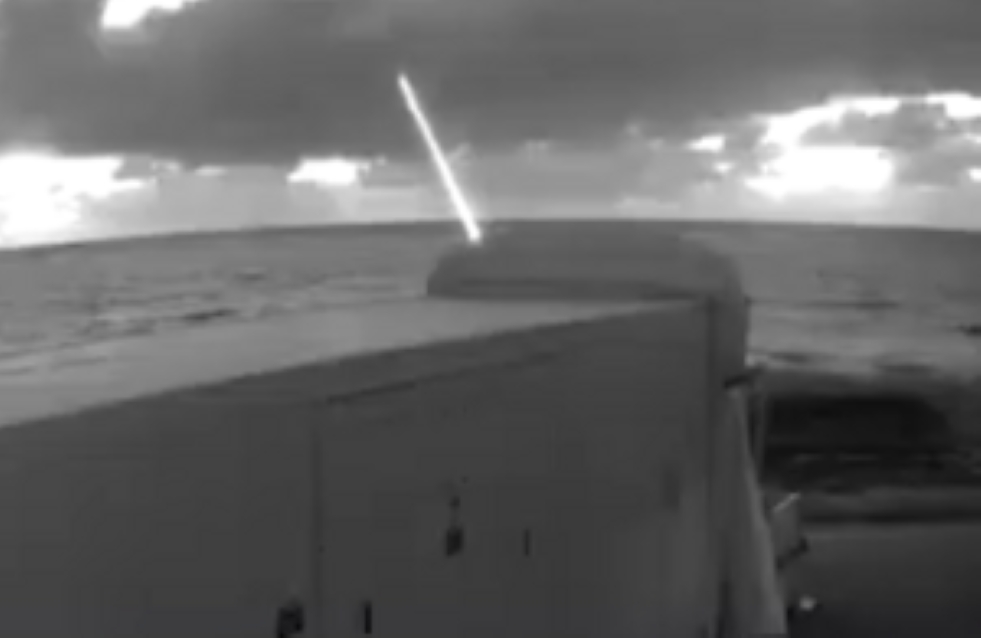
The main characteristic of DragonFire is its advanced optical beam control system which enables the laser to focus on targets for extended periods to create structural damage. The system provides a cost-effective solution for each shot because it operates at a fraction of the price of traditional ammunition which allows continuous protection against multiple drone attacks.
(Photo Credit: UK Ministry of Defence (MoD)
The public receives information about fast-moving threats, but the actual strategic advantage emerges from the opposite threat category. Modern drone warfare increasingly relies on low-speed, low-altitude UAVs designed to slip beneath Doppler radar thresholds by flying at bird-like velocities. The Ministry of Defence avoids quantifying laser engagement performance in this lower regime, but the repeated use of the phrase “any visible target” strongly implies a capability spanning beyond disclosed speeds. Because DragonFire’s targeting is optical rather than radar-dependent, any object that can be tracked visually or electro-optically becomes a viable engagement candidate, regardless of how slowly it flies.
This gives the system a distinct advantage against the class of threats that currently challenge shipborne radar systems the most: small, slow, commercially derived drones operating with minimal radar signatures. The ability to counter such platforms fills a critical gap left by conventional sensors and interceptors.
The £316 million contract therefore represents more than a procurement milestone. It signals a doctrinal pivot towards energy-based ship protection, blending affordability, optical precision and multi-speed threat coverage.
Author: Özgür Ekşi