US Navy announced the FLASH programme, aiming for a hypersonic missile that can be fired from the in-use Mk41 VLS cells due to CPS needing a different launcher.
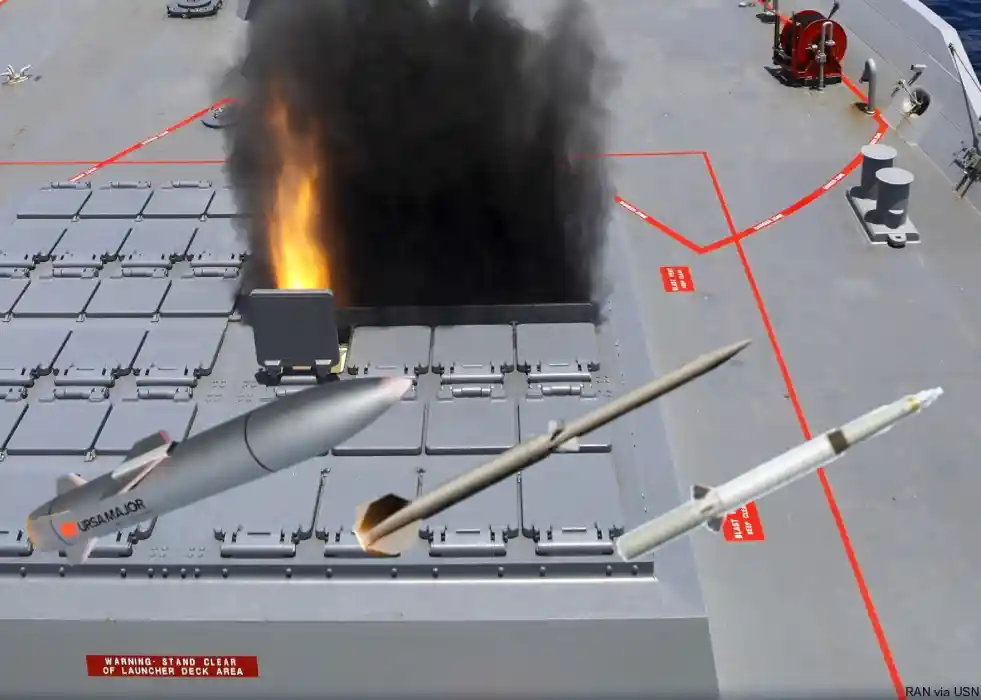
Naval News reported that the US Navy wants to introduce hypersonic capabilities on its existing warships using the Mk41 VLS through the new Flight Advancement of Structures for Hypersonics (FLASH) programme.
The key requirements include the missile fitting inside Mk41 VLS (Likely strike-length) cells and components with high technology readiness level to ease up development and production.
The US Navy is in the process of introducing hypersonic missiles to its fleet with the CPS hypersonic glide weapon that can be launched from modified Zumwalt-class destroyers (In place of 155 mm AGS guns) and Virginia-class nuclear-powered attack submarines. However, CPS as a larger missile requires specialised three-round launchers that go deeper in the hull compared to strike-length Mk41 cells.
Recently, US-based Castelion and Ursa Major have made investments regarding more compact and cheaper hypersonic weapons using rocket propulsion.
Castelion is notable for the two-stage Blackbeard GL missile that carries a 75 lb warhead but is compact enough to be fitted on HIMARS/M270 MLRS in use.
Ursa Major, on the other hand, takes a different approach with the Havoc missile, adopting a liquid fuel engine for a better sustained midcourse flight at hypersonic speeds. The missile will be powered by the Draper lightweight liquid fuel engine that uses kerosene and hydrogen peroxide (H2O2) as fuel, putting out 4000 lbf (1.81 kN) of thrust.
On the other hand, SM-6 Block IB with anti-surface capability and hypersonic speed, thanks to the larger main stage, is another candidate, guarenteedly compliance with Mk41 VLS cells.
Author: Kaan Azman
Editor:Özgür Ekşi