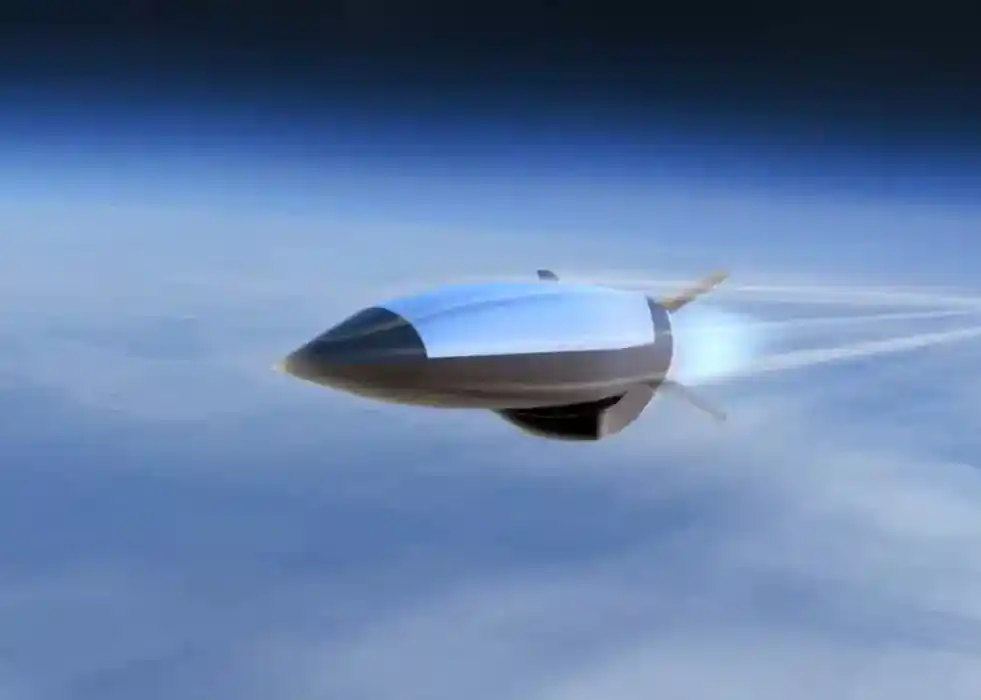
The U.S. Navy has pulled the lever on the HALO hypersonic cruise missile programme intended for carrier-based fighter jets because of costs running rampant.
A U.S. Navy spokesperson told Naval News that HALO was cancelled because the budget did not meet the delivery deadline within the scope of OASuW Increment 2.
Northrop Grumman-RTX team and Lockheed Martin were the participants in the HALO missile bid to provide the U.S. Navy fighter jets with a hypersonic anti-ship cruise missile.
The U.S. Navy will continue with the subsonic but stealthy and proven AGM-158C LRASM missile for the next phase of OASuW. A development of AGM-158C with upgraded guidance and electronics will be used for the next phase instead of HALO.
Alternatively, the U.S. Navy might visit the MAKO missile as an alternative solution nearing hypersonic speeds.
Trump Culling the Problematic Projects
President Trump’s signing of an order to review problematic defence projects and cancel those deemed costly or stuck not long ago might be a factor in the project’s cancellation despite the gains it can provide in the carrier strike groups’ ASuW capabilities.
Projects with troubles known to the public, such as Constellation-class frigates based on FREMM design and LGM-30 Sentinel ICBM, might face the danger of cancellation.
Constellation-class frigates have been facing numerous issues, including delays in construction and uncertainty regarding the equipment to be used.
LGM-30, on the other hand, is facing a severe cost overrun that is larger than what was predicted by the authorities.
While this approach might save time and money in the short term, there will be consequences as much as the scale of Trump’s culling order. A mass cancellation can result in lowered innovation and slower development of technologies.
Author: Kaan Azman
Editor: Özgür Ekşi