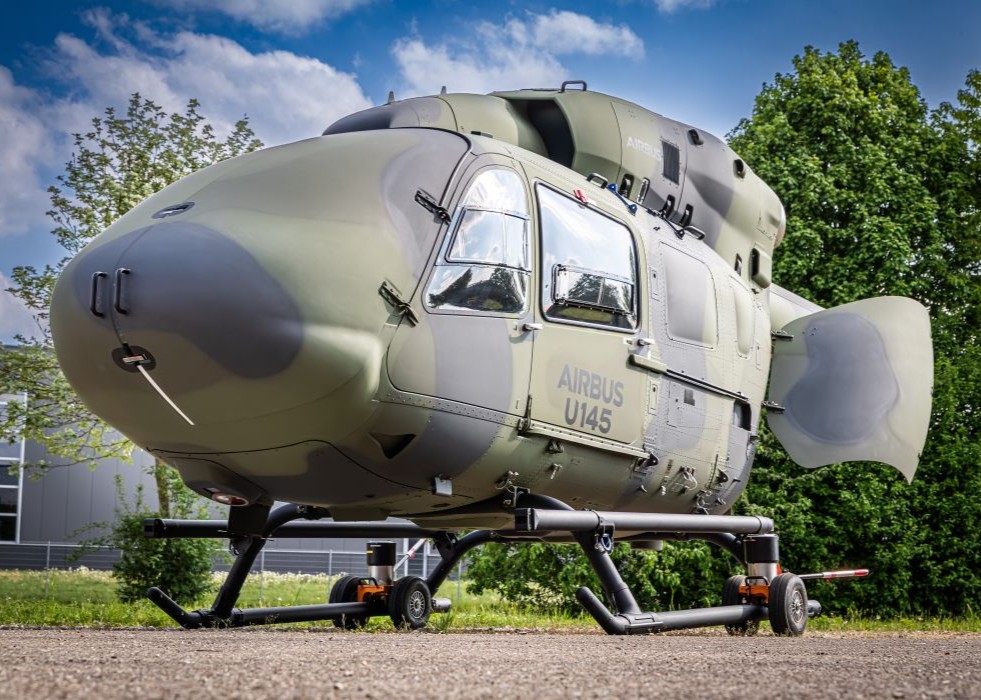
Airbus Helicopters introduces the new platform during the ILA Berlin Air Show, displaying a full-scale mock-up of the aircraft and confirming plans for a maiden flight by the end of 2026. Entry into service is targeted for the early years of the next decade.
The U145 is derived directly from the H145 family, one of Airbus' most popular helicopter programmes. More than 1,800 H145 helicopters are currently in service worldwide, collectively accumulating over 8.5 million flight hours across military, emergency medical, law enforcement and commercial missions. Airbus aims to combine that proven airframe with autonomous flight technologies to create a new category of multi-mission uncrewed rotorcraft.
According to Airbus Helicopters CEO Matthieu Louvot, the U145 combines the payload capacity, power and operational maturity of the H145 with the autonomy of an unmanned aerial system. The company plans to cooperate with European autonomy and mission-system partners to expand the aircraft's capabilities and support a broader uncrewed ecosystem.
No cockpit, more payload
Unlike the crewed H145, the U145 eliminates the traditional cockpit entirely. Airbus has redesigned the forward fuselage to support cargo and autonomous operations, incorporating an integrated nose-loading door, foldable loading table and dedicated cargo floor. The aircraft will rely on a specialised sensor suite and artificial intelligence systems to conduct fully autonomous missions.
The design approach reflects a growing trend within both military and civil aviation sectors: converting proven manned platforms into autonomous systems rather than developing entirely new aircraft from scratch. Airbus previously adopted a similar strategy with the VSR700 programme, which is based on the Cabri G2 helicopter. The U145 therefore becomes the company's second major effort in this field.
Military logistics and disaster response in focus
Airbus envisions the U145 primarily as a logistics platform capable of transporting supplies into environments considered too risky for crewed aircraft. Potential missions include disaster relief, emergency response, aerial firefighting and cargo transport. Military users could also employ the aircraft for surveillance, reconnaissance and battlefield resupply operations.
The concept aligns with a wider military trend toward larger autonomous aircraft capable of carrying meaningful payloads rather than functioning solely as surveillance drones. Airbus has also suggested future applications involving air-launched effects and drone-mothership roles, building on existing cooperation with missile manufacturer MBDA.
The U145 highlights how the unmanned aviation market is expanding beyond fixed-wing drones and small tactical systems into the helicopter domain. While many armed forces have already adopted unmanned aircraft for reconnaissance and strike missions, autonomous rotorcraft offer a different value proposition: the ability to transport personnel, ammunition, medical supplies or equipment to locations where runways are unavailable and risk levels are too high for human crews.
If Airbus achieves its planned timeline, the U145 could become one of the first Western autonomous medium-class helicopters derived from a mature operational platform, potentially opening a new segment between conventional helicopters and large cargo drones.
Author: Özgür Ekşi