Altınay Group has drawn a new roadmap to move beyond project-based engineering and enter full-scale production. Unlike many domestic and foreign competitors that rely on subcontracted processes, Altınay manages all production phases internally, achieving a broad product and capability portfolio. The company now plans to turn several of its proven defence and automation systems into off-the-shelf solutions ready for the global market, using expected revenue to reinforce investments in other technology areas.
To this end, Altınay is conducting international market research to identify the right economic and business models and has begun offering design and production services abroad. Its current foreign proposals reportedly amount to nearly 450 million USD, with a future backlog target of 200 million USD. The group is also in talks with Tier-1 manufacturers such as Lockheed Martin and Northrop Grumman to work as a subcontractor to their subcontractors, while pursuing joint development opportunities and plans to establish subsidiaries in the United States and Europe.
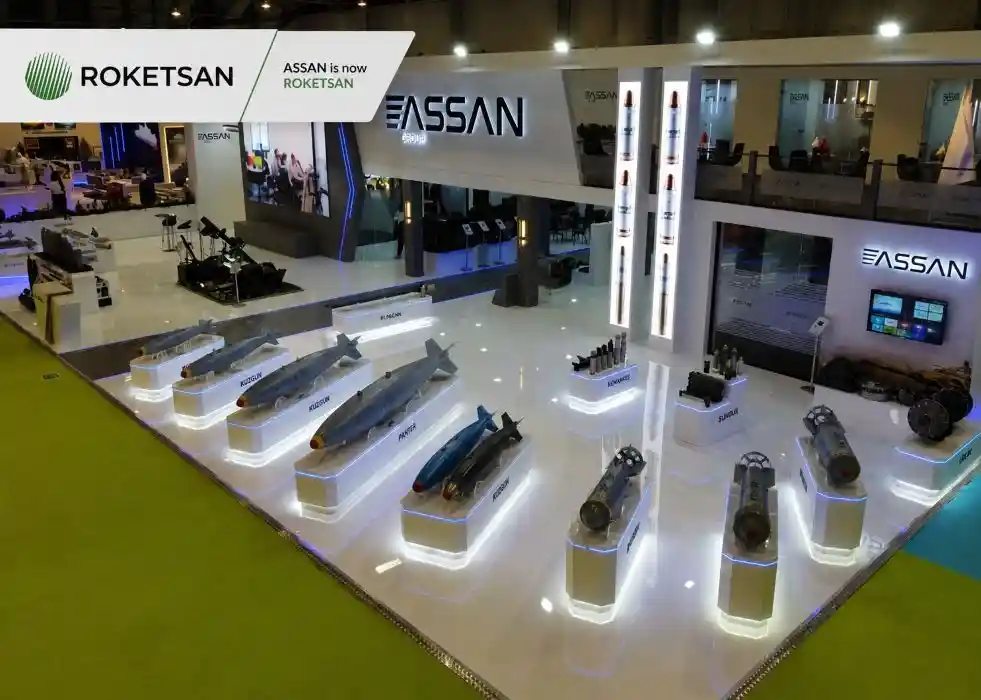
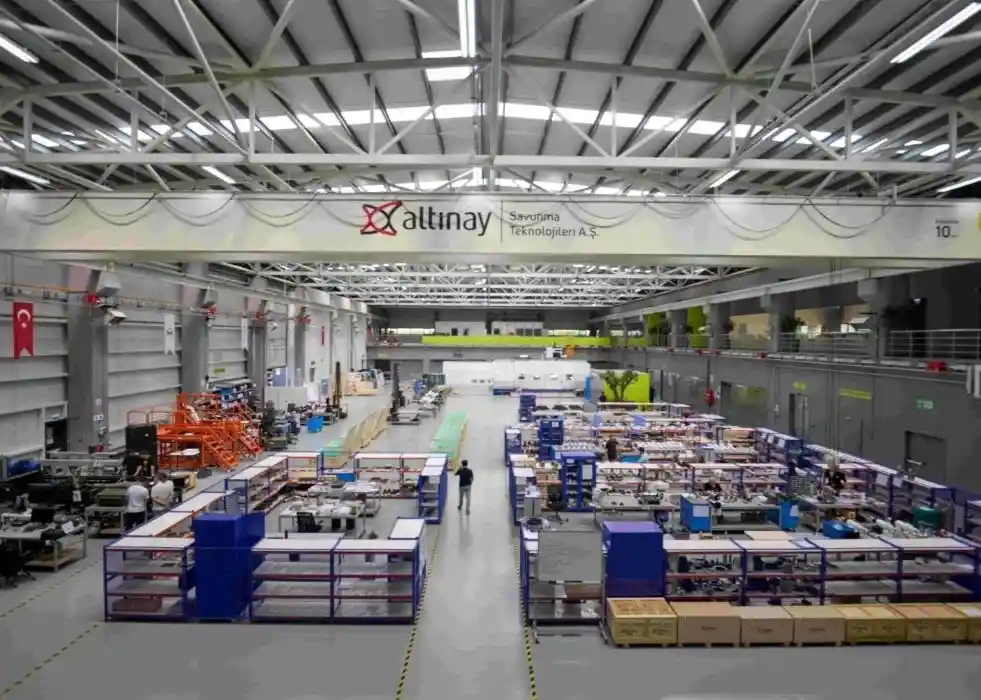
Founded in 1990, the group provides automation, motion control, robotics, and production systems for both civil and defence sectors. Its defence activities date back to 2006, when it developed ammunition disposal and automation systems — experience later transferred into partnerships with companies such as Roketsan. Today, Altınay Defence Technologies operates from a 12,500 m² facility in Dilovası, supplying motion control systems, unmanned platforms, naval and weapon systems, and critical production infrastructure to domestic and foreign clients.
In 2024, Altınay Defence Technologies went public to strengthen its capital base and sustain long-term R&D investments. The company currently employs around 700 personnel across its defence subsidiaries, including TAAC and DASAL, and provides not only products but also training, infrastructure, and engineering support tailored to end-user demands.
One of its key innovations, the Kuşkapanı Helicopter Haul-Down and Transfer System (HYTS), enables safe naval helicopter operations on frigates and destroyers under adverse sea conditions. Developed after supply disruptions in foreign markets, the system is now the only qualified domestic solution of its kind, with ongoing talks to integrate it into the upcoming TF-2000 destroyers and Türkiye’s future aircraft carrier.
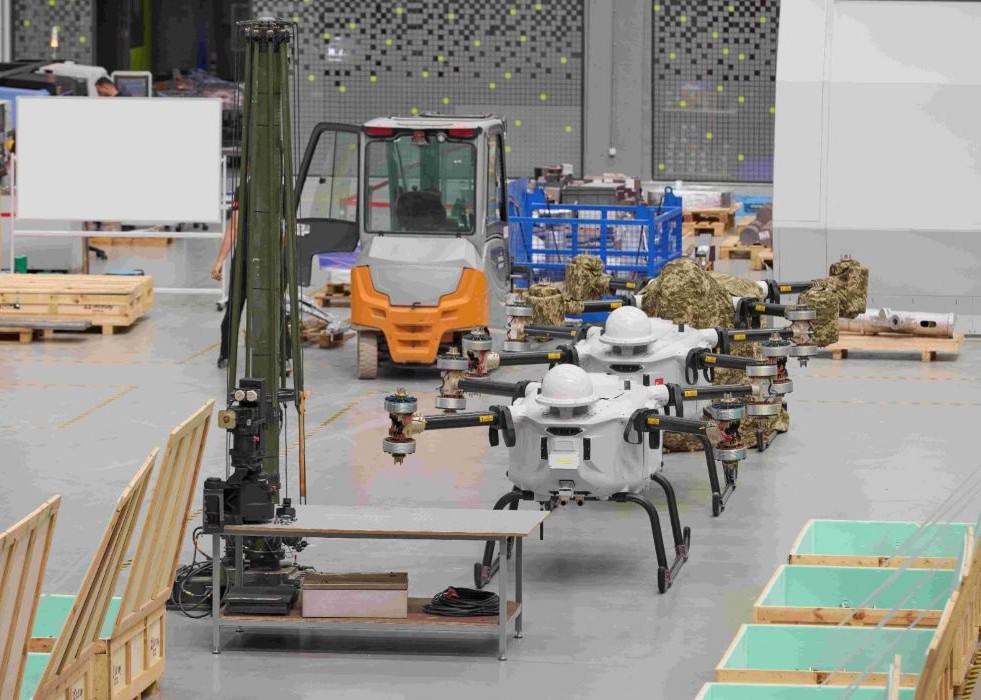
Altınay is also developing naval decoy drones capable of mimicking radar signatures for electronic warfare missions. Within unmanned systems, DASAL — one of the group’s fastest-growing entities — has delivered over 2,000 aerial and ground robotic platforms, including Puhu C75 cargo drones with 50 kg payload capacity. The company designs its own autopilot, control, and electronic subsystems in-house, and is developing an indigenous propulsion unit after imported engines failed to meet expected performance standards.
DASAL’s Alkara counter-UAV system, integrating ground sensors and AI-assisted target tracking, is expected to enter service in 2026. Designed to neutralise fibre-optic guided FPV drones immune to jamming, the system will engage targets through proximity detonation, with a shoulder-launched high-speed variant also under development.
TAAC, a joint venture between Turkish Aerospace (TUSAŞ) and Altınay established in 2019, focuses on motion and flight control systems, landing gears, and test infrastructure for Türkiye’s new-generation air platforms — including KAAN, Hürjet, Gökbey and the 10-ton Utility Helicopter. It produced the first domestically manufactured landing gear for the KAAN programme and continues to develop actuators and subsystems critical to the aircraft’s aerodynamic controls.
Altınay is extending its production capacity by making additional investments at its planned Tuzla Technology Campus, which is in keeping with its goal of focussing on exports. The firm wants to increase its serial production, enhance its collaborations with companies in other countries, and expand its technical base. This will make it a key player in the Turkish industrial sector that connects defence, robotics, and sophisticated automation on the world stage.
Author: Özgür Ekşi