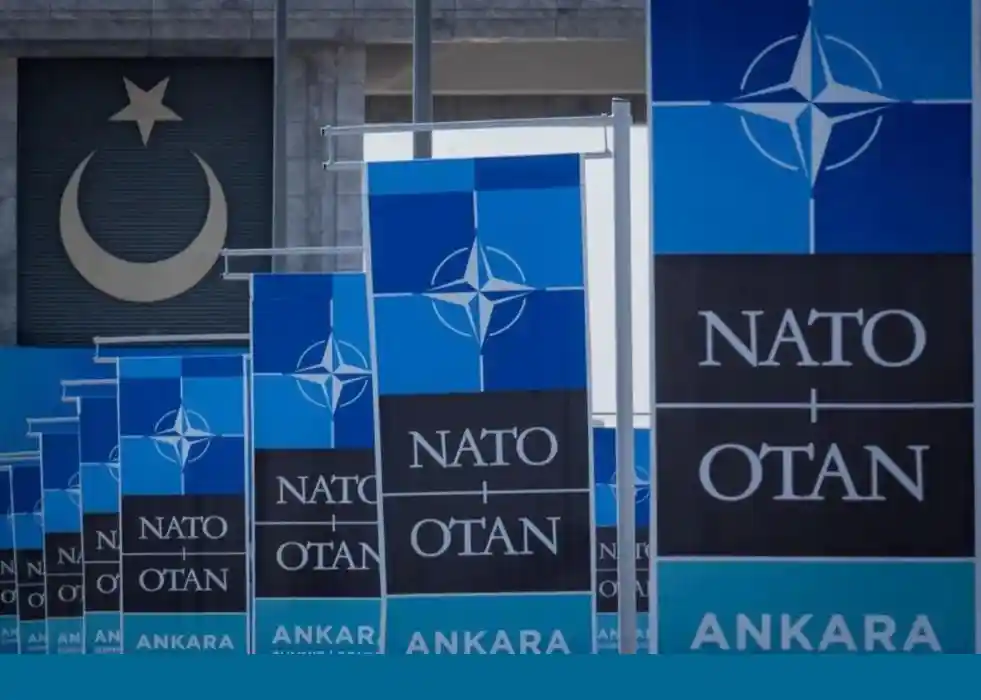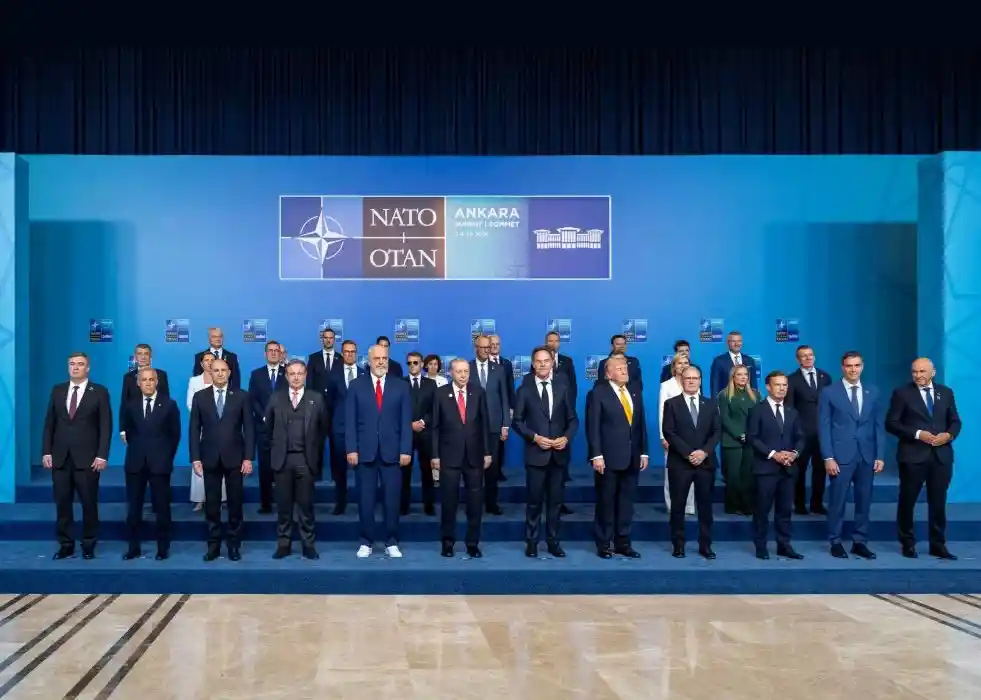
The NATO Summit Defence Industry Forum in Ankara was not NATO’s first defence industry forum. Previous editions at The Hague and Washington had already underlined the link between defence and industry. Ankara’s difference was that, for the first time, high-level announcements of national, multinational and industry-led agreements, deliverables and initiatives were made part of the forum programme.
That change showed how NATO is beginning to turn post-Hague spending commitments into organised capability, production and procurement tracks.
The Ankara Summit Declaration confirmed that this was not a stand-alone industry event. Allied leaders said European Allies and Canada had increased investments in core defence requirements by more than $139 billion in 2025 and announced more than $50 billion in new procurements in Ankara. They also committed to expanding collective manufacturing capacity, working with industry to accelerate innovation and eliminating defence trade barriers among Allies.
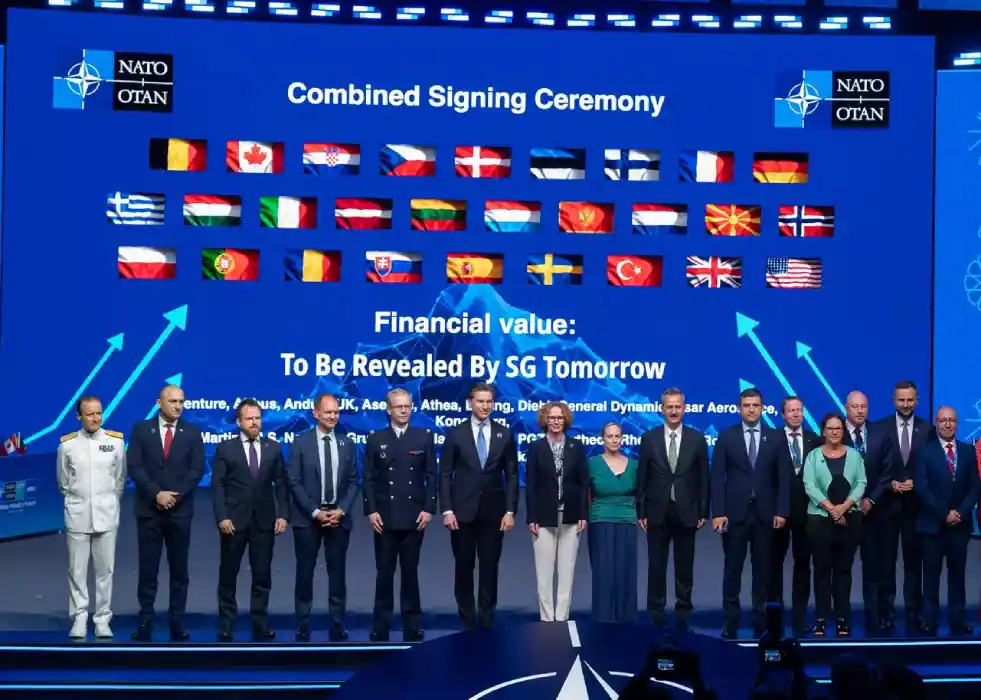
The Ankara package brought together six thematic signing tracks and a broader joint signing ceremony covering transatlantic defence industrial cooperation, defence-critical raw materials, drone superiority, space and surveillance, strike capabilities, and integrated air and missile defence. Of these, five carried disclosed financial envelopes or investment commitments. Two did not have separate publicly disclosed financial values: the defence-critical raw materials initiative and the joint signing ceremony.
The Summit Declaration described the Ankara outcome as more than $50 billion in new procurements. Individual forum tracks, however, point to almost $74.7 billion in announced value and investment commitments when broader capability investments are included.
This distinction matters. The figures should not be read as a single contract total or as purchases of new platforms alone. They may also include modernisation, sustainment, logistics, munitions, software, training and industrial capacity elements attached to capability delivery.
Nor should the figure be read as a single NATO-funded budget line. NATO is not replacing national procurement budgets. It is trying to align them. The financing of the Ankara package will depend on national defence budgets, multinational procurement coalitions, acquisition channels including possible NSPA-managed procurement, industry co-production arrangements and the wider 5% GDP defence investment commitment agreed at The Hague.
That distinction is central to understanding the forum. NATO’s common-funded budgets are not designed to carry projects of this scale. The Ankara model instead points to a different mechanism: Allies commit money nationally, group demand multilaterally, identify capability tracks collectively and bring industry into the same framework.
This does not mean that NATO has created a new OCCAR or a new NSPA. But the logic is moving in that direction. The Ankara agreements point to the emergence of a NATO procurement architecture without a new name, organised around capability requirements rather than single platforms. Participating countries, financial envelopes, contractor groups and operational priorities are being aligned in the same political-industrial structure.
The country distribution also matters. The Ankara package is not a Turkiye-only story. According to the disclosed lists, Turkiye, Denmark, Norway and Sweden appear across all seven signing tracks. Finland and Canada appear in six. Belgium, Greece, Italy and the Netherlands appear in five. This does not indicate workshare or contract value, but it does show participation density inside NATO’s emerging procurement architecture.
The pattern is revealing. The most frequent participants are not only major industrial actors. They also include northern and transatlantic Allies exposed to Russia through the Baltic, the High North, the Arctic and wider maritime security. Greece’s presence is also notable. It should not be read as bilateral industrial convergence with Turkiye, but as evidence that NATO capability requirements can bring politically sensitive Allies into the same procurement picture when air defence, strike, drones, space and supply chain resilience are at stake.
For Turkiye, this distribution changes the meaning of the Ankara package. Turkiye is not alone in appearing across the full spectrum of signing tracks. Its distinctive position comes from the industrial layer. Turkish companies are listed among contractors in four of the five tracks where contractor groups were disclosed.
This marks a shift in Turkiye’s defence industry profile. For years, Turkish exports were viewed mainly through markets in the Middle East, Africa and the Indo-Pacific, where NATO-compatible products were offered at competitive prices. More recent export successes in Poland, Hungary and Romania, all former Warsaw Pact states and now NATO members, marked a different phase. The Ankara agreements take that shift further by placing Turkish companies beside established NATO primes inside Alliance capability tracks.
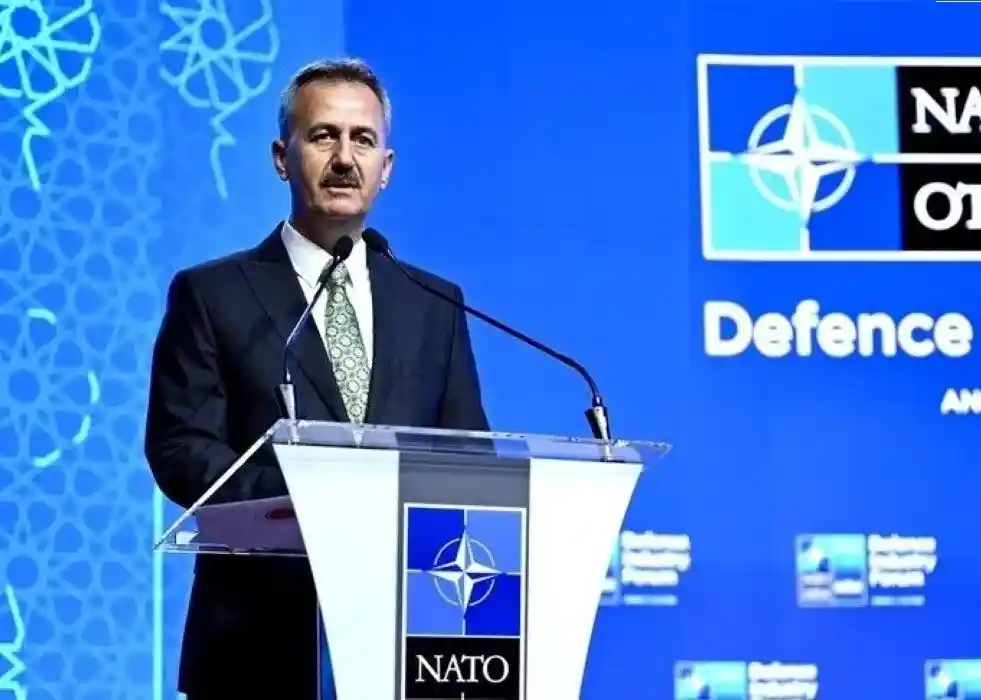
ASELSAN, ROKETSAN, STM and TÜBİTAK were named in connection with projects that Haluk Görgün, Secretary of Defence Industries, described as forming part of the backbone of NATO’s deterrence architecture in the coming years. His wording is ambitious, but the structure of the agreements gives it a material basis. Turkish companies are not attached to a single symbolic package. They appear across multiple operational domains.
The strongest Turkish footprint is in the capability tracks rather than in the transatlantic production package centred on American-origin systems. The Transatlantic Defence Industrial Cooperation track focuses on multinational procurement and European production of products such as NSM, JSM, SDB, Abrams, AMRAAM, ATACMS and Stinger. Turkiye is a participant country in that framework, but the contractor list is dominated by U.S., European and Polish firms.
By contrast, Turkish companies appear directly in the space and surveillance, strike, and integrated air and missile defence lines. This suggests that Turkiye’s role in NATO’s industrial transformation will be shaped less by licensed production of legacy Western systems and more by its own maturing capability areas: sensors, missiles, air defence, unmanned systems, software-driven integration and space-linked surveillance.
The space and surveillance package is especially important because it moves the Turkish industrial presence beyond the familiar UAV and missile narrative. ASELSAN, ROKETSAN and TÜBİTAK being listed alongside companies such as Isar Aerospace and MLS points to a NATO demand signal in which surveillance, space access, data and targeting chains are increasingly treated as part of the same defence-industrial architecture.
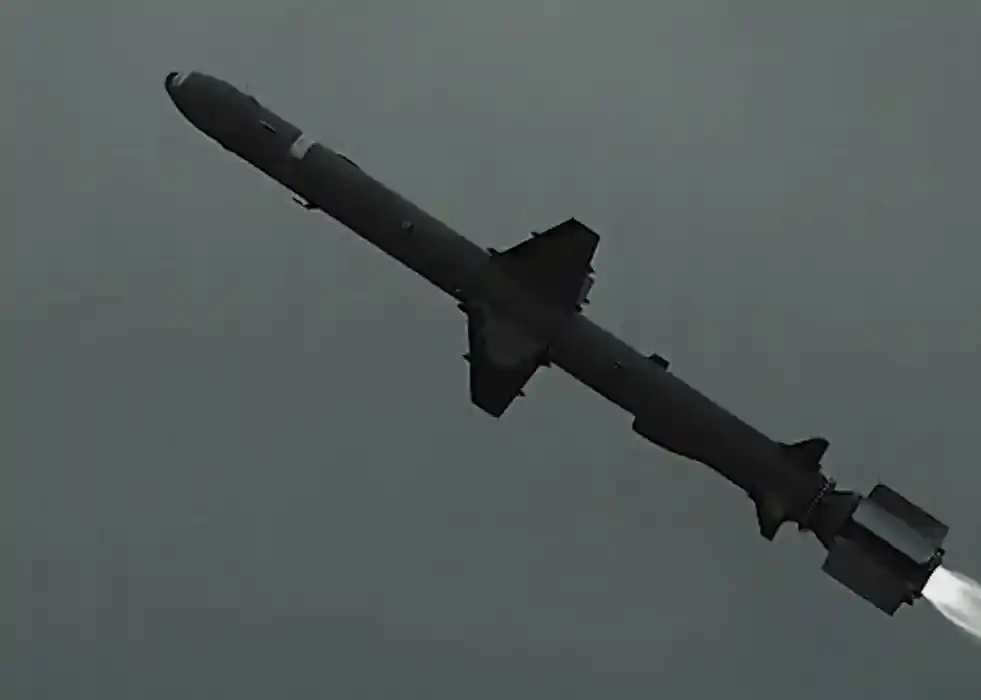
The strike capabilities track also fits the wider NATO shift. Since Russia’s full-scale invasion of Ukraine, Allied discussions have moved from platform replacement toward magazine depth, long-range fires and industrial surge capacity. ROKETSAN’s presence in this field gives Turkiye a place in one of NATO’s most urgent capability gaps.
Integrated air and missile defence may be the most strategically visible line. The announced value exceeds $26 billion, and the contractor list includes ASELSAN and ROKETSAN alongside Anduril UK, Athea, Palantir, Raytheon and Rheinmetall. This places Turkish firms in a crowded but critical field where NATO needs layered sensors, interceptors, command-and-control systems and rapid integration across national architectures.
The Ankara Summit Declaration’s reference to an interoperable transatlantic warfighting cloud and powerful AI models also explains why these packages are not limited to platforms and munitions. Software, data, command-and-control and AI-enabled integration are becoming part of NATO’s procurement architecture.
The drone superiority track is different. No contractor list has been disclosed, but the scale is larger than any single company package. Allies plan to invest more than $40 billion in counter-drone capabilities over five years and to increase the number of drone operators in their armed forces fivefold by the end of 2027. For Turkiye, this is both an opportunity and a challenge. Turkish industry has strong operational credibility in UAVs, but NATO’s new focus is broader: counter-UAS systems, training pipelines, procurement marketplaces, interoperability and rapid fielding.
The critical raw materials track adds another layer. It is not a headline-grabbing weapons package, and no contractors have been named, but it shows that NATO’s industrial agenda now extends into inputs, components, recycling, storage, transport and supply management. Future defence production will depend not only on final assembly capacity but also on secure access to materials and subcomponents.
The Ankara package therefore shows a dual movement. NATO is trying to turn spending commitments into production capacity, while Turkiye is trying to turn national industrial maturity into Alliance-level relevance. These are not the same thing, but they now overlap.
The test will come after the signing ceremonies. NATO capability tracks require certification, interoperability, security clearances, export coordination, production scaling and long-term sustainment. The Summit Declaration’s pledge to eliminate defence trade barriers among Allies is especially relevant for Turkish firms, because their long-term role will depend not only on technical capability but also on export permissions, security procedures and intra-Alliance political trust.
For Turkiye, the Ankara Forum is still a significant threshold. It shows that Turkish defence companies are no longer being assessed only as national suppliers or export competitors. They are increasingly being considered as part of the Alliance’s industrial answer to air defence shortages, strike capacity, drone warfare, space-enabled surveillance and supply chain resilience.
Author: Özgür Ekşi