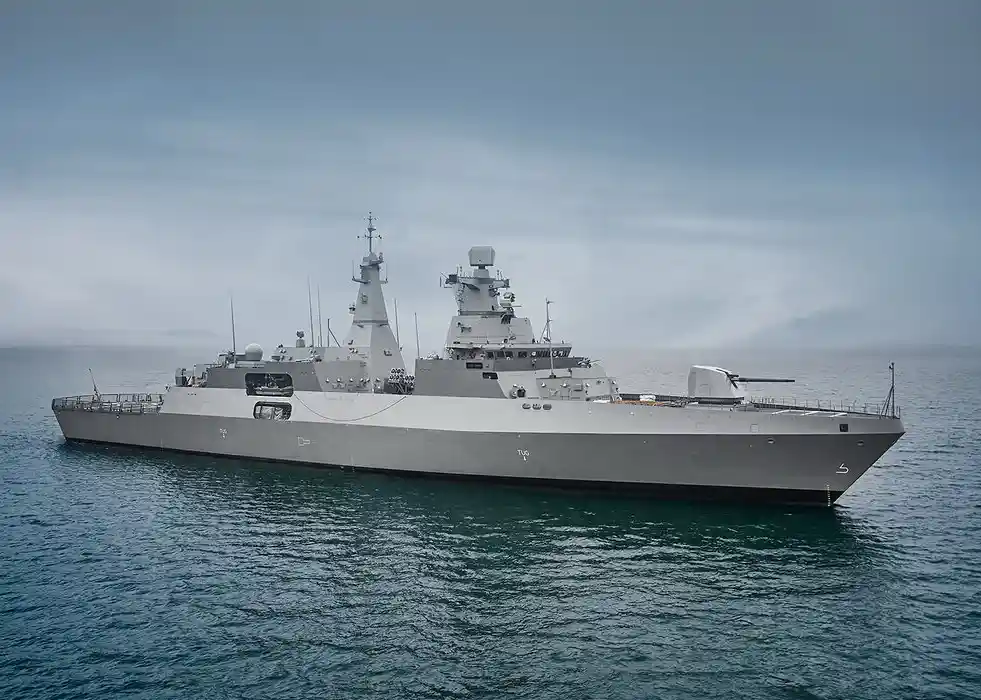
ASELSAN proposes an upgrade of the Argentine Navy’s MEKO 360 vessels based on its proven work on Turkiye’s MEKO 200 frigates with the Barbaros MLU Programme.
ASELSAN eyes Argentina’s MEKO 360 upgrade with experience from Turkiye
Turkish defence electronics company ASELSAN has expressed its intention to modernise the Argentine Navy’s MEKO 360-class frigates, offering a comprehensive solution based on its ongoing upgrade work on Turkiye’s MEKO 200 vessels. The proposal was presented during the LAAD 2025 Defence and Security exhibition in Brazil, where ASELSAN took part in expanding its presence in Latin America.

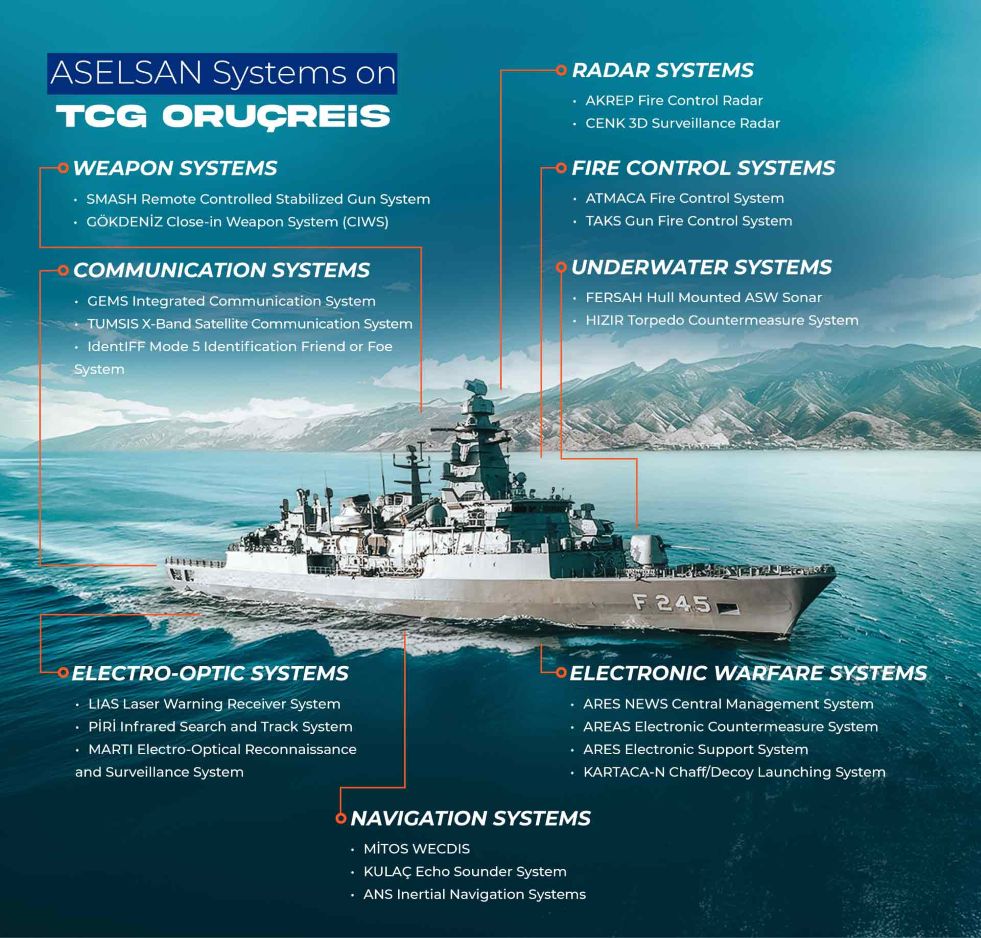
In an exclusive interview with Argentine publication Pucará Defensa, ASELSAN CEO Ahmet Akyol outlined the company’s offer in detail. Days before the fair, ASELSAN also highlighted its role in modernising the Turkish Navy’s MEKO 200 frigate, TCG Oruçreis (F-245) (Barbaros MLU), through a bilingual social media post that showcased integrated radar, sonar, electronic warfare, and combat management systems.
TurDef had previously visited TCG Oruçreis F245 under special authorisation and posed a critical question: Can the modernisation of a MEKO 200-class frigate serve as a guide for other ship classes? A source responded with a vivid analogy: “Modernising an existing ship without losing its current capabilities is like performing a multi-organ transplant. Designing a new ship from scratch is like delivering a baby.”
Modernisation package offers cost-efficiency and operational credibility
ASELSAN’s offer to Argentina includes a wide array of capabilities: long-range radars, ISR systems, sonar, electronic warfare solutions, and a fully upgraded combat management suite. According to Akyol, the modernisation model is highly cost-effective compared to new ship construction, and for this reason, the Turkish Navy has opted for upgrades instead of replacements.
All the systems being proposed are already in use with Turkiye’s armed forces and have also been tested by several international partners. “We equip all Turkish warships, and our systems are operational in over 25 countries,” Akyol stated.
He also stressed the advantage of single-provider integration: “We offer around 50 different naval systems. Having one company deliver and support all major electronic components simplifies logistics, training, and long-term maintenance.”
Flexible platform integration opens the path for future upgrades
When asked whether ASELSAN’s proposal could be adapted to the Argentine Navy’s MEKO 140 vessels, Akyol responded with confidence:
“We have the modernisation capability, so it doesn’t matter if it’s MEKO 140, 200, or 360. We did this in Turkiye and many other countries. We have all the sensors, weapons systems, electronics—everything needed to analyse and deploy.”
This flexibility strengthens the current MEKO 360 proposal and opens the door to the modernisation of other ship classes within Argentina’s fleet in the future.
Local industry involvement and NATO-standard assurance
ASELSAN underlined its willingness to collaborate with Argentina’s domestic industry. “Argentina has shipyards, and we are not a shipyard—we are an electronics company,” Akyol said. “Our vision is to do something together with local companies, especially shipyards operated by the Argentine government.”
In addition to cost-efficiency and adaptability, Akyol highlighted the importance of NATO standards: “We are members of NATO, so our systems meet NATO standards; our armed forces, who are the main operators of our systems, are very professional and active armed forces, so Turkiye uses all systems, and our allies are also testing them..”
Latin America as a strategic growth region
ASELSAN is positioning Latin America as one of its strategic international markets, alongside Western Europe and Western Asia. Akyol noted that many navies in the region, including those in Chile and Peru, are operating vessels in need of modernisation, even if not from the MEKO family.
“We are here at LAAD to showcase our capabilities to all of Latin America,” Akyol said. “We are open to all forms of local cooperation—not just with shipyards but with any partner involved in defence electronics. Anyone aiming to grow electronic capabilities in the region can be a natural partner for ASELSAN.”
Background: Argentine MEKO 360 procurement timeline
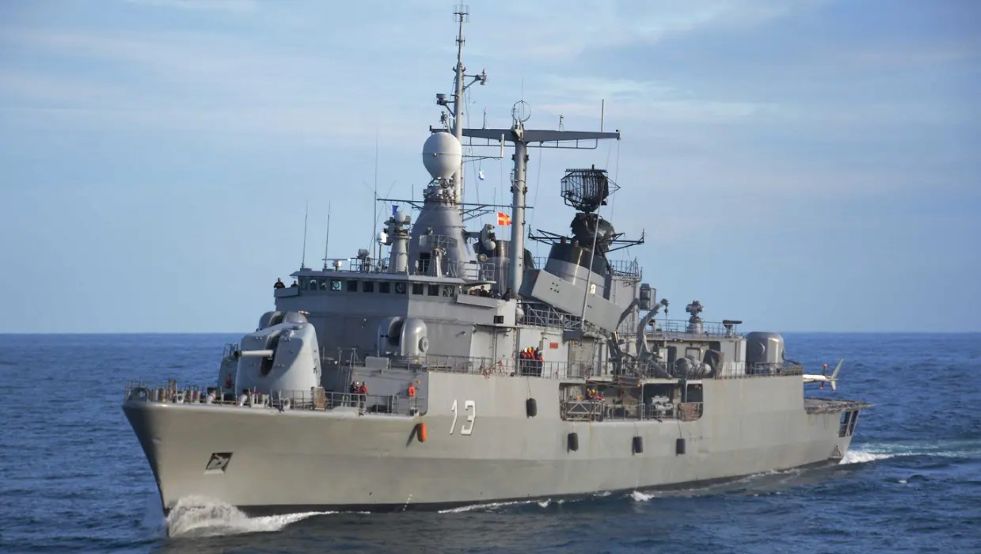
Procured in the early 1980s under a contract made in 1979 with the German shipyard Blohm + Voss, the MEKO 360-class destroyers of the Argentine Navy—also known as the Almirante Brown class—were The four vessels were commissioned as follows:
-
ARA Almirante Brown (D-10):Commissioned on 26 January 1983
-
ARA La Argentina (D-11): Commissioned on 4 August 1983
-
ARA Heroína (D-12): Commissioned on 31 October 1983
-
ARA Sarandí (D-13): Commissioned on 16 April 1984
Designed with modularity in mind to replace old World War II-era ships, these boats are crucial for present modernisation as they enable system replacements and future improvements.
Background: MEKO 140 service entry and upgrade potential
Designed by Germany’s Blohm + Voss, the Argentine Navy’s MEKO 140-class corvettes were constructed locally at the Río Santiago shipyard under the same 1979 accord. These ships were in service throughout almost two decades:
-
ARA Espora (P-41): Entered service in 1985
-
ARA Rosales (P-42): Entered service in 1986
-
ARA Spiro (P-43): Entered service in 1987
-
ARA Parker (P-44): Entered service in 1990
-
ARA Robinson (P-45): Entered service in 2001
-
ARA Gómez Roca (P-46): Entered service in 2004
Currently part of the Argentine Navy’s 2nd Corvette Squadron, these ships also feature modular designs, making them suitable candidates for system integration and mid-life modernisation.
British arms embargo and its implications on naval platforms
The United Kingdom has maintained an arms embargo on Argentina since the 1982 Falklands War. This embargo restricts both direct and indirect acquisition of military equipment that could enhance Argentina’s defence capabilities.
Air platforms
The embargo on aerial platforms has been particularly stringent. The UK has blocked multiple Argentine attempts to procure military aircraft due to the presence of British-made components. The sale of the Republic of Korea’s FA-50 fighters to Argentina was halted because six key British parts were integrated into the aircraft. Similar attempts to acquire Israeli Kfir and Spanish Mirage F1M fighters were also obstructed due to British diplomatic pressure.
Naval platforms
In contrast, the embargo’s effect on naval platforms has been more limited. Designed and constructed in Germany and Argentina, respectively, Argentina’s MEKO 360 and MEKO 140 ships are less dependent on British subsystems, making modernisation of these ships more possible.
Older British-built ships in Argentina’s fleet, such as the Type 42 destroyers, have difficulty acquiring spare parts because of the embargo, compromising their operational readiness.
Given this, ASELSAN, a non-British military firm, offers a strategic option for the Argentine Navy. Its independence from British supply chains allows it to assist in modernising initiatives free of the limitations set by the UK arms embargo.
Author: Özgür Ekşi
You may find more news about Barbaros Mid-life Upgrade Programme from here.