Beijing’s new export rules extend jurisdiction abroad and heighten tensions with Washington, while Türkiye emerges as a potential strategic supplier in Europe’s search for rare-earth alternatives.
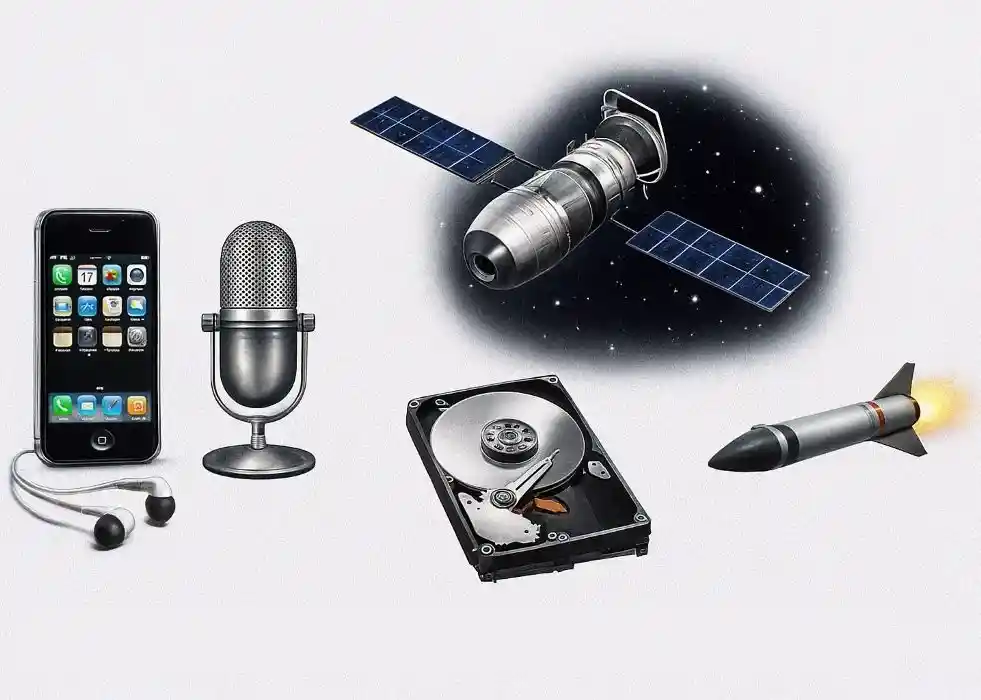
China has greatly increased its control over the flow of rare-earth elements across the world by putting tough new limits on the export of minerals, machines, and technology that are used in everything from mobile phones to fighter planes. The Ministry of Commerce (MOFCOM) announced the measures on October 9. They will go into effect in December 2025. They show that Beijing wants to tighten state control over strategic resources that are important to national security while also extending the reach of Chinese law beyond its borders.
The timing is striking. The new rules, which were announced only weeks before a scheduled meeting between Chinese President Xi Jinping and U.S. President Donald Trump at the APEC summit in the Republic of Korea, make an already tense trade and technology conflict much more serious. Beijing claimed the measure was necessary because of "direct and indirect" transfers of rare-earth minerals and technologies to other forces, which hurt China's national security and interests "seriously."
Under the new framework, export of any technology related to rare-earth mining, processing, or recycling now requires official permission—and approval will not be automatic. The rules also prohibit Chinese nationals and companies from assisting in similar activities abroad. In effect, this bars any collaboration that could enable foreign manufacturers to replicate Chinese expertise in rare-earth extraction and magnet production.
Even more consequential are the extraterritorial provisions taking effect on December 1, 2025. These extend Chinese jurisdiction to foreign-made items that incorporate Chinese-origin rare-earth materials above a 0.1% value threshold, or that are produced using Chinese technologies. This means manufacturers outside China—especially in electronics, aerospace, and defence—must now trace the origin of even microscopic inputs in their supply chains.
The rules introduce a “50% rule,” meaning any entity that is at least half-owned by a company on China’s control or watch list will be treated as part of that entity. In practical terms, this closes potential loopholes for subsidiaries and affiliates that might otherwise escape scrutiny. Export licence applications involving military end users, or firms tied to weapons production, will be denied outright. Applications linked to advanced semiconductors and AI technologies will face exhaustive case-by-case reviews.
The scope of coverage is vast. Rare-earth mining and magnet production technologies are subject to immediate control, while lithium battery and superhard materials will be added from November 8. MOFCOM’s own guidance instructs exporters to implement new compliance systems, document origin chains, and anticipate longer licensing timelines. Companies that previously held export permits are being told to “proactively present” them for review.
The United States reacted swiftly. President Trump announced a 100% tariff on Chinese imports effective November 1, accusing Beijing of “weaponising critical materials.” He also intimated that there would be more limits on exports of AI and software. The statement made the expected bilateral summit less likely, which made people worry that the situation might become worse again.
The House Select Committee on the Chinese Communist Party in Washington called the action a "direct provocation" and called for quicker diversification away from Chinese supply chains. In the meantime, MOFCOM in Beijing said that the U.S. was "arbitrarily expanding control lists" and going against the spirit of previous trade discussions. The tone makes it sound like both sides regard key minerals as the next big issue in their fight for technical power.
The effects are immediate and serious for manufacturers throughout the world. Companies that employ rare-earth elements, notably those that make semiconductors, electric motors, and radar systems, now have to check to see if their goods match the 0.1% Chinese-content limit. If they do, they may need a licence from MOFCOM to export or re-export, even if the final product never crosses Chinese land.Compliance officers warn that this could create a logistical nightmare, as even a small magnet or sputtering target in a complex assembly could trigger the new rules.
The European Union is keeping a careful eye on things since it is already having trouble getting a steady supply of rare earths. The union gets more than 90% of its rare-earth needs from other countries, with China being the main supplier. The European Commission has said several times that these resources are "irreplaceable inputs" for the green transition and defence technology, yet there aren't many other sources available.
This is when Türkiye's strategic position becomes important again. Türkiye isn't the biggest producer of rare-earth elements, but geological estimations say it has enough reserves to be in the top 10 or 11 in the world. These resources, which are spread out throughout Eskişehir, Kütahya, and Malatya, might become quite important as Europe looks for suppliers that aren't influenced by China. Current U.S. ambassador in Ankara, Thomas Barrack underscored this in his Senate confirmation hearing, identifying rare-earth cooperation with Türkiye as one of his key priorities, referring to it by its industry acronym, REE.
It's simple: Türkiye is Europe's closest possible supply of rare earths. Türkiye is a NATO ally and a contender for a stronger industrial collaboration. Beijing is tightening export controls and Washington is putting taxes on goods from China. This might make Ankara's mineral deposits a valuable strategic asset. If Türkiye can build an integrated supply chain that goes from extraction to magnet manufacture, it might play a key role in making sure Europe can get the important resources it needs.
Still, it will require time, finance, and the transfer of technology to build this capability. The Turkish Ministry of Energy and the Secretariat of Defence Industries (SSB) have both shown more interest in rare-earth cooperation projects, although no large-scale mining or separation plant is ready to go yet. Working with European and Japanese partners might speed things up, especially because the EU's Critical Raw Materials Act encourages a wider range of suppliers.
China's actions show a bigger trend in global power politics: using supply chains as weapons. China is now using its control over rare earths as both a shield and a sword, much like Washington has used export curbs on sophisticated semiconductors to keep Beijing's technological progress in check. For global companies, this means dealing with a trading environment that is becoming more and more fragmented, where compliance, traceability, and political risk are just as important as engineering innovation.
It is apparent that rare earths are now the most important part of global economic statecraft. And as the world’s superpowers exchange blows over control of these strategic materials, Türkiye—quietly sitting on its untapped reserves—may find itself holding a small but increasingly significant card in the next round of the global trade game.
Author: Özgür Ekşi